

A beautiful home and a healthy home are not always the same thing. You can paint every wall a perfectly chosen shade, arrange furniture with precision, and still be living in a space that quietly undermines your health, your sleep, and your mood. Most of us spend over 90% of our time indoors, yet the hidden factors that matter most — air quality, moisture levels, natural light, and thermal comfort — rarely feature in the standard conversation about home improvement. This guide cuts through the surface-level advice and explains exactly why upgrading your home environment is one of the most impactful things you can do for your everyday wellbeing.
Table of Contents
- How your home environment impacts health and wellbeing
- Key elements of a healthy and comfortable home
- Who benefits and how: owners versus renters
- The comfort-taking effect: what most guides miss
- What most homeowners overlook about enhancing their environment
- Enhance your home environment effortlessly with IW1T
- Frequently asked questions
Key Takeaways
| Point | Details |
|---|---|
| Health comes first | Prioritising air quality, ventilation, and moisture control ensures a healthier, more resilient home. |
| Comfort is layered | Thermal comfort, light, and layout all work together to boost daily wellbeing and reduce stress. |
| Energy savings vary | Expect a balance between lower bills and greater comfort—outcomes depend on how you use your improved home. |
| Renters have options | Small, reversible changes can make a meaningful impact on comfort and health, even without major renovations. |
| Personalise your upgrades | Choose enhancements that fit your lifestyle, habits, and specific living situation for the most effective results. |
How your home environment impacts health and wellbeing
When people think about improving their homes, they usually picture a fresh coat of paint, new cushions, or a smart speaker on the shelf. What they rarely picture is their lungs, their stress hormones, or their immune system. Yet these are exactly what your home environment affects every single day.
The physical connections are well documented. Cold, damp homes are directly linked to respiratory illness, asthma, and allergies. Poor ventilation traps indoor pollutants that can be two to five times more concentrated indoors than outside. Overheating in summer has been linked to cardiovascular strain, particularly in older adults. Better indoor air quality and comfortable temperatures reduce these risks in measurable ways.
The mental health picture is just as compelling. A study reviewing the relationship between housing and health found that poor housing conditions are widely linked to both physical and mental harm. Cold, dark, or chaotic spaces raise cortisol levels and contribute to anxiety and low mood. By contrast, homes with natural light, comfortable temperatures, and a sense of order actively support emotional resilience.
"A healthy home is not a luxury. It is a foundation for everything else — concentration, rest, relationships, and physical health. Treat your environment as infrastructure, not decoration."
Here is a quick overview of how your home environment connects to real health outcomes:
- Air quality: Reducing indoor pollutants and damp lowers allergy and asthma triggers considerably
- Temperature: Consistent thermal comfort protects cardiovascular and respiratory health, especially in winter
- Natural light: Daylight regulates your circadian rhythm, supporting better sleep and reduced seasonal low mood
- Noise and space: How a home is laid out affects your ability to rest and recover mentally
Understanding that comfort boosts wellbeing in concrete, physical ways reframes home improvement entirely. It is no longer about taste — it is about health infrastructure. And the good news is that even modest changes can produce real results, which we will explore throughout this article. Even something as simple as your choice of hygge décor for cosiness can influence how relaxed and at ease you feel in your own space.
Key elements of a healthy and comfortable home
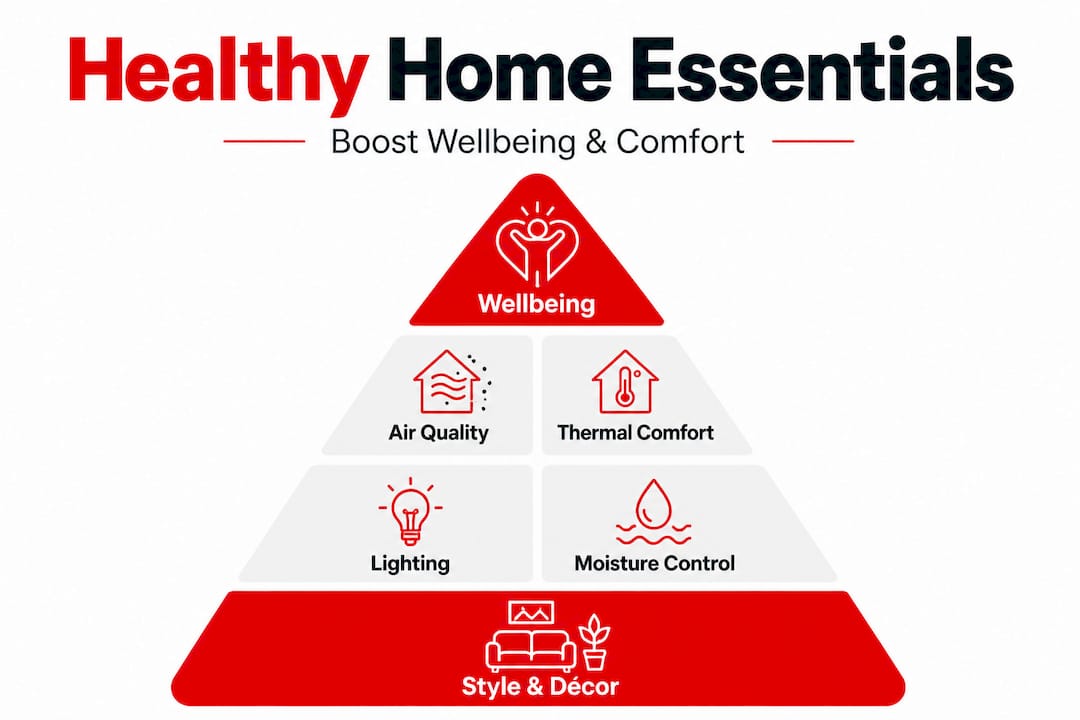
Once you understand why your home environment matters, the next question is: which changes make the biggest difference? Research consistently points to four core areas, and understanding each one gives you a practical roadmap rather than a vague wish list.
Thermal comfort
Your body works hard to maintain its core temperature, and your home either helps or hinders that process. Cold rooms force your body to compensate, increasing the strain on your heart and immune system. Overheated rooms disrupt sleep and concentration. The goal is consistency, not just warmth.
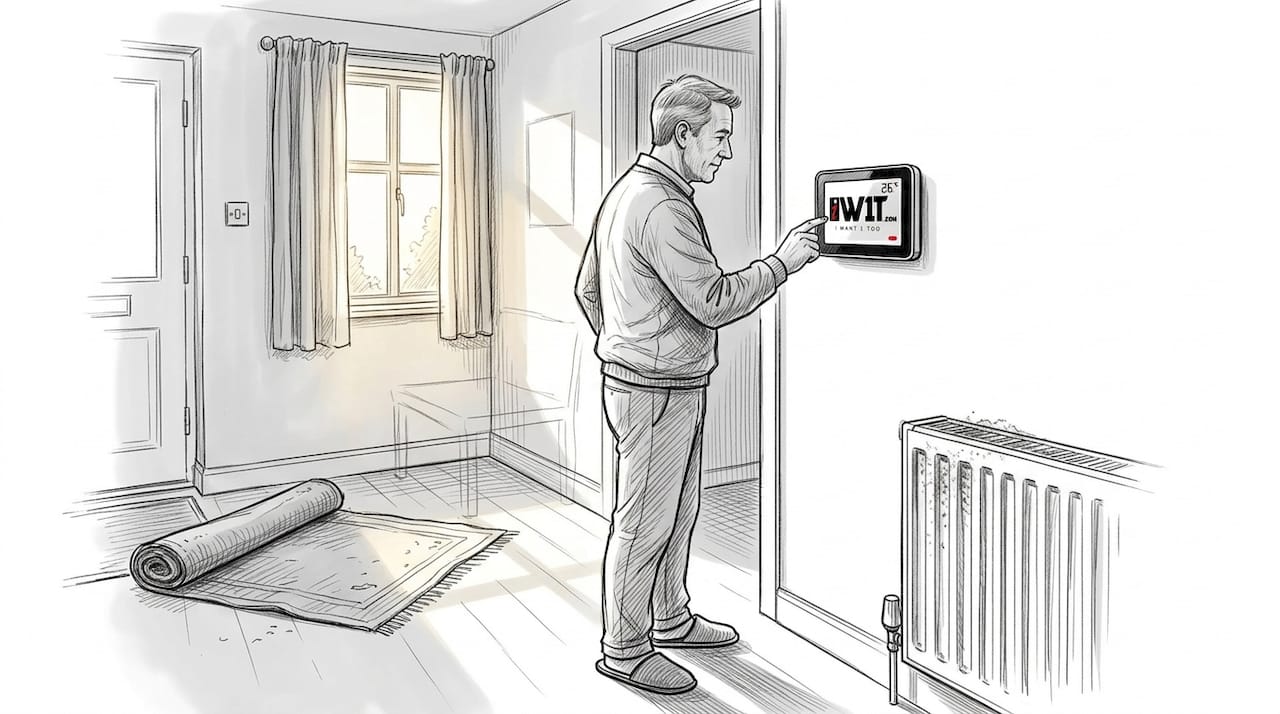
Practical steps include adding draught excluders to doors and windows, using thermal curtains, laying rugs on bare floors to reduce heat loss, and using a programmable or smart thermostat to keep temperatures stable. These are not expensive interventions, but they make a tangible difference to how your home feels throughout the day.
Ventilation and air quality
This is arguably the most underrated element of a healthy home. Retrofitting and home improvements can improve comfort and reduce energy use, while also helping prevent damp-related health issues — but only when paired with adequate ventilation. Without it, even a well-insulated home can trap moisture, encourage mould growth, and accumulate pollutants from cooking, cleaning products, and synthetic furnishings.
Opening windows for ten to fifteen minutes each morning, using extractor fans consistently in kitchens and bathrooms, and avoiding drying laundry on radiators without ventilation are all simple, free steps that pay dividends in air quality and moisture control. The four priority mechanisms for comfort and wellness cluster around thermal comfort, ventilation, daylight, and moisture control — and they are all interconnected.
Lighting
Light is a biological signal, not just an aesthetic one. Poor lighting contributes to eye strain, fatigue, and low mood. Insufficient daylight in winter months is linked to seasonal affective disorder in a significant portion of the UK population. Understanding the benefits of indoor lighting helps you make choices that support energy, focus, and sleep quality simultaneously.
Maximise natural light by keeping windows clean, using mirrors strategically to reflect daylight deeper into rooms, and choosing light-coloured window treatments. For artificial lighting, layer your sources: ambient, task, and accent lighting together provide a more comfortable and adaptable environment than a single overhead bulb ever could.
Moisture control
Damp is one of the most damaging and most common problems in UK homes. It fuels mould growth, damages structures, and triggers respiratory conditions. A dehumidifier in consistently damp rooms, proper ventilation when cooking or bathing, and checking for condensation on windows regularly are all practical first steps. For more complex issues such as rising damp or leaking roofing, these require professional attention, but day-to-day moisture management is something every household can take charge of immediately.
Pro Tip: Place a cheap hygrometer (a device that measures air humidity) in your living room and bedroom. Ideal indoor humidity sits between 40% and 60%. Above 70% and you are in mould territory. Below 30% and your respiratory system will feel it.
| Element | Quick win | Bigger upgrade |
|---|---|---|
| Thermal comfort | Draught excluders, rugs, curtains | Insulation, smart thermostat |
| Air quality | Open windows daily, extractor fans | MVHR system, air purifier |
| Lighting | Clean windows, mirrors | Full lighting redesign, SAD lamp |
| Moisture control | Dehumidifier, ventilate when cooking | Damp-proof course, new extraction units |
Exploring stylish décor for comfort that incorporates these principles means you do not have to choose between a beautiful home and a healthy one. Many solutions serve both goals at once, and decorating for privacy can also improve how insulated and settled your home feels without requiring structural work.
Who benefits and how: owners versus renters
One of the most persistent misconceptions about home improvement is that meaningful change requires ownership. In reality, renters and homeowners simply have different toolkits available to them, and both can make substantial improvements to their health and comfort.
Homeowners
If you own your home, your options include structural changes that deliver lasting impact. Cavity wall insulation or solid wall insulation dramatically reduces heat loss. Upgrading to double or triple glazing improves both thermal comfort and noise reduction. Installing a modern condensing boiler or heat pump, replacing older thermostats with smart controls, and addressing roof insulation all have measurable effects on comfort and indoor temperature stability.
One important caveat: measured-performance research shows that actual thermal performance after retrofit can differ from what energy performance certificate models predict. This means homeowners should track real changes in comfort, temperature consistency, and humidity rather than relying purely on predicted bill savings.
Renters
For renters, the picture is different but far from helpless. Many high-impact changes are practical, reversible, and entirely within a tenant's control. These include:
- Adjusting furniture layout to improve airflow and natural light
- Adding freestanding lamps with warm or daylight bulbs to improve lighting quality
- Using a portable dehumidifier in damp-prone rooms such as bathrooms or ground-floor bedrooms
- Installing draught-proofing strips on doors and windows (removable on move-out)
- Using a smart plug to monitor energy use and heating patterns
- Maximising ventilation habits, particularly in kitchens and bathrooms
Structural changes such as insulation and window upgrades require landlord cooperation, but many local councils and government schemes such as the Warm Homes Local Grant offer routes for renters to request improvements through their landlord with support from funding schemes.
Pro Tip: If you rent, keep a simple written record of temperature, condensation, and damp observations over a few weeks. This gives you concrete evidence if you need to approach your landlord about habitability concerns, and helps you spot patterns in your home's behaviour across different seasons.
Looking through practical décor ideas designed for UK spaces will give you a useful library of renter-friendly improvements. Equally, browsing tips on decorating for comfort can reveal changes that cost very little but shift how a room feels considerably. A well-curated DIY décor guide is also worth bookmarking for practical, hands-on inspiration.
The comfort-taking effect: what most guides miss
Here is something that almost no standard home improvement article will tell you: making your home more energy-efficient does not always lead to lower bills. Sometimes it leads to a warmer home instead, and that is not necessarily a bad outcome.
This is called comfort taking. When a home becomes easier to heat, some households choose to raise their thermostat, heat rooms they previously left cold, or stay warm for longer periods each day. The energy savings are partially or fully absorbed by the increased comfort. Evidence from UK retrofit schemes consistently shows this effect across a wide range of households and improvement types.
Why this matters when you are planning upgrades
- Set realistic expectations about bills. If your primary goal is to reduce heating costs, comfort taking may mean your savings are lower than the model predicted. This is not a failure of the improvement itself.
- Recognise warmth as a valid goal. Many households, particularly those with older residents, young children, or people with health conditions, were previously under-heating their homes because they could not afford to run them at a comfortable temperature. Getting properly warm is a genuine health outcome, not a waste.
- Measure both comfort and cost. After any upgrade, track temperature consistency and how often you feel genuinely comfortable, not only your monthly energy bill. Evaluating outcomes properly means accounting for how residents use the improved system, not only the predicted figures.
- Plan for wellbeing, not just efficiency. Upgrades that prioritise year-round comfort, stable temperatures, and reduced damp will consistently deliver health value even when the financial return is modest.
Key statistic: Comfort taking is measured across a significant proportion of UK households after efficiency improvements, meaning a notable share of the expected energy savings are used for increased warmth rather than reduced consumption.
Pro Tip: Before starting any home improvement project, write down your actual goals. Is it lower bills, warmer mornings, less condensation, or better sleep? Being specific about what success looks like means you can evaluate results honestly and make smarter decisions about where to invest next.
Considering modern home expert tips that account for real-world outcomes rather than theoretical models is a good habit to develop when planning any home enhancement project.
What most homeowners overlook about enhancing their environment
The standard narrative around home improvement leans heavily on two drivers: increasing property value and saving money on bills. Both are legitimate, but they miss the point for most people living in their homes day to day.
At IW1T, we have seen what actually motivates people to change their spaces. It is not usually a projected return on investment. It is waking up feeling genuinely rested. It is a living room that feels like a place to breathe out rather than a space that quietly stresses you. It is the absence of that slightly damp smell in the hallway that you had quietly normalised for years.
The most overlooked home improvements are the ones that address chronic low-level discomfort. A room that is slightly too cold every morning for three months. A hallway that never gets natural light. A bedroom that holds moisture from a shower down the corridor. These are not dramatic problems, and they rarely prompt urgent action. But they accumulate. Over time, they shape how you feel, how well you sleep, and even how often you get ill.
Proactive small steps — improving light quality, managing moisture, rearranging furniture to improve airflow — can be as genuinely impactful as large-scale renovations. They are also accessible to renters and homeowners alike, which matters enormously in a country where a significant proportion of households rent their home. Rather than waiting for the perfect opportunity for a major project, the better question is what can you change this week that would make your home feel measurably better to live in.
Thinking about enhancing for both style and comfort simultaneously is the right framing. The goal is not austerity in the name of health, but rather a home that supports you fully, looks the way you want it to look, and protects your wellbeing without you having to think about it.
Enhance your home environment effortlessly with IW1T
If reading this article has prompted you to think seriously about your home environment, the next step is finding the right products to support those changes without the usual headache of researching every option from scratch.

At IW1T, we have curated a practical range of home, wellness, and lifestyle products specifically for UK homeowners and renters. From smart home gadgets and lighting solutions to wellness accessories and home décor pieces that genuinely serve a purpose, everything in our shop is selected with comfort, practicality, and everyday living in mind. We are a family-run business based in the UK, and we understand that what you need is reliable, thoughtfully chosen solutions delivered discreetly to your door. Browse our functional home décor tips for inspiration, then head to the shop to find the tools to put those ideas into practice.
Frequently asked questions
What is the single most important factor in a healthy home environment?
Good ventilation for air quality and moisture control is consistently highlighted as the top priority, as ventilation and air quality directly underpin respiratory health, damp prevention, and thermal comfort year-round.
Can renters really make a difference in their home's comfort and health?
Absolutely. Many renter-friendly changes such as better lighting choices, regular ventilation habits, furniture layout adjustments, and using a portable dehumidifier are highly effective and require no landlord permission.
Why might my energy bill not fall as much as promised after upgrades?
This is often the result of comfort taking, where households use the improved efficiency to heat their home more thoroughly rather than purely reducing consumption, which is a legitimate and healthy outcome in many cases.
How do I know if my home needs enhancements for health?
Warning signs include persistent condensation on windows, damp or musty smells, cold spots in rooms, frequent respiratory symptoms, or a general sense of low mood or fatigue at home, all of which poor housing conditions are known to contribute to.