
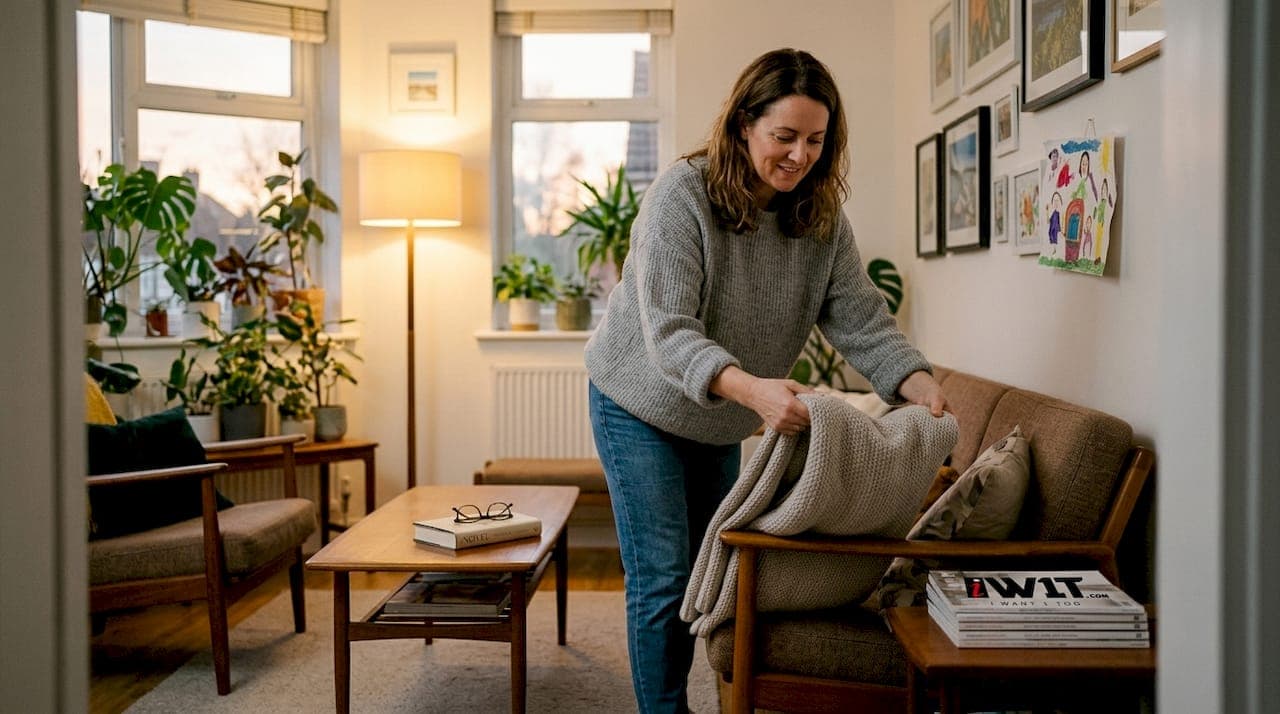
According to Zoopla, 64% of UK homebuyers renovate within two years of purchasing their property. That figure alone tells you something important: upgrading your home is not just a pre-sale tactic. It is something people do because they want to enjoy where they live. Whether you are refreshing a tired living room, rethinking your kitchen layout, or simply adding finishing touches that feel like you, the right décor changes can transform your daily experience, boost your home's value, and future-proof your space for how life looks today.
Table of Contents
- Why upgrading is more popular than moving
- The value impact of key décor upgrades
- Personalising your space for wellbeing and comfort
- Sustainability and smart choices in décor upgrades
- What most guides overlook: Making your upgrade last
- Discover quality décor upgrades for your home
- Frequently asked questions
Key Takeaways
| Point | Details |
|---|---|
| Upgrading boosts comfort | Enhancing décor creates more relaxing, efficient, and welcoming spaces at home. |
| Smart upgrades drive value | Strategic improvements like kitchens, bathrooms, and extensions can significantly increase property worth. |
| Personalisation pays off | Tailoring décor to your personality and lifestyle improves wellbeing and daily enjoyment. |
| Sustainable choices matter | Opting for durable, vintage, and natural décor trends reduces waste and delivers longevity. |
| Balance trends with cohesion | Staying true to your style avoids costly mistakes and ensures your upgrades remain timeless. |
Why upgrading is more popular than moving
Moving house has always been expensive, but in recent years the costs have climbed sharply. Stamp duty, estate agent fees, solicitor charges, and the sheer disruption of uprooting your life add up fast. Many homeowners are doing the sums and realising that upgrading what they already have makes far more sense.
There is more to it than just money, though. Homeowners upgrade instead of moving for better comfort, improved functionality, energy savings, and reduced long-term maintenance. These are not abstract benefits. They play out every single day in how warm, calm, and practical your home feels.
The rise of hybrid working has accelerated this shift dramatically. When your home doubles as your office, your gym, your school, and your sanctuary, a cramped or poorly organised space genuinely affects your mood and productivity. Suddenly, a well-thought-out home upgrade is not a luxury. It is a necessity.
Here is a quick snapshot of why UK homeowners are choosing to upgrade rather than move:
- High moving costs make staying and improving the financially smarter option in most cases
- Energy efficiency upgrades reduce bills and improve comfort throughout the year
- Functional redesigns accommodate changing household needs, such as home offices or multi-use rooms
- Reduced disruption means families stay rooted in communities, schools, and social networks
- Personal satisfaction from creating a space that truly reflects your taste and lifestyle
Worth knowing: UK homeowners who upgrade report significant improvements in daily comfort and home functionality, with energy savings and reduced maintenance cited as top motivators.
Pro Tip: Before committing to any upgrade, write down the three biggest frustrations with your current space. Solving real problems first will always deliver more satisfaction than chasing trends. Browse home décor wellbeing products to find practical solutions that address both comfort and aesthetics.
The value impact of key décor upgrades
Not every upgrade delivers the same return, but the numbers are encouraging across the board. Adding a bedroom via loft conversion or extension can increase property value by up to 24%, according to Nationwide. That is a substantial uplift, and one that pays dividends whether you sell or simply stay put and enjoy a more spacious home.
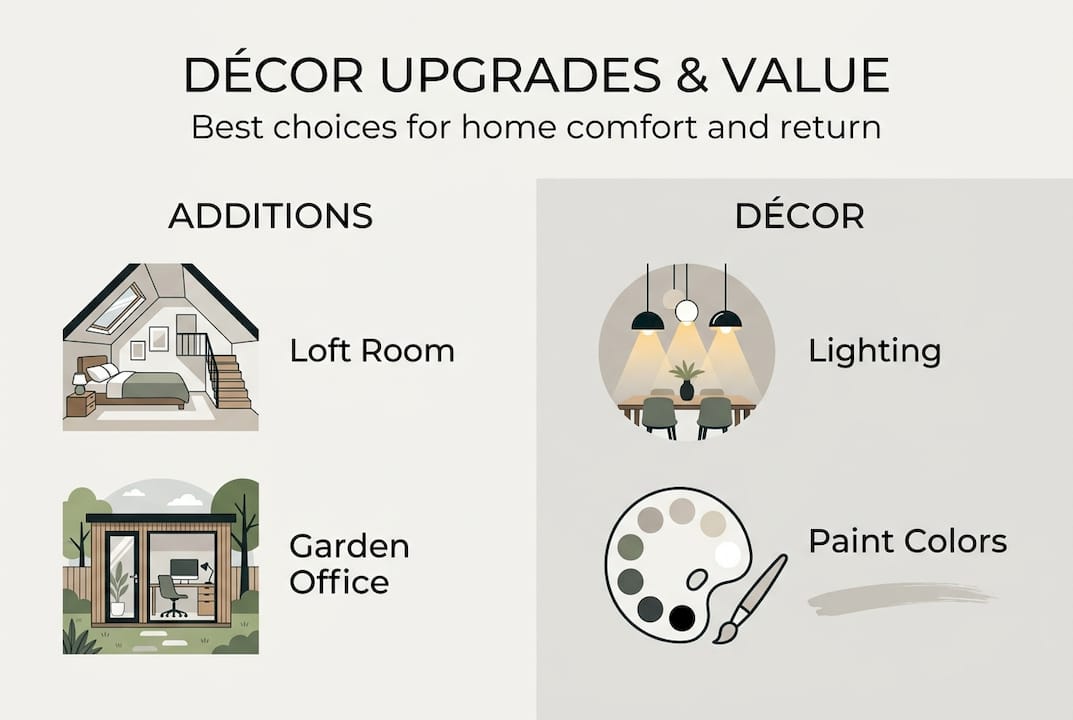
Of course, not everyone has the budget for structural work. The good news is that targeted décor upgrades, things like updating your kitchen cabinetry, refreshing bathroom fittings, or adding cohesive styling throughout, can also move the needle meaningfully.
Here is how some popular upgrades compare for return on investment:
| Upgrade type | Estimated value uplift | Cost range |
|---|---|---|
| Loft conversion (adds bedroom) | Up to 24% | £20,000 to £50,000 |
| Kitchen renovation | 10 to 15% | £5,000 to £25,000 |
| Bathroom refresh | 5 to 10% | £2,000 to £10,000 |
| Décor and styling updates | 3 to 5% | £500 to £3,000 |
| Garden and kerb appeal | 5 to 8% | £1,000 to £8,000 |
For the best return on your investment, focus on upgrades in this order:
- Kitchen updates — buyers and valuers pay close attention to kitchens. Even minor refreshes such as new handles, worktops, or lighting make a striking difference.
- Bathroom improvements — a clean, modern bathroom signals care and quality throughout the whole home.
- Kerb appeal and entrance — first impressions drive perception of value before anyone steps inside.
- Living room styling — cohesive furniture, lighting, and colour choices create an emotional response that buyers remember.
- Functional storage solutions — clever storage makes spaces feel larger and more liveable.
"A thoughtfully upgraded home communicates care, and buyers and valuers respond to that emotionally as much as financially."
The key is balance. Upgrades that reflect a strong personal style without alienating others tend to deliver the best of both worlds: a space you love living in and one that others will love buying.
Personalising your space for wellbeing and comfort
Beyond financial return, there is a deeply personal dimension to home upgrades that rarely gets enough attention. Personalised upgrades create calmer, warmer, more efficient homes that align with the realities of modern hybrid living. That psychological boost is real and measurable.

Research consistently shows that our physical environment shapes our mood, focus, and even sleep quality. A bedroom that feels cluttered and cold does not just look uninviting — it actively affects how rested you feel. A well-lit, thoughtfully arranged home office reduces mental fatigue and improves concentration.
Seasonal upgrades, particularly those undertaken in late winter or early spring, deliver a notable psychological lift. Refreshing cushion covers, adding warm lighting, or introducing natural textures after the grey months can genuinely shift your outlook.
Here is how different personalisation choices support specific wellbeing goals:
| Décor upgrade | Wellbeing benefit | Best room |
|---|---|---|
| Warm, layered lighting | Reduces eye strain, improves mood | Living room, bedroom |
| Natural textures (linen, wood, rattan) | Creates calm and tactile comfort | Any room |
| Designated home office space | Boosts productivity and mental clarity | Spare room or corner |
| Colour-considered walls or accessories | Supports emotional regulation | Bedroom, bathroom |
| Seasonal décor updates | Lifts mood and creates fresh perspective | Living room, hallway |
A few well-chosen personalisation choices stand out for their impact:
- Scent and ambience — candles, diffusers, and soft textiles engage multiple senses simultaneously
- Personal collections — displaying meaningful items creates emotional connection to your space
- Biophilic design — plants, natural light, and organic materials reduce stress and improve air quality
- Multi-functional furniture — especially important for hybrid workers balancing work and home life
Pro Tip: You do not need a big budget to personalise meaningfully. Swapping out three or four key accessories, such as a throw, a lamp, and some artwork, can completely shift the feel of a room in an afternoon. Explore shop stylish décor products to find pieces that reflect your personality without breaking the bank.
Sustainability and smart choices in décor upgrades
There is a growing realisation among UK homeowners that the choices made during a home upgrade carry environmental weight. Fast furniture and disposable décor might look attractive initially, but they cost more in the long run, both financially and ecologically.
Interior design trends for 2026 point firmly towards durable, vintage, and salvaged items over mass-produced fast furniture. Natural, lived-in aesthetics featuring wood, imperfection, and honest materials are gaining serious ground. This is good news: choosing quality over quantity almost always results in a more characterful, longer-lasting home.
Here are the key principles for sustainable, smart upgrading:
- Prioritise durability — invest in pieces built to last rather than following micro-trends that date quickly
- Choose natural materials — timber, stone, linen, and wool are not just fashionable but genuinely longer-lasting
- Shop vintage and salvaged — pre-loved furniture often offers superior craftsmanship at lower prices
- Repair before replacing — reupholstering, repainting, and refinishing existing pieces reduces waste considerably
- Plan for cohesion — a room filled with thoughtfully chosen pieces that relate to each other will always outlast a collection of impulse buys
"The most sustainable upgrade is usually the one you do not need to repeat in two years."
When it comes to return on investment, kitchen and bathroom upgrades recoup 60 to 80% of their cost, making them the most financially rewarding focus for most homeowners. That said, over-investing in highly specific or trend-led choices, such as bold colour drenching in every room, can actually reduce broad appeal if you are considering future sale.
Pro Tip: Before buying any new piece, ask yourself two questions. Does it work with what I already own? And will I still love it in five years? If the answer to either is no, step back and reconsider.
What most guides overlook: Making your upgrade last
Most home décor guides focus on what to buy. Far fewer address the harder question of whether your upgrades will still feel right three years from now. At IW1T, we see this pattern regularly: homeowners invest in a beautiful but trend-heavy room, only to feel restless with it within eighteen months.
The real secret is cohesion over novelty. A room that tells a consistent story through its materials, colours, and proportions will always feel more satisfying than one assembled from whatever was fashionable at the time. Only 4% of homeowners regret renovating instead of moving, which is reassuring, but budget overruns and lack of planning are common causes of dissatisfaction.
The homeowners who are happiest with their upgrades tend to start with a clear sense of their own taste rather than a mood board of borrowed ideas. They choose curated home décor items that genuinely fit their lifestyle rather than ones that simply look good in a photograph. And they give themselves permission to upgrade incrementally rather than trying to transform everything at once. Patience, here, is genuinely a decorating skill.
Discover quality décor upgrades for your home
Now that you understand how to upgrade smartly, sustainably, and with genuine lasting value in mind, it makes sense to shop with the same intention. At IW1T, we have curated a selection of home décor and lifestyle products designed to enhance real homes, not just showrooms.

Whether you are looking for practical storage solutions, stylish accessories, or thoughtful finishing touches that tie a room together, the IW1T home décor store has options to suit a range of styles, budgets, and sustainability goals. We are a family-run business that genuinely cares about helping you build a home you love living in every single day. Browse our collection and discover upgrades that work as hard as you do.
Frequently asked questions
Does upgrading home décor really increase property value?
Yes, targeted upgrades like loft conversions, kitchens, or extensions can raise value by up to 24%, making them one of the most financially rewarding investments a homeowner can make.
Is it cheaper to upgrade than to move?
For most UK homeowners, upgrading is significantly cheaper than moving, and only 4% regret renovating over relocating, making it the more popular and practical choice.
How do I balance trends and timelessness in décor upgrades?
Choose upgrades that reflect your personality and lean towards durable, natural materials over fast furniture; cohesive design that tells a consistent story will always outlast trend-chasing.
What upgrades recoup the most costs?
Kitchens and bathrooms generally recoup 60 to 80% of their cost during resale, making them the smartest starting point for homeowners focused on long-term value.