
Your living room might be making you anxious. Not because of the bills on the coffee table or the news on the television, but because of the colour on the walls, the clutter on the shelves, and the quality of the light above your head. Interior design elements like lighting, thermal comfort, spatial layout, and biophilic features significantly impact physical, physiological, and mental health. This is not a vague lifestyle claim. It is backed by a growing body of research showing that the homes we inhabit shape our mood, our stress levels, our sleep, and even our long-term health in ways most of us have never stopped to consider.
Table of Contents
- The science behind décor and wellbeing
- Key elements: Lighting, colour, and comfort
- Declutter and beauty: Why organisation lifts your mood
- Nature in the home: The power of biophilic design
- A fresh perspective: What most guides miss about wellbeing and décor
- Curate your wellbeing space with our practical picks
- Frequently asked questions
Key Takeaways
| Point | Details |
|---|---|
| Décor shapes wellbeing | How you design and maintain your space directly affects mental, emotional, and physical health. |
| Nature and decluttering matter | Introducing plants and reducing clutter are two of the strongest proven strategies for boosting mood and reducing stress. |
| Lighting and colour impact mood | Cool colours and layered lighting can increase calm and focus while warm colours energise, so choose to suit your needs. |
| Balance brings best results | Avoid excess; simple, personal touches tailored to your lifestyle offer lasting wellbeing benefits. |
The science behind décor and wellbeing
Décor is not just about looks. The choices you make about your home environment send constant signals to your brain and body, influencing everything from your cortisol levels to how well you sleep at night.
Research confirms that interior design significantly impacts physical, physiological, and mental health, with older adults and those spending more time indoors being especially sensitive to these effects. Think about what that really means. If you work from home, care for a family member, or simply spend a lot of time indoors, your décor is not a background detail. It is an active force shaping how you feel every single day.
| Interior factor | Wellbeing impact | Key examples |
|---|---|---|
| Lighting | Sleep, alertness, mood | Natural light, layered lamps, warm bulbs |
| Thermal comfort | Physical ease, concentration | Soft textiles, optimal room temperature |
| Spatial layout | Stress, movement, focus | Open flow, clear surfaces, designated zones |
| Biophilic elements | Stress reduction, creativity | Plants, natural materials, nature-inspired art |
| Clutter levels | Anxiety, life satisfaction | Clear surfaces, organised storage |
The table above is a useful starting point, but the real story is in how these factors interact. Poor lighting combined with clutter, for instance, creates a compounding effect on anxiety that is greater than either issue alone. A thermally uncomfortable room with no natural elements feels hostile in a way that is hard to articulate but very easy to feel.
"Biophilic design with greenery enhances perceived restorativeness, positive affect, and reduces stress, making it one of the most powerful tools in wellness-focused interior design."
Sound also plays a role. Hard surfaces reflect noise, raising ambient sound levels and increasing cognitive load. Soft furnishings, rugs, curtains, and upholstered pieces absorb sound and create a quieter, calmer atmosphere. This is why a sparsely furnished flat can feel stressful even when it is tidy.
If you are looking for practical and stylish products to begin making these changes, the good news is that small, targeted upgrades can produce measurable benefits without a full renovation. The science gives us a clear map. All we need to do is follow it.
Key elements: Lighting, colour, and comfort
With the science in mind, let us look closely at the most influential décor choices you can make. Three areas stand out above all others: lighting, colour, and physical comfort. Getting these right will transform how your home feels, often within days.
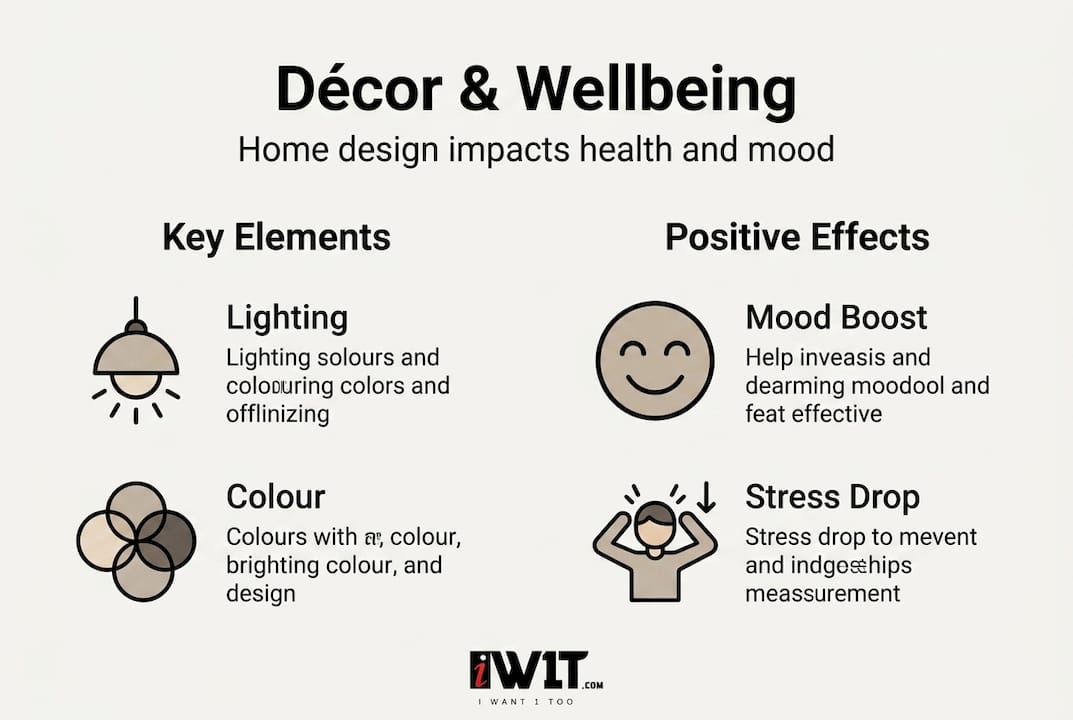
Lighting is arguably the single most powerful variable in your home environment. Natural light regulates your circadian rhythm, the internal body clock that governs sleep, appetite, and hormone production. Homes that allow plenty of daylight reduce fatigue and improve mood significantly. But most of us also spend evenings indoors under artificial light, and the type of bulb matters enormously. Warm white bulbs (around 2700K to 3000K) support relaxation and signal to your body that evening is approaching. Cool white or daylight bulbs (5000K and above) are better for workspaces during daytime hours because they promote alertness and concentration.
Layering your lighting is a simple but transformative approach. Rather than relying on one overhead light, combine ambient lighting (the main source), task lighting (lamps for reading or working), and accent lighting (candles, fairy lights, or spotlights for warmth). This gives you genuine control over the atmosphere in each room at each time of day.
Colour psychology is equally powerful. Cool colours like blue and green promote calm and focus, reduce anxiety, and are excellent choices for bedrooms, home offices, and anywhere you need to decompress. Warm colours such as red, orange, and yellow energise and stimulate, making them well suited to social spaces, though they can overstimulate when used in excess. Neutral tones like soft whites, warm greys, and earthy taupes are versatile foundations that allow you to add colour through accessories and textiles without committing to a permanent statement.
Here are the most impactful colour-led changes you can make right now:
- Paint a bedroom or reading nook in a soft sage green or muted blue to encourage rest and focus
- Use warm terracotta or mustard yellow in a dining area to encourage warmth and appetite
- Introduce neutral tones on large surfaces and bring energy through cushions, artwork, and throws
- Avoid stark, bright white in spaces meant for relaxation as it can feel clinical and cold
Thermal comfort and texture round out this trio. Research consistently points to room temperatures around 26°C as an optimal zone for physical ease and cognitive performance. But texture adds another layer entirely. Soft furnishings, velvet cushions, wool throws, and natural fibre rugs do more than look appealing. They engage the sense of touch, signalling safety and comfort to the nervous system. This is one reason why a well-layered sofa can feel genuinely restorative rather than just aesthetically pleasing.
Pro Tip: If you cannot repaint or make structural changes, focus on textiles. Swapping out synthetic cushion covers for natural cotton or linen, and adding a chunky knit throw, can meaningfully shift how comfortable and calm a room feels in under an hour.
Declutter and beauty: Why organisation lifts your mood
Even the best design is undermined by chaos. So how does organisation uplift wellbeing? The answer involves both psychology and neuroscience, and the evidence is more compelling than many people expect.

Home clutter negatively correlates with mental wellbeing, mediated by perceived home beauty. In plain terms, clutter makes you feel worse, and the reason it does so is partly because it makes your home feel less beautiful, which in turn reduces your sense of comfort and safety within your own space. This is an important distinction. It is not just about tidiness for its own sake. It is about how your home looks and feels to you on a deeper, almost emotional level.
📊 Key insight: Research suggests that women report higher clutter-related stress than men, possibly because societal expectations around the home environment create additional pressure. However, clutter affects mental wellbeing across all demographics, making it a universal issue worth addressing.
The good news is that you do not need to overhaul your entire home in a weekend. Small, targeted steps produce real results. Here is a practical sequence to follow:
- Start with horizontal surfaces. Kitchen worktops, coffee tables, and dressing tables are the surfaces you see most often. Clearing just these will immediately make your home feel more spacious and calm.
- Create a designated home for frequently used items. Keys, remotes, bags, and chargers are common clutter triggers. A small basket or tray in a consistent location removes the visual noise and reduces daily friction.
- Invest in attractive storage. Functional boxes, woven baskets, and stylish shelving units mean that even stored items contribute to the aesthetic rather than detracting from it.
- Adopt a one-in, one-out habit. For every new item that enters your home, one existing item leaves. This prevents gradual accumulation and keeps your spaces feeling intentional.
- Tidy in ten-minute bursts. A single focused ten-minute tidy before bed can prevent the gradual build-up that leads to overwhelming clutter over time.
The relationship between beauty and mental health is not superficial. When your home looks the way you want it to, you feel more in control, more comfortable, and more positive. That emotional response has measurable downstream effects on stress, sleep, and productivity.
Browse organisational essentials to find practical storage and styling tools that make this process easier and more enjoyable. The right products make a genuine difference to how sustainable these habits become.
Pro Tip: Perceived beauty matters as much as actual tidiness. Adding one or two genuinely pleasing objects to a shelf, a framed print you love, a beautiful plant pot, can make that space feel curated rather than cluttered, even before a full declutter takes place.
Nature in the home: The power of biophilic design
No wellness décor guide is complete without nature. Biophilic design, which refers to incorporating natural elements into your living environment, offers some of the most profound and well-evidenced wellbeing benefits available to homeowners.
The word "biophilic" comes from the Greek for love of nature, and the underlying idea is straightforward. Humans evolved in natural environments. Our brains and bodies are wired to respond positively to natural light, organic shapes, greenery, flowing water, and natural materials. When we recreate even a fraction of that environment indoors, our nervous systems respond accordingly.
| Element | Wellbeing benefit | Ease of implementation |
|---|---|---|
| Houseplants | Mood boost, stress reduction, creativity | Easy, low cost |
| Natural materials (wood, stone) | Calm, warmth, sensory comfort | Moderate, varies by budget |
| Biophilic art (nature scenes) | Reduced anxiety, improved focus | Very easy |
| Water features | Auditory calm, relaxation | Moderate |
| Natural light maximisation | Circadian rhythm support, energy | Easy with layout changes |
Biophilic design with greenery enhances perceived restorativeness, positive affect, and reduces stress. Studies comparing real plants to artificial ones consistently find that real greenery has a stronger emotional impact, likely because of the subtle sensory cues: the slight variation in leaf shape, the faint earthy scent, and the visible signs of growth and life.
Even more striking is the long-term picture. Biophilic art environments reduce depression and anxiety symptoms over extended periods, which means that hanging a well-chosen nature photograph or botanical print is not merely decorative. It is a form of ongoing, passive wellbeing support.
Here are simple, effective ways to bring nature into your home:
- Place a low-maintenance plant like a snake plant or pothos in your most-used room
- Choose wooden furniture, frames, and accessories over synthetic alternatives
- Hang artwork featuring landscapes, botanicals, or natural textures
- Use natural linen, cotton, or jute for soft furnishings
- Position seating near windows to maximise your contact with outdoor views and natural light
A word of caution: integrated greenery can feel chaotic if overdone. A room overrun with plants and natural objects begins to feel cluttered rather than restorative. The principle of balance applies here just as strongly as in any other area of décor. Aim for considered, intentional placement rather than abundance for its own sake.
Find eco-friendly décor options that bring the beauty of nature indoors without requiring specialist gardening knowledge or a large budget.
A fresh perspective: What most guides miss about wellbeing and décor
Most articles on this subject present a checklist. Add a plant. Use blue. Declutter your surfaces. Follow the steps and feel better. But that approach misses something important.
The science supports personalisation above all else. Studies show that the wellbeing benefits of décor are most powerful when the choices feel personally meaningful. A room filled with objects that hold no significance to you, even if it follows every evidence-based guideline, will feel less restorative than a space that genuinely reflects who you are.
This means that the "right" colour for your bedroom is not automatically sage green because research suggests it is calming. It is the colour that genuinely relaxes you when you see it. The most beneficial plant for your desk is not necessarily the one with the highest air-purifying credentials. It is the one you find beautiful and feel motivated to care for.
We would encourage you to treat the research as a framework rather than a prescription. Use it to understand the principles, then apply those principles in ways that suit your life, your taste, and your habits. Small, incremental changes made with intention and enjoyment will always outperform a wholesale transformation that feels imposed rather than chosen. Your home should feel like yours. That, more than any specific colour or plant species, is what makes a space genuinely good for your wellbeing.
Curate your wellbeing space with our practical picks
For those ready to refresh their living space, practical next steps are within reach. The principles explored in this article, thoughtful lighting, purposeful colour, biophilic elements, and calm organisation, all begin with the right products in the right places.

At IW1T, we have chosen our carefully curated home essentials with exactly this kind of purposeful living in mind. From stylish organisational tools that help you maintain clear, beautiful surfaces, to home décor items that bring warmth, texture, and natural elements into your space, everything in our range is selected to make your home feel better to live in. We understand that wellbeing starts at home, and we are here to help you make those changes simply, affordably, and with confidence.
Frequently asked questions
Which home décor change most improves mental wellbeing?
Decluttering and adding natural elements, particularly houseplants, powerfully improve mood and lower stress. Research confirms that clutter reduces wellbeing while biophilic greenery enhances positive affect and reduces stress.
Are there risks to too much greenery or décor?
Over-integrated greenery can feel chaotic and cluttered, decreasing rather than improving wellbeing, so balance and simplicity often work best for most homes.
How does colour choice affect wellness at home?
Cool colours like blue and green are calming and reduce anxiety, while warm colours can overstimulate when used in excess. Choosing colours intentionally for each room's purpose makes a meaningful difference.
Does home organisation affect physical health too?
Yes. Clutter increases stress, which in turn can influence sleep quality, immune function, and physical comfort. Clutter negatively correlates with overall mental wellbeing, and the physical effects follow closely behind.