

Most people treat lighting as an afterthought, something to sort out once the sofa is in place and the walls are painted. But lighting's effect on mood goes far deeper than aesthetics. The light in your home shapes how well you sleep, how focused you feel, and how much you enjoy spending time in each room. Whether you own your home or rent it, getting the lighting right is one of the most impactful and often overlooked upgrades you can make. This article walks through the science, the practical strategy, and the real-world solutions that make a genuine difference.
Table of Contents
- How indoor lighting affects wellbeing and mood
- The foundations of effective indoor lighting: Layered solutions
- Lighting for function and design: UK standards and real-life needs
- Smart, flexible solutions for renters and homeowners
- A fresh perspective: What most guides miss about indoor lighting
- Enhance your home with quality lighting solutions
- Frequently asked questions
Key Takeaways
| Point | Details |
|---|---|
| Mood and health boost | Good indoor lighting supports your mental wellbeing and daily mood. |
| Layering is vital | Combining ambient, task, and accent lights creates adaptable and comfortable spaces. |
| UK lighting standards | Following standard illuminance levels helps ensure safe and pleasant home environments. |
| Smart and flexible upgrades | Both renters and owners can improve lighting comfort with easy, modern solutions. |
| Natural light still matters | No amount of artificial light fully replaces the value of daylight for overall wellbeing. |
How indoor lighting affects wellbeing and mood
Light is not just something you see by. It is something your body actively responds to, every hour of the day. Your brain contains a region called the suprachiasmatic nucleus, which acts as your internal clock. Light feeds directly into this system, telling your body whether to feel awake and alert or relaxed and ready for sleep. When your home lighting does not match your body's natural rhythm, the knock-on effects can include poor sleep, low energy, and even symptoms of depression.
The evidence on this is solid. Bright white light reduces depressive symptoms in seasonal affective disorder and older adults, while circadian lighting that mimics the arc of natural daylight improves both sleep quality and mood over time. This means that swapping a warm dim bulb for a well-chosen bright daylight bulb in your morning routine space could have a measurable impact on how you feel by lunchtime.
Different types of light create very different emotional environments. Here is a summary of the key moods that lighting directly influences:
- Alertness and focus: Cool white or daylight bulbs (5000K to 6500K colour temperature) in a home office or study increase concentration and mental sharpness.
- Relaxation and calm: Warm amber light (2700K to 3000K) in a living room or bedroom triggers a wind-down response in the brain, signalling that the day is ending.
- Melancholy or lethargy: Dim, flat, or poorly placed lighting with no variation can suppress mood and even make rooms feel smaller and more oppressive.
- Energy and motivation: Brighter, well-distributed light in kitchens and hallways encourages movement and task completion throughout the day.
"Lighting shapes not just how a space looks, but how the people in it feel, function, and rest. Getting it wrong costs more than just aesthetics."
Placement matters enormously here. A single overhead bulb in a living room floods everything with flat, uniform light that strips away depth and warmth. Instead, consider floor lamps at eye level, table lamps beside seating areas, and soft lighting near shelves or alcoves. In the evening, try dimming your main lights and switching to a warm lamp when you want to wind down. In the morning, open the blinds and supplement with a bright, cool bulb in areas where you get ready. These small adjustments genuinely shift how your body responds to the space.
The foundations of effective indoor lighting: Layered solutions
Once you understand what light does to your mood and body, the next step is learning how to build a lighting scheme that serves every need. The professional approach is called layered lighting, and it is the reason some rooms feel effortlessly comfortable while others feel flat, harsh, or cold.
Layered lighting insights show that combining ambient, task, and accent lighting enhances functionality, mood, and how spacious a room feels, which is particularly valuable in compact UK homes where every square metre counts.
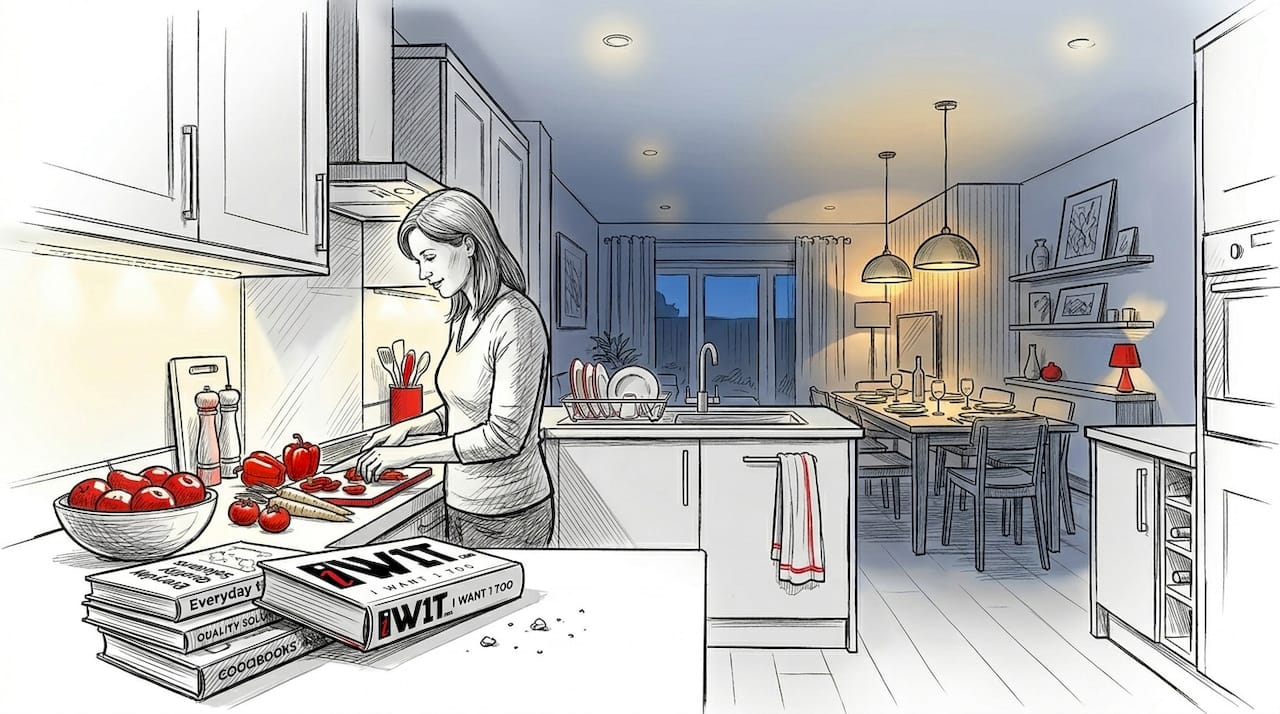
Here is a breakdown of the three layers and how they work together:
| Layer | Function | Best locations | Example fixtures |
|---|---|---|---|
| Ambient | General illumination, fills the room | All rooms | Ceiling pendants, flush mounts, recessed downlights |
| Task | Focused light for specific activities | Kitchen, desk, bathroom | Under-cabinet strips, reading lamps, vanity lights |
| Accent | Highlights features, adds depth and drama | Living rooms, hallways | Picture lights, LED strips, uplighters |
The mistake most people make is relying entirely on ambient light, typically one ceiling fitting per room. This creates flat lighting with deep shadows and forces your eyes to constantly adjust as you move around. Layering prevents that strain. Task lighting keeps your eyes comfortable during reading or cooking. Accent lighting draws attention to features you love, a bookshelf, a piece of art, a fireplace, and makes a room feel curated rather than functional-only.
For compact UK homes, layering also creates the visual illusion of more space. Low lamps with warm light make a small living room feel cosy rather than cramped. Accent lights on vertical surfaces draw the eye upward, making ceilings feel higher.
Pro Tip: Install dimmer switches on your ambient lighting circuit. Dimmers cost as little as £10 to £20 each and give you instant control over the mood of a room without changing any bulbs. Combined with layered sources, a dimmer transforms a single space from a bright daytime workroom to a relaxed evening retreat with one smooth adjustment.
A practical example: in a typical UK kitchen-diner, install recessed downlights on a dimmer for general ambient light, add LED strips underneath wall cabinets for task lighting over the worktop, and place a pendant over the dining table as both accent and ambient. This single approach solves glare at the sink, proper illumination for chopping, and a warm atmosphere for meals, all in one layered plan.
Lighting for function and design: UK standards and real-life needs
Beyond comfort and style, there are objective benchmarks for what counts as adequate lighting in a home. The UK standard BS EN 17037 sets out minimum illuminance (the amount of light reaching a surface, measured in lux) for residential spaces. These figures are worth knowing, especially if you are renting a property that feels dimly lit or trying to assess whether a new fixture will genuinely improve a room.
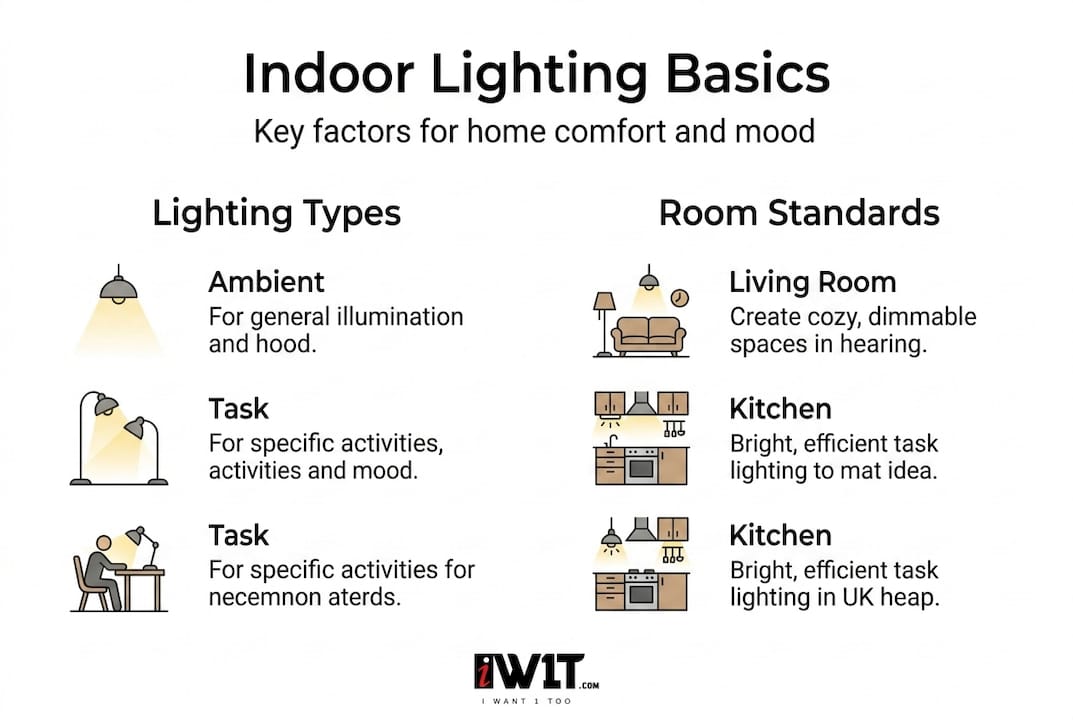
UK lighting standards recommend minimum illuminance levels over at least 50% of a room's floor area, as follows:
| Room | Minimum lux level | Why it matters |
|---|---|---|
| Bedroom | 100 lux | Comfortable for dressing, reading, and basic tasks |
| Living room | 150 lux | Adequate for relaxing, watching TV, light reading |
| Kitchen | 200 lux | Essential for food safety, accurate colour perception |
| Home office/study | 300 to 500 lux | Reduces eye strain during prolonged screen or desk work |
| Bathroom | 200 to 300 lux | Accurate grooming and safety |
Meeting the minimum lux is not the same as optimising for comfort. A room that just clears 150 lux with a single, poorly placed fitting may still feel uncomfortable. The quality, direction, and colour temperature of light all influence how adequate a space actually feels to live in.
Here is a practical step-by-step approach to assess and improve lighting in each room:
- Walk the room at night with only the existing lights on. Note any areas that feel too dark, too bright, or cause you to squint.
- Check fixture placement. Is the main light directly overhead? Does it create shadows over your face in a mirror, or over your hands at the worktop?
- Measure or estimate lux levels. A basic lux meter costs around £10 online and gives you a real reading. Alternatively, if you struggle to read comfortably in a room with all lights on, you are likely below 150 lux.
- Identify which layer is missing. Usually it is task or accent lighting. Add a desk lamp, under-cabinet strip, or a well-placed floor lamp before replacing the main fitting.
- Consider natural daylight. Artificial light is most effective when it works alongside, not instead of, daylight. Keep window areas clear where possible, and use mirrors to reflect natural light deeper into a room.
It is worth emphasising that artificial light supplements rather than replaces daylight, and designing your lighting scheme with that principle in mind leads to far better results than treating every room as if it will always be lit electrically.
Smart, flexible solutions for renters and homeowners
Understanding the principles is one thing. Finding practical solutions that work in your actual home, whether you own it or rent it, is where many guides fall short. The good news is that effective lighting upgrades do not require rewiring, landlord permission, or significant cost.
For renters and homeowners alike, here are the most impactful and accessible changes you can make:
- Smart bulbs: Products like Philips Hue or similar alternatives fit into existing standard lamp fittings. Lighting for renters confirms that smart systems allow scheduling and circadian rhythm support without any wiring changes at all.
- Plug-in lamps: Floor lamps and table lamps require zero installation and can be moved freely. They are the fastest way to add a layer to any room.
- LED bulb swaps: Replacing old halogen or incandescent bulbs with LEDs saves energy and allows you to choose different colour temperatures for different rooms.
- Plug-in dimmers: Some bulb-and-adapter combinations allow dimming without changing existing switches, useful where a landlord will not permit electrical work.
- LED strip lights: Adhesive LED strips can add accent or task lighting under shelving, behind televisions, or under kitchen cabinets, and are completely removable.
For homeowners, the options expand further. Hardwired dimmer switches are a straightforward upgrade, often achievable in an afternoon. Recessed downlights in kitchens and bathrooms add professional-quality layering. Smart lighting setups that integrate with voice assistants or smartphone apps allow full scheduling, meaning your lights can automatically shift from bright and cool in the morning to warm and dim by evening, effectively running a circadian programme without you thinking about it.
Pro Tip: When choosing bulbs for kitchens and any room with plants, look for a CRI (Colour Rendering Index) of 90 or above. High CRI bulbs show food colours accurately, helping you cook by sight effectively. They also support plant growth far better than low-CRI alternatives, as the full spectrum supports photosynthesis even in low-light indoor environments.
A quick cost-benefit comparison illustrates why LED and smart upgrades make financial sense:
| Upgrade | Approx. cost | Energy saving | Mood benefit |
|---|---|---|---|
| LED bulb swap (per bulb) | £2 to £6 | Up to 80% vs halogen | Immediate; choose any colour temp |
| Smart bulb (per bulb) | £10 to £20 | Similar to LED | Scheduling and full dimming control |
| Plug-in floor lamp | £20 to £60 | Depends on bulb | Adds a full layer; highly flexible |
| Dimmer switch (hardwired) | £10 to £25 | Moderate | Major comfort improvement per room |
Even on a tight budget, a single well-placed floor lamp with a warm LED bulb can transform how a living room feels in the evening. Start with the room where you spend the most time, and build from there.
A fresh perspective: What most guides miss about indoor lighting
Most lighting guides focus entirely on aesthetics or energy efficiency. Neither is the real issue for most people living in UK homes. The actual gap is biological. We have built our indoor environments around convenience, a light on the ceiling, a switch at the door, and in doing so, we have divorced ourselves from the natural patterns of light that our bodies evolved alongside.
Bright bulbs are often marketed as a universal upgrade, but this misses the point entirely. A 1000-lumen cool white bulb in your bedroom at 10pm is not an improvement. It actively disrupts melatonin production and delays sleep, regardless of how modern or efficient it is. Quality and timing matter more than brightness alone.
The biggest gains in home comfort come from treating light as something that changes through the day, not something you set once and ignore. Wellbeing and daylight research consistently shows that artificial light supplements but cannot replace natural daylight for mental health, which means the smartest investment is often not a new fixture but positioning furniture to maximise the light you already have coming through your windows.
The single most common pitfall we see is over-reliance on one central ceiling light. It is the lighting equivalent of eating the same meal every day. Your home needs variety, different sources, different heights, different temperatures, at different times. Once you start thinking that way, everything else falls into place.
Enhance your home with quality lighting solutions
Understanding the principles behind great indoor lighting is just the beginning. Finding the right products to put those principles into practice is where the real transformation happens. At IW1T, we have curated a range of home lighting solutions that work for both renters and homeowners, from plug-in lamps and smart bulbs to practical home improvement accessories that make a genuine difference to how your space feels and functions. Whether you are starting with a single lamp or rethinking an entire room's scheme, there is a straightforward, affordable solution ready for you.

Frequently asked questions
How does indoor lighting impact mental health?
Indoor lighting influences mood, sleep, and wellbeing by affecting brain pathways and the circadian rhythm through brightness, colour temperature, and placement. Poor lighting choices can contribute to low mood, fatigue, and disrupted sleep patterns over time.
What is layered lighting and why is it important?
Layered lighting combines ambient, task, and accent light sources to create flexible, comfortable spaces that prevent eye strain and flat, oppressive illumination. It allows a single room to serve multiple purposes throughout the day and evening.
Are there minimum lighting standards for UK homes?
Yes. UK standards recommend at least 100 lux for bedrooms, 150 lux for living rooms, and 200 lux for kitchens, measured over at least half the room's floor area. These are minimums, not targets for optimal comfort.
Can renters improve lighting without permanent changes?
Absolutely. Smart lighting systems such as Philips Hue, plug-in lamps, and LED bulb swaps all improve mood and function without any rewiring or changes to fixed fixtures, making them fully renter-friendly options.
Is artificial light enough to replace natural daylight?
No. Artificial light is a helpful supplement but cannot replicate the full mental health benefits of natural daylight, which is why maximising daylight access in your home remains the most important foundation of any good lighting scheme.