
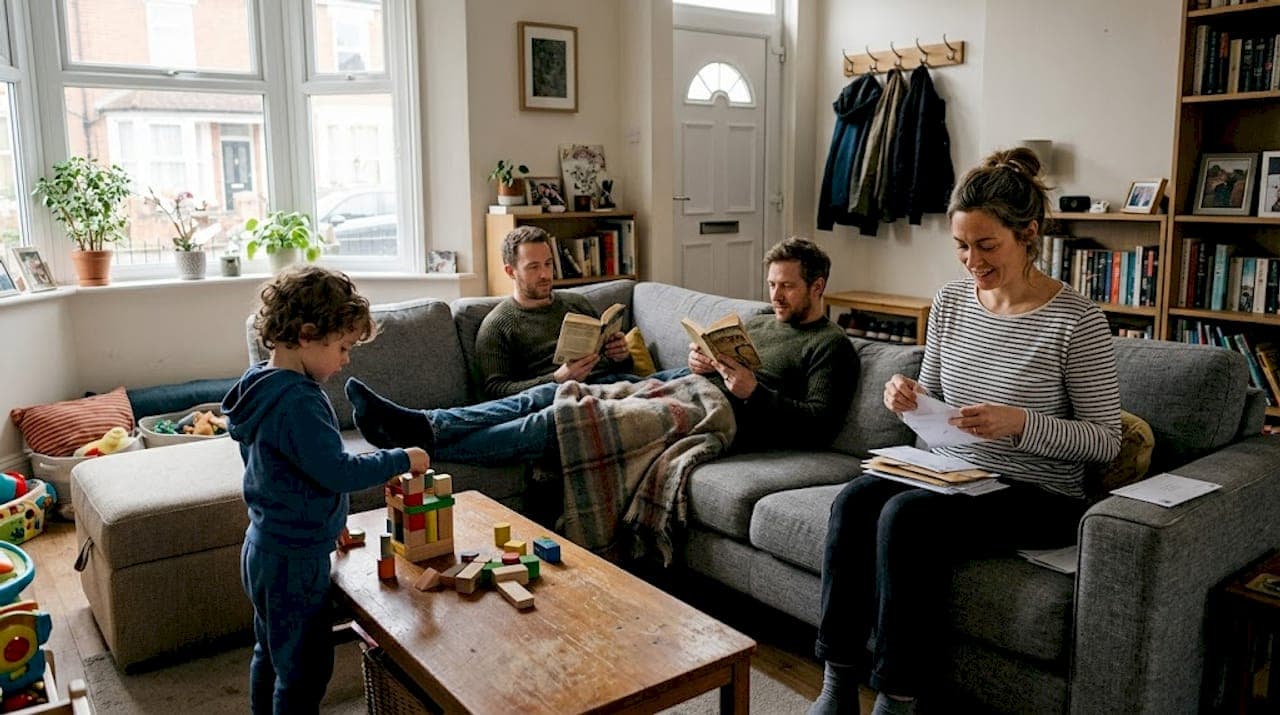
Most people assume they have to choose between a home that looks good and one that actually works. That's a false choice, and it holds a lot of households back from creating spaces they genuinely enjoy. Functional home décor challenges that assumption entirely. It's the idea that the things you bring into your home should earn their place, not just fill a shelf or tick a trend. Whether you're renting a flat in Manchester or settling into a family home in Surrey, getting this balance right can reduce daily stress, cut clutter, and make every room feel more like yours.
Table of Contents
- Defining functional home décor: more than just looks
- Functional vs. decorative décor: key comparisons
- Choosing functional décor for different UK households
- Room-by-room tips: maximising both comfort and style
- The truth most overlook about functional home décor
- Find your functional décor solutions with IW1T
- Frequently asked questions
Key Takeaways
| Point | Details |
|---|---|
| Prioritise real utility | Choose décor that solves daily problems and endures real-life use, not just items that look good. |
| Style meets function | Modern functional pieces can be beautiful and practical, transforming any space. |
| Adapt to your household | Select solutions that fit renters, families, or pet owners for a comfortable, resilient home. |
| Room-by-room results | Apply practical tips in each part of your home to maximise both comfort and style. |
| Embrace imperfection | Functional décor works even when life gets messy, leading to less stress and more happiness. |
Defining functional home décor: more than just looks
Functional home décor refers to pieces that serve a genuine purpose in daily life while still contributing to the look and feel of a space. Think storage ottomans that double as seating, wall racks that organise coats and bags, or baskets that hold blankets without looking like a jumble sale. The key distinction is that these items work for you, not just for photographs.
The biggest misconception is that functional equals plain. People picture beige plastic organisers and flat-pack shelving when they hear "functional," but that couldn't be further from the truth. Beautifully crafted wooden crates, woven storage baskets, and sleek modular shelving units are all highly functional and genuinely attractive. Style and utility are not opposites.
Here's a quick look at what separates functional décor from purely decorative choices:
| Feature | Functional décor | Purely decorative décor |
|---|---|---|
| Primary purpose | Utility and aesthetics | Visual appeal only |
| Ease of maintenance | High | Often low |
| Resilience to daily use | Strong | Fragile or limited |
| Value to daily life | Adds genuine value | Adds visual value only |
The benefits of choosing functional pieces are real and measurable. A well-organised home reduces the mental load of searching for things, lowers stress, and can even increase property appeal. Functional items also tend to last longer because they're built to be used, not just admired.
Key benefits of functional home décor include:
- Reduces clutter by giving everything a proper home
- Lowers daily stress through easier organisation
- Improves well-being by creating calmer, more liveable spaces
- Adds long-term value to your home environment
- Survives real life, including children, pets, and busy mornings
As noted by home organisation experts, true functionality allows imperfection, meaning an overfilled drawer still works, and a storage bench still holds shoes even when it's not perfectly arranged. This is a crucial point that most interior design content ignores entirely.
"Functional design avoids the trap of 'Instagram staging' and allows for everyday mess without sacrificing utility. It boosts home value and well-being by reducing clutter and stress."
Pro Tip: The best functional piece in your home is one that keeps doing its job even when life gets messy. If it only works when everything is perfectly in place, it's closer to decoration than function.
Now that we've clarified what functional home décor means, let's see how it differs from standard decorative approaches.
Functional vs. decorative décor: key comparisons
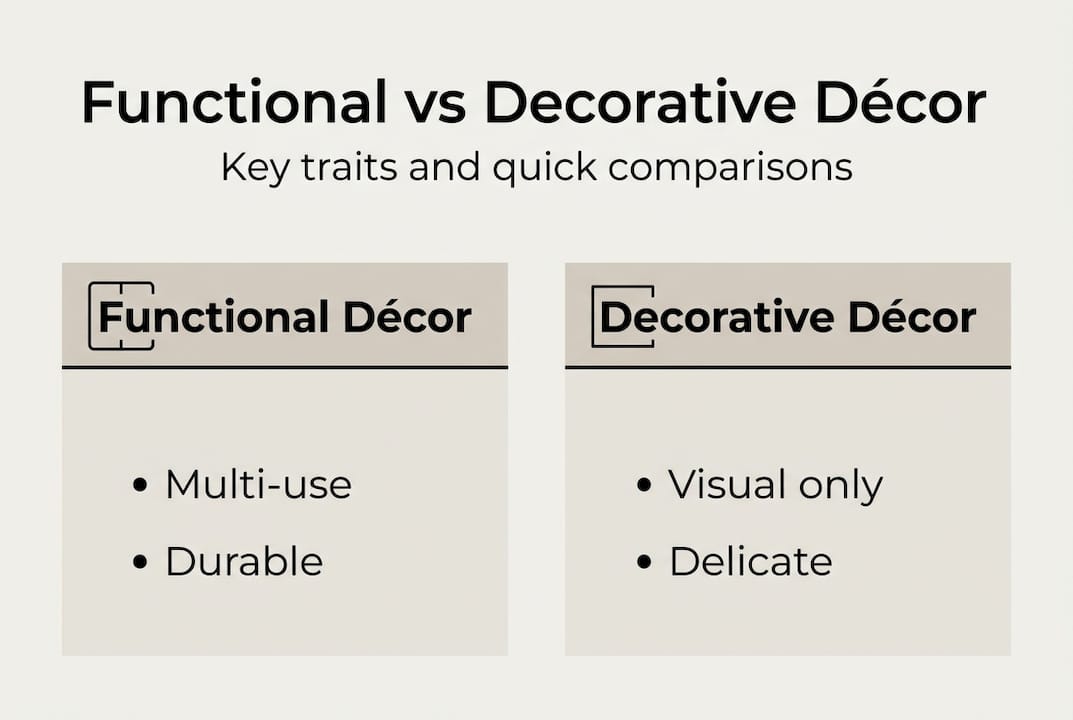
Understanding the practical differences between functional and decorative décor helps you make smarter choices when shopping or rearranging your home. Both have a place, but knowing when to prioritise one over the other is where most people go wrong.
| Attribute | Functional décor | Decorative décor |
|---|---|---|
| Durability | Built for regular use | Often delicate |
| Maintenance | Easy to clean and maintain | May require careful handling |
| Practicality | Serves daily needs | Primarily visual |
| Aesthetic appeal | Stylish and purposeful | Highly visual, trend-led |
| Performance under mess | Works regardless of disorder | Fails when disrupted |
The real test comes in everyday life. A household with young children or pets doesn't have the luxury of perfectly arranged vignettes on a coffee table. Decorative items in those environments often end up broken, dusty, or hidden away. Functional systems tolerate mess far better than decorative ones, which tend to fall apart the moment real life intervenes.
Here's a simple step-by-step approach to switching from decorative to functional choices in your home:
- Audit one room at a time. Walk through a single room and identify items that serve no daily purpose. Be honest.
- Ask the replacement question. For each decorative item, ask: could this be replaced by something equally attractive but actually useful?
- Swap gradually. Replace one item at a time so the transition feels natural rather than a total overhaul.
- Test for resilience. After a week, check whether the new piece still looks reasonable under normal living conditions.
- Repeat the process. Move to the next room once you're satisfied with the results.
This process works particularly well in high-traffic areas like hallways, kitchens, and living rooms where clutter accumulates fastest.
Pro Tip: Always choose items that work even when they're not perfectly arranged. A storage basket that looks good half-full is far more valuable than a decorative bowl that only looks right when empty.
With these differences clear, it's important to consider practical factors when selecting décor for your unique household situation.
Choosing functional décor for different UK households
Not every home has the same needs, and functional décor should reflect your actual living situation rather than a generic ideal. The right choices for a rented flat in Leeds are quite different from those for a detached family home in the Cotswolds.
For renters, the priority is non-permanent solutions. You can't knock holes in walls or make structural changes, so freestanding furniture and adhesive hooks become your best friends. Command strips, tension rod shelving, and modular cube units give you flexibility without risking your deposit. Non-permanent solutions like these are ideal for rental properties where adaptability matters.
For families with young children, durability and ease of cleaning are everything. Washable fabric storage bins, wipe-clean surfaces, and robust wooden furniture that can take a knock are far more practical than delicate ceramics or light-coloured upholstery. Choose materials that forgive spills and scratches.
For pet owners, the same logic applies with added emphasis on scratch resistance and hair management. Tightly woven fabrics, leather alternatives, and closed storage units keep pet hair contained and surfaces easier to maintain.
Before buying any décor item, run through this quick checklist:
- Will this item still look reasonable after a week of normal use?
- Is it easy to clean with everyday products?
- Does it serve at least one practical purpose beyond looking nice?
- Will it work in my specific space without permanent installation?
- Is it appropriately sized for the room and the people using it?
The UK housing market is diverse, from Victorian terraces to modern new-builds, and practical décor products that adapt to different layouts and tenancy situations are increasingly in demand. Choosing pieces that flex with your lifestyle rather than dictating it is the smarter long-term investment.
Having tailored your choices to your lifestyle, you can maximise both comfort and style in any room.
Room-by-room tips: maximising both comfort and style
Applying functional décor principles across your home doesn't require a full renovation. Small, considered changes in each room can make a significant difference to how your home feels and functions day to day.
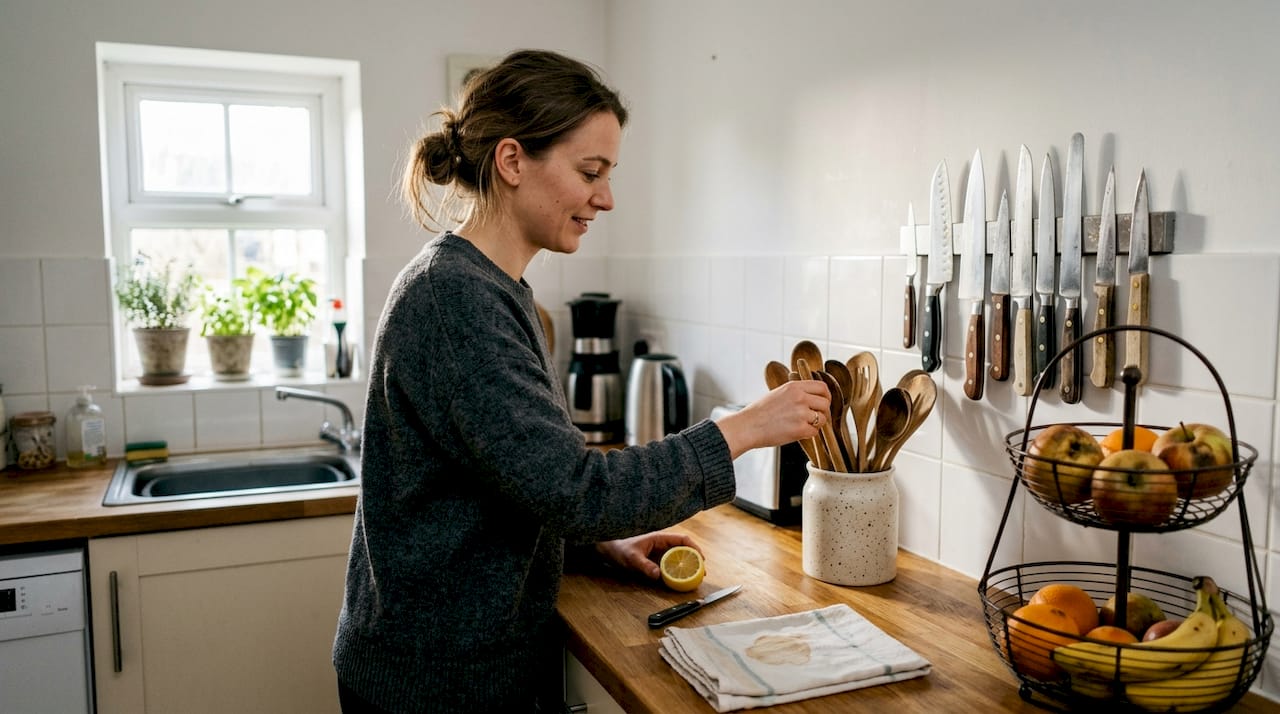
Kitchen: Start with countertop organisation. A stylish utensil holder, a wall-mounted magnetic knife strip, and a tiered fruit stand all reduce clutter while keeping essentials within reach. Choose materials like stainless steel or sealed wood that are easy to wipe down.
Living room: Replace purely decorative throws with washable ones that actually get used. Swap a decorative coffee table for one with built-in storage. A woven basket beside the sofa for remote controls and magazines is both attractive and genuinely useful.
Bedroom: Over-door hooks, under-bed storage boxes, and bedside tables with drawers all add function without sacrificing the calm aesthetic most people want in a bedroom. A storage ottoman at the foot of the bed is one of the most versatile pieces you can own.
Entryway: This is the hardest-working space in any home. A wall rack with hooks, a shoe bench with storage underneath, and a small basket for keys and post can transform a chaotic entry point into a welcoming, organised space.
Here's a practical sequence for transforming any room:
- Clear the space entirely and assess what you actually need within reach.
- Identify the three biggest sources of clutter in that room.
- Find one functional piece that addresses each clutter source.
- Arrange the new pieces with both accessibility and aesthetics in mind.
- Reassess after two weeks and adjust as needed.
"Functional systems tolerate imperfection and make life easier while still looking great. The goal isn't a showroom. It's a home that works."
Pro Tip: Dual-purpose pieces are the secret weapon of functional décor. A storage bench in the hallway, a wall rack in the kitchen, or a shelving unit with baskets in the living room all do twice the work of a single-purpose item.
With these ideas in mind, let's dig deeper into what most people get wrong about functional home décor.
The truth most overlook about functional home décor
Social media has done a strange thing to how we think about our homes. Scroll through any interiors account and you'll see perfectly staged rooms where every object is placed with surgical precision. It looks beautiful. It also looks like nobody lives there.
This is the trap. When we absorb those images constantly, we start measuring our own homes against an impossible standard. Functional décor gets dismissed as "not aesthetic enough" because it doesn't photograph the way a carefully curated vignette does.
But here's what those images don't show: the stress of maintaining that level of order, the clutter that gets shoved out of frame, and the items that never actually get used because they're too precious to touch.
True functionality avoids Instagram staging and allows for everyday mess without sacrificing utility. That's not a compromise. That's freedom.
The mindset shift worth making is this: functionality isn't about minimalism or giving up style. It's about choosing things that serve your life rather than performing for an imaginary audience. A home that works is a home that feels good to be in, and that's the most stylish thing of all.
Find your functional décor solutions with IW1T
Ready to take practical steps? Here's how you can start transforming your home today.
At IW1T, we've spent time curating a range of home products that genuinely earn their place in your space. We're a family-run UK business, and we understand that real homes need real solutions, not just things that look good in a product photo.
From storage solutions to versatile home accessories, our selection is built around the idea that practical and stylish home décor should be accessible to everyone, whether you're renting, renovating, or simply refreshing a room. Browse our curated range and find pieces that work as hard as you do, without ever looking like they're trying too hard.
Frequently asked questions
What makes home décor functional rather than just decorative?
Functional décor serves a genuine daily purpose, is easy to maintain, and remains useful even when not perfectly arranged. As experts note, overfilled drawers still work, which is the hallmark of truly functional design.
Can functional décor still look stylish?
Absolutely. Modern functional décor blends aesthetics with utility, and the best pieces are indistinguishable from purely decorative ones. Functional décor reduces stress and improves well-being without asking you to sacrifice a thing visually.
How do I pick functional décor for a rented flat?
Focus on non-permanent options such as modular freestanding furniture and adhesive hooks that won't damage walls or risk your deposit. Non-permanent solutions are specifically recommended for rental properties.
Why is functional home décor recommended for families and pet owners?
Families and pet owners benefit most from durable, easy-clean materials that hold up to daily activity. Durable, easy-clean materials are the practical choice for any household where mess is a daily reality.
What are quick examples of functional décor?
Storage ottomans, wall racks, freestanding shelves, and washable throws all blend style with genuine daily usefulness. Modular furniture and easy-clean materials are among the most versatile starting points for any home.