
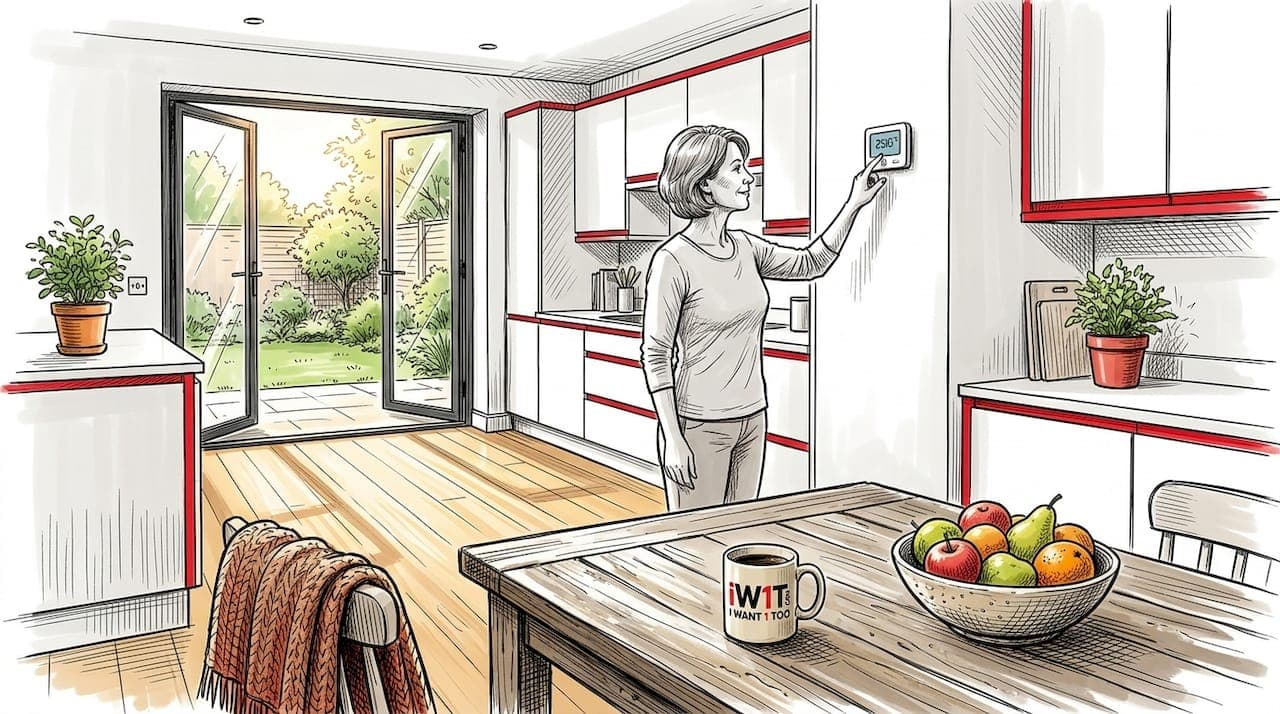
Home comfort is defined by six measurable factors: air temperature, humidity, air speed, mean radiant temperature, clothing, and metabolic rate. Most people chase the thermostat and ignore the other five. That single mistake explains why so many homes feel stuffy in summer, draughty in winter, and never quite right in between. Knowing how to enhance home comfort means tuning all these factors together, using practical tools like fans, humidifiers, insulating curtains, and draught seals, rather than relying on one dial. The good news is that most improvements cost very little and require no planning permission.
How to enhance home comfort by measuring what you have first
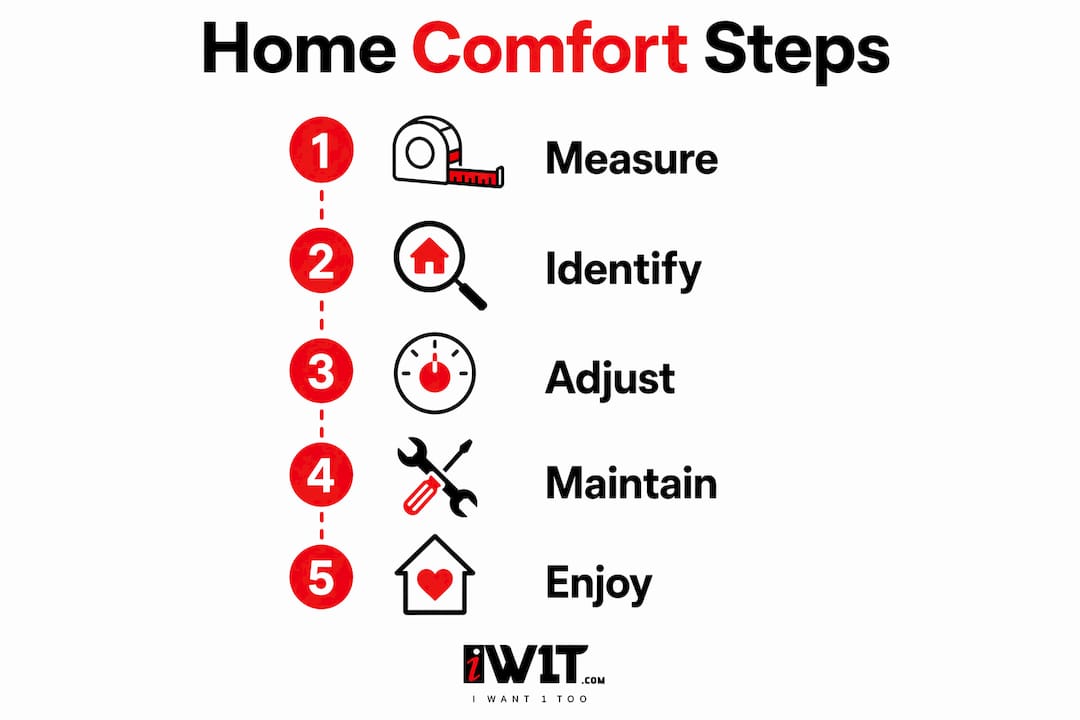
You cannot fix what you have not measured. Before buying a single product or adjusting a single setting, spend a week logging the conditions in your main living spaces.
Place a combined temperature and humidity sensor at seated head height, roughly one metre from the floor, in each room you use most. This position reflects what your body actually experiences, not what the ceiling or floor registers. ASHRAE 55-2023 guidance sets the accepted comfort range for relative humidity at 40 to 60% RH. Readings outside that band cause discomfort even when the thermometer looks fine.
For a more complete picture, consider two additional tools. A globe thermometer measures mean radiant temperature, which captures the heat radiating from walls, windows, and floors rather than just the air around you. A handheld anemometer measures airspeed, which matters more than most people realise. Still air at 22°C feels warmer and stuffier than moving air at the same temperature.
- Log temperature and humidity in each main room, morning and evening, for seven days.
- Note when discomfort occurs and what conditions were present at that moment.
- Identify the worst-performing room and focus your first changes there.
- Revisit your log after each change to confirm whether conditions improved.
| Measurement | Target range | Tool to use |
|---|---|---|
| Air temperature | 18 to 24°C | Digital thermometer |
| Relative humidity | 40 to 60% RH | Hygrometer or combined sensor |
| Air speed | 0.1 to 0.3 m/s | Handheld anemometer |
| Mean radiant temp | Close to air temp | Globe thermometer |
Pro Tip: Free smartphone apps can log temperature and humidity data from Bluetooth sensors automatically, saving you the effort of manual recording and making patterns far easier to spot.
Which quick fixes improve indoor comfort without any renovation?
Reversible, symptom-driven fixes are the most reliable first steps for renters and homeowners alike, and they cost a fraction of any structural upgrade. Low-cost reversible steps should always come before devices or major works.
- Seal obvious draught sources. Letter boxes, gaps around pipes, and poorly fitted window frames are common culprits. Self-adhesive foam tape and draught excluders cost under £10 and make an immediate difference to perceived warmth.
- Manage your window coverings actively. Closing blinds during peak sun reduces solar heat gain without touching the thermostat. At night, heavy curtains trap warmth that would otherwise radiate out through cold glass.
- Clear radiators and vents. Furniture pushed against a radiator blocks convection and forces your boiler to work longer for the same result. Moving a sofa 10 centimetres forward can noticeably improve heat distribution.
- Fix portable AC vent leaks. If you use a portable air conditioner, the exhaust hose connection is often the weakest point. Warm air leaking back into the room undermines the unit's entire output.
- Use fans to increase air movement. A desk fan or tower fan adds perceived cooling without lowering the actual temperature. This matters because comfort depends on airspeed as well as temperature.
- Layer changes one at a time. One reversible change at a time with observation prevents wasted effort and clarifies which measures actually work.
- Know when to call a professional. Persistent cold spots, condensation on internal walls, or uneven heating across floors usually indicate a structural or system issue that no draught excluder will solve.
Pro Tip: Stick a strip of tissue paper near suspected draught sources. If it moves, you have found a leak worth sealing. It costs nothing and takes two minutes.
What role do temperature, humidity, and airspeed play in home comfort?
Thermal comfort depends on six factors, and tuning even two or three of them produces a noticeably better result than adjusting the thermostat alone. Understanding how these factors interact is the difference between guessing and actually solving the problem.
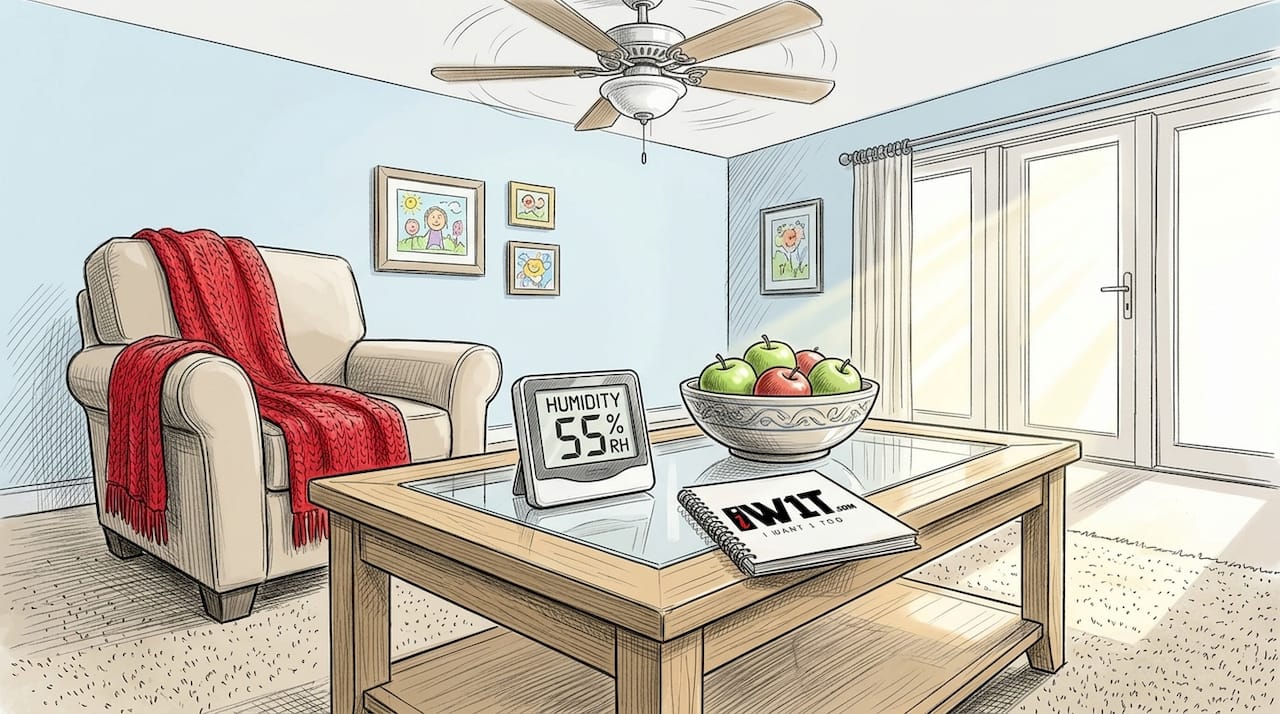
Humidity is the most underestimated variable. Humidity outside 40 to 60% RH causes discomfort even when the temperature reads correctly. Above 60% RH, air feels sticky and heavy. Below 40% RH, skin dries out, throats feel scratchy, and static electricity builds up on fabrics. A dehumidifier on muggy summer days and a humidifier during dry winter heating periods address both extremes. Monitor carefully, though. Over-humidifying a poorly ventilated room encourages mould growth on cold surfaces.
Fans increase air speed, making rooms feel cooler by accelerating evaporation from skin and increasing convective heat loss. A ceiling fan running at medium speed in summer mode, blowing air downward, is one of the most energy-efficient comfort tools available. The Amico ceiling fan range offers reversible, noiseless operation that works in both summer and winter modes, making it a practical year-round investment.
| Condition | Problem caused | Practical fix |
|---|---|---|
| Humidity above 60% RH | Sticky, heavy air | Dehumidifier, improved ventilation |
| Humidity below 40% RH | Dry skin, static | Humidifier, reduce heating output |
| Still air above 22°C | Stuffy, warm feeling | Desk fan or ceiling fan at medium speed |
| High radiant temperature | Uncomfortable near windows | Insulating curtains, reflective blinds |
Pro Tip: In winter, reverse your ceiling fan to run clockwise at low speed. This pushes warm air that has risen to the ceiling back down the walls without creating a cold draught.
How do insulation, window treatments, and HVAC maintenance improve comfort?
Once you have addressed reversible fixes, longer-term upgrades deliver more stable and lasting results. These are the measures that reduce the gap between what your heating or cooling system produces and what your body actually feels.
- Improve insulation in the loft and walls. Insulation and energy-efficient windows reduce heat loss in winter and limit heat gain in summer, stabilising indoor conditions without constant system adjustments.
- Fit low-emissivity window film. Applied directly to existing glass, low-e film reflects radiant heat back into the room in winter and blocks solar gain in summer. It costs far less than full window replacement and is reversible.
- Service your HVAC system annually. Dirty or clogged air filters reduce HVAC efficiency and create uneven heating and cooling zones across rooms. Replacing a filter takes five minutes and costs under £15.
- Install a programmable thermostat. Programmable thermostats optimise HVAC schedules to match your routine, saving energy without sacrificing comfort during occupied hours.
- Add external shading. Awnings, external roller blinds, or even well-placed climbing plants reduce solar heat gain before it enters the glass, which is far more effective than managing it once it is already inside.
| Upgrade | Approximate cost | Primary benefit |
|---|---|---|
| Loft insulation (top-up) | £300 to £600 | Reduces winter heat loss significantly |
| Low-e window film | £20 to £80 per window | Cuts solar gain and radiant cold |
| HVAC filter replacement | £5 to £15 | Restores airflow and even heat distribution |
| Programmable thermostat | £30 to £150 | Matches heating to your schedule |
For renters who cannot make structural changes, smart home gadgets like smart plugs and programmable fan controllers deliver a similar scheduling benefit without any permanent installation.
What design and décor choices create a more inviting living space?
Comfort is not purely physical. The way a room looks and feels to the eye influences how warm, calm, or welcoming it seems, and several décor choices have measurable physical effects too.
- Layer soft textiles. Cushions, throws, and rugs add acoustic absorption as well as visual warmth. Hard, bare floors and walls reflect sound and make a room feel cold and clinical even at a comfortable temperature.
- Choose natural fibres for warmer months. Cotton and linen feel cooler against skin than synthetic fabrics because they absorb moisture more readily. Swapping a polyester throw for a cotton one in summer is a free comfort upgrade.
- Place rugs strategically near cold surfaces. A rug between your feet and a cold stone or tile floor reduces radiant asymmetry, the uncomfortable sensation of one body surface being much colder than another.
- Arrange seating away from cold walls and windows. A sofa placed directly against an external wall in winter sits in a cold radiant zone. Moving it 30 centimetres inward makes a perceptible difference to comfort without any other change.
- Use window treatments for dual purpose. Thermal-lined curtains manage heat and light simultaneously. For ideas on combining privacy and thermal control, the guide on stylish window treatments covers practical options for UK homes.
Pro Tip: Wall hangings and large canvas prints on external walls add a thin layer of insulation and reduce the cold radiant effect from the wall surface behind them. Style and function in one.
Key takeaways
Enhancing home comfort requires tuning temperature, humidity, airspeed, and radiant surfaces together, not adjusting the thermostat in isolation.
| Point | Details |
|---|---|
| Measure before you act | Log temperature and humidity at seated height for one week before making any changes. |
| Target 40 to 60% RH | Humidity outside this range causes discomfort regardless of how accurate the thermostat reads. |
| Fans fix more than heat | Increasing airspeed with a ceiling or desk fan improves perceived comfort without lowering temperature. |
| Reversible fixes first | Seal draughts, manage curtains, and clear vents before spending money on devices or upgrades. |
| Maintain your HVAC filter | A clean filter restores airflow and prevents uneven heating zones across rooms. |
What I have learned from tuning comfort in real homes
Most people I speak to have spent years adjusting the thermostat up and down, never quite finding the right setting. The thermostat controls one variable out of six. Chasing it alone is like trying to tune a guitar by adjusting only the first string.
The insight that changes everything is measurement. Once you see that your living room sits at 55% RH in summer and your bedroom drops to 32% RH in winter, you stop guessing and start fixing the right things. A hygrometer costs less than a takeaway meal and gives you more useful data than any smart speaker.
For renters, the reversibility principle is not just practical, it is liberating. You do not need a landlord's permission to seal a letter box, move a sofa, or run a fan. These changes are yours to make and yours to undo. I would always recommend starting there before lobbying for double glazing.
One caution I feel strongly about: do not over-humidify. I have seen homes where a humidifier ran continuously through winter and produced condensation on every cold surface by February. The acceptable humidity range exists for a reason. Stay within it, and you get comfort. Exceed it, and you get mould.
Smart devices can assist without intrusion. A programmable plug on a fan or humidifier, set to run during the hours you are home, costs under £15 and removes the need to remember anything. That is the kind of quiet automation that actually sticks.
— Scott
Practical products to improve your home comfort from Iw1t

Iw1t stocks a curated range of home comfort products chosen for practical performance in UK homes. Whether you need a portable air conditioner for a room without fixed cooling, a humidifier for dry winter air, or soft textiles to add warmth and acoustic comfort, the range covers the full spectrum of what this guide recommends. Every product is selected with everyday usability in mind, arrives in discreet packaging, and is backed by the kind of personal service you expect from a family-run business. Browse the full home comfort range at Iw1t and find the right tools to make your living space work properly for you.
FAQ
What is the ideal indoor humidity for home comfort?
The accepted comfort range for relative humidity is 40 to 60% RH, as set out in ASHRAE 55-2023 guidance. Readings outside this band cause discomfort through stickiness, dryness, or static, even when the temperature is correct.
Can I improve home comfort without making permanent changes?
Yes. Sealing draughts with foam tape, managing curtains to block or retain heat, clearing radiators, and using fans are all reversible steps that produce measurable improvements without any structural work.
How often should I replace my HVAC air filter?
Most manufacturers recommend replacing standard filters every one to three months. A clogged filter restricts airflow, forces the system to work harder, and creates uneven temperature zones across rooms.
Do fans actually make a room cooler?
Fans do not lower air temperature, but they increase airspeed, which accelerates evaporation from skin and makes the room feel several degrees cooler. A ceiling fan at medium speed is one of the most energy-efficient comfort tools available.
How do I make a cosy atmosphere in a rented home?
Layer soft textiles like rugs, throws, and cushions to add warmth and acoustic comfort. Arrange seating away from cold external walls, use thermal-lined curtains, and explore decorating for comfort ideas that require no permanent fixtures.