
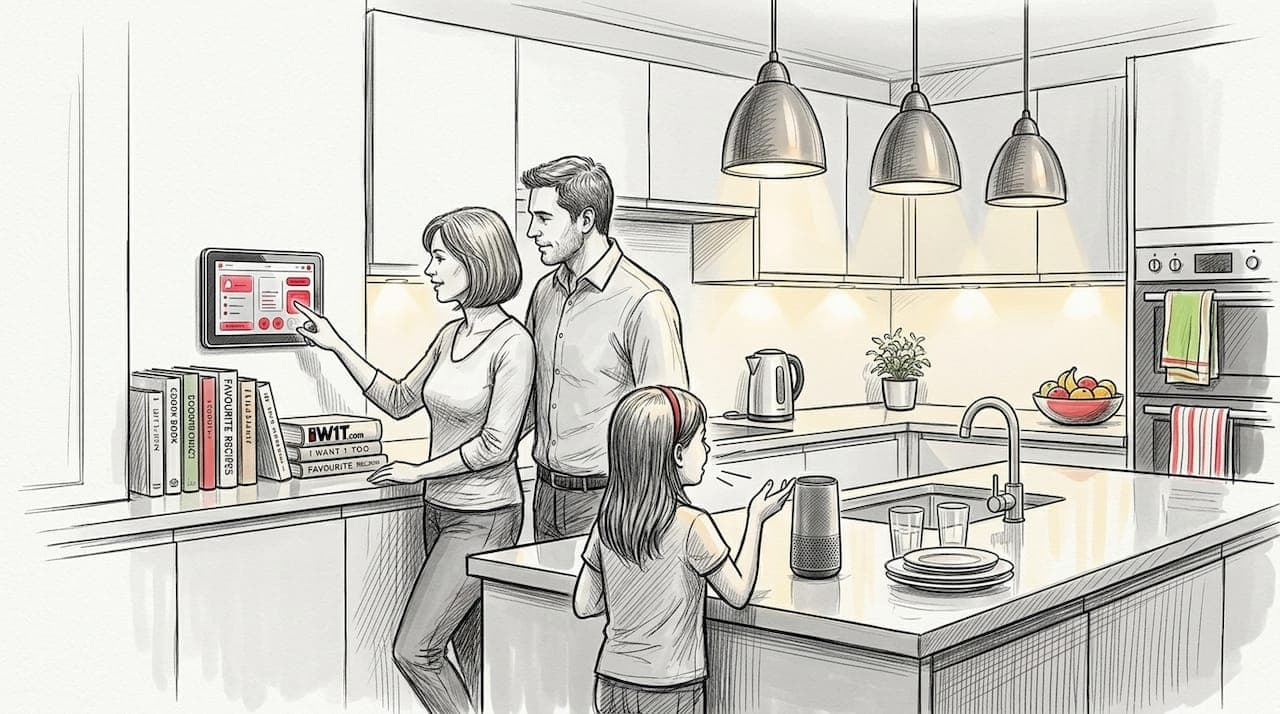
Smart home gadgets have a reputation problem. Many homeowners assume they are expensive toys that require a computer science degree to set up, or that they hand your personal data straight to tech giants. The reality in 2026 looks quite different. If you are weighing up why choose smart home gadgets, the honest answer sits in three places: the technology has genuinely matured, the benefits of smart home devices are now measurable and practical, and the barriers that once put people off have largely been engineered away. This guide cuts through the noise and gives you the specifics.
Table of Contents
- Key takeaways
- Why smart home technology works better now
- The real benefits of smart home devices
- Privacy and security: what you need to know
- How to choose the right smart home gadgets
- My take on building a smart home that actually works
- Ready to start your smart home?
- FAQ
Key takeaways
| Point | Details |
|---|---|
| Local-first protocols changed the game | Matter and Thread let devices work without internet, solving reliability problems that plagued older systems. |
| Energy savings are real and quantifiable | Smart thermostats can cut heating and cooling bills by 12 to 15 per cent annually, paying for themselves quickly. |
| Privacy risks vary by device type | Voice assistants carry the highest perceived risk; thermostats and security devices score much better with users. |
| Start with a problem, not a product | Identify your biggest daily friction point first, then choose gadgets that solve it directly. |
| Matter certification prevents lock-in | Buying certified devices means you can use Apple, Google, or Amazon ecosystems without replacing hardware later. |
Why smart home technology works better now
The biggest shift in smart home technology over the past two years has nothing to do with flashier screens or louder speakers. It is about how devices talk to each other and where that conversation happens.
Older systems relied on fragmented protocols. Zigbee, Z-Wave, and various proprietary standards meant a bulb from one brand rarely spoke to a hub from another without frustrating workarounds. The Matter smart home protocol changed that by creating a unified standard that devices from different manufacturers can share. More importantly, Matter runs commands locally over your home network using IPv6, so your smart lights still turn on during a broadband outage. Cloud dependency was one of the loudest complaints about early smart home gadgets. Local-first design eliminates it.
Thread is the wireless mesh protocol that underpins Matter for battery-powered devices. Think of it as the nervous system connecting sensors, locks, and smaller gadgets without draining their batteries. Thread devices route signals through each other, so the network grows stronger as you add more devices rather than more congested.
What you need to make it work
Thread requires a Thread Border Router to connect the mesh to your home's IP network. The good news is that many devices you may already own, including recent HomePod mini, Google Nest Hub, and Amazon Echo units, act as border routers out of the box. For larger homes, placing one border router per floor and spacing them apart improves mesh reliability and extends battery life on connected sensors.
Pro Tip: Avoid placing your Thread border router next to the router itself. Spreading them across the home creates a stronger, more evenly distributed mesh and reduces connection drop-offs near outer walls.
| Protocol | Cloud reliance | Cross-brand support | Battery device support |
|---|---|---|---|
| Matter over Thread | None for local | Yes, all major platforms | Yes, via Thread mesh |
| Zigbee | Partial | Limited | Yes |
| Z-Wave | Partial | Limited | Yes |
| Wi-Fi only | High | Varies | Poor |
The real benefits of smart home devices
The advantages of smart home technology extend well beyond asking a speaker to play music. Here is where homeowners see genuine, day-to-day return on their investment.
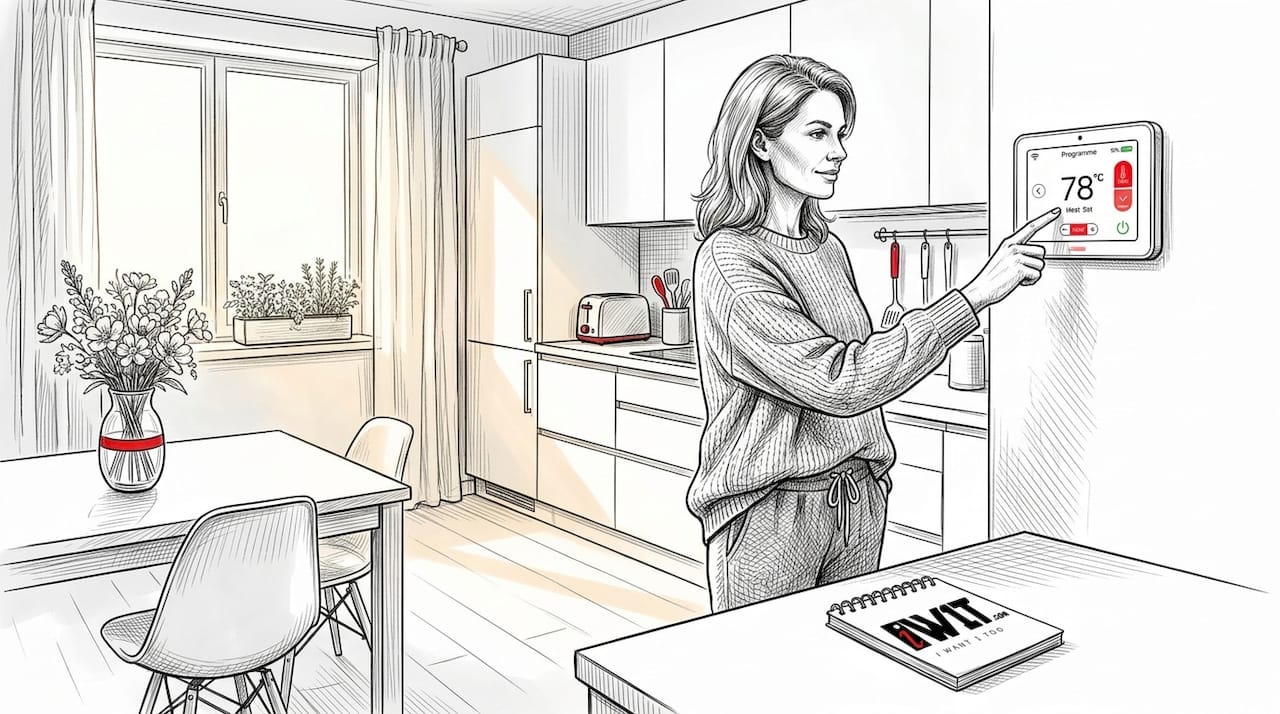
Convenience that compounds. Remote control of lights, locks, and heating is table stakes. The real value comes from automations. A well-configured routine means your heating drops when the last person leaves the house, the lights adjust to the time of day without you touching a switch, and your front door unlocks as you arrive home. Improving your home environment through automation has a measurable effect on daily stress and mental comfort.
Security that is actually useful. Smart locks, cameras, and sensors give you remote alerts and management that traditional alarms cannot match. You can see who is at the door from another country, grant temporary access to a tradesperson without being home, and get an instant notification if a smoke sensor triggers. That kind of layered monitoring is not just reassuring. It changes how you interact with your property.
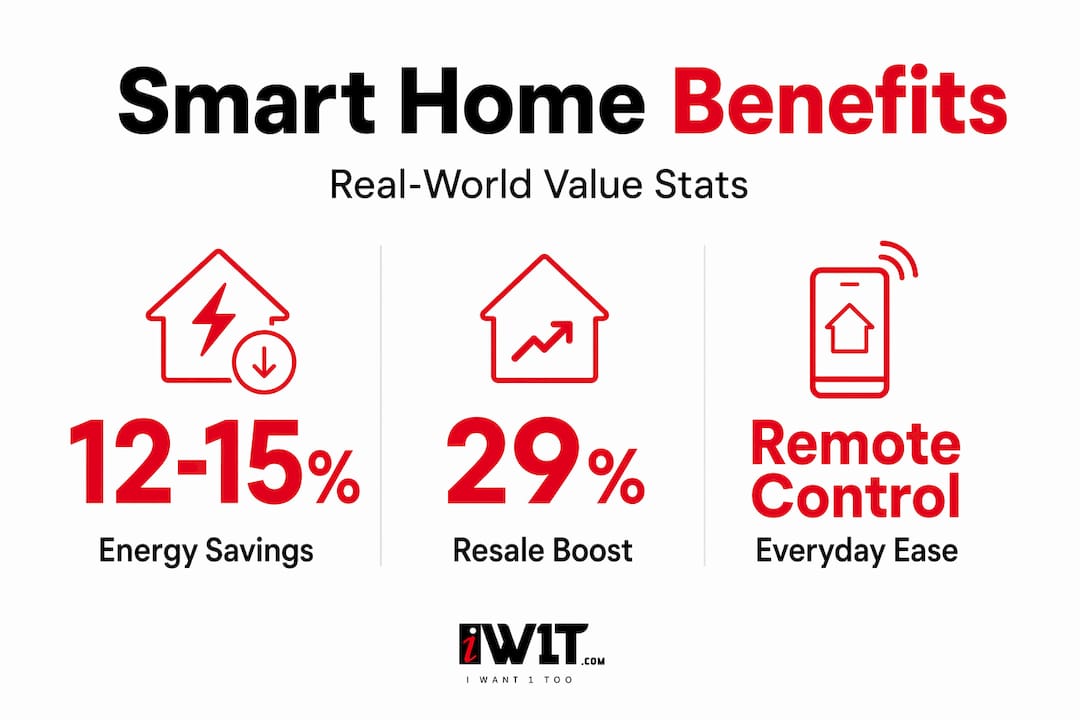
Energy savings with numbers behind them. Smart thermostats are the clearest example of how smart gadgets improve life through cost reduction. Devices like the Google Nest Learning Thermostat can save 12 to 15 per cent on annual heating and cooling costs. That translates to roughly £100 to £120 saved each year without any other changes to your behaviour. Combined with real-time energy alerts, you can monitor consumption patterns and cut waste you did not even know existed.
Accessibility for everyone in the household. Voice control and automated routines are genuinely life-changing for older adults or anyone with limited mobility. Controlling lights, locks, and temperature without walking across the house or fumbling with switches removes friction that many people have simply accepted as unavoidable.
Home resale value. This is where why invest in smart gadgets gets a financial argument that surprises most people. 29 per cent of buyers say they would pay more for a home equipped with smart technology, and such properties tend to sell faster in competitive markets. Smart locks, thermostats, and security systems are the features buyers value most.
Privacy and security: what you need to know
Choosing smart home gadgets means making decisions about what you bring into your home network. That deserves honest attention, not alarm.
A 2025 NIST survey of over 400 smart home users found that voice assistants are seen as most problematic for privacy and security, while users feel most confident about security cameras and thermostats. That distinction matters when you are deciding which devices to prioritise. If privacy is your primary concern, starting with a smart thermostat or sensor kit carries far less perceived and actual risk than beginning with a voice assistant in every room.
"Local control and network segmentation are the two most effective measures a homeowner can take. Isolate your voice assistants from other IoT devices, use strong access controls, and limit which devices have cloud connectivity." NIST cybersecurity guidance, 2025
Network segmentation is the practice of putting your smart devices on a separate Wi-Fi network from your phones and computers. Most modern routers support a guest network, and that is the simplest way to implement it. If a device is compromised, it cannot reach your personal data.
The advantages of smart home technology in this area come back to Matter. Because Matter devices process commands locally, they are not constantly sending data to manufacturer servers. Less cloud traffic means fewer opportunities for interception and fewer third parties holding your usage data.
Pro Tip: Set a calendar reminder every three months to check for firmware updates on all smart devices. Manufacturers regularly patch security vulnerabilities, and most smart home incidents happen on devices that have not been updated in over a year.
How to choose the right smart home gadgets
Knowing why choose smart home gadgets is only half the equation. Making choices that actually suit your home and lifestyle is where most people go wrong. The benefits of entry-level gadgets for beginners are best realised when you start with a clear problem to solve rather than a brand to commit to.
Here is a practical approach that works for most homes:
- Identify your biggest daily friction point. Is it forgetting to turn off lights? Worrying about the front door? Heating bills that feel out of control? Start with the device category that solves that specific problem.
- Check for Matter certification before you buy. Matter-certified products work across Apple HomeKit, Google Home, and Amazon Alexa. This protects your investment if you change ecosystems later.
- Sort out your border router situation. Check whether your existing smart speakers support Thread. If not, a dedicated hub is worth adding before you buy battery-powered sensors.
- Add devices in phases. Resist the urge to automate everything at once. Adding one or two devices, learning how they behave, and then expanding gives you time to build good automations rather than a confusing tangle of rules.
- Bridge, do not bin, your existing devices. Many older Zigbee and Bluetooth Low Energy devices can be bridged into Matter ecosystems using compatible hubs. Some proprietary features may not carry over, but basic control usually does. This saves money and reduces the waste of replacing working hardware.
When thinking about smart home décor integration, it is worth considering how devices fit the visual character of your rooms as well as the practical layout. Cables, hubs, and sensors placed thoughtlessly can undermine a well-designed space.
My take on building a smart home that actually works
I've set up enough smart home systems to know that the biggest mistakes are rarely technical. They are about impatience and skipping fundamentals.
The move to local-first protocols like Matter over Thread has genuinely transformed the experience. I've seen smart home setups where a broadband outage used to mean manually overriding every device. Now, automations keep running because the hub and devices talk directly to each other on the home network. That alone is reason enough to migrate away from older cloud-dependent systems.
What I find most underappreciated is network preparation. People spend hours choosing the right smart lock but five minutes on their Wi-Fi setup. Border router placement, channel separation between 2.4GHz and 5GHz bands, and keeping devices within good mesh range make the difference between a reliable system and one that frustrates you into switching everything off.
On privacy, my view is that the risk is manageable but cannot be ignored. I keep voice assistants on a separate network segment and only use them for low-sensitivity tasks. For security cameras and locks, I choose brands that are transparent about their data policies and support local storage. The smart home devices pros and cons around privacy almost always come down to configuration, not the device itself.
Start with one room. Get it working reliably. Then expand. A well-built smart home takes months, not weekends, and that is not a flaw. It is how you end up with something you actually use every day.
— Scott
Ready to start your smart home?
Iw1t has brought together a curated selection of smart home gadgets chosen specifically for UK homeowners who want practical results without the guesswork.

Every product in the Iw1t range has been selected for quality, compatibility, and real-world usability. Whether you are starting with a smart thermostat to cut your energy bills, a security kit for peace of mind, or automation accessories to make daily routines feel effortless, you will find options that meet the criteria this guide has set out. Iw1t ships in discreet, unobtrusive packaging, and the team understands that most buyers are not tech specialists. They are people who want their home to work better. Browse the full smart home gadgets range at Iw1t and find the right starting point for your setup.
FAQ
Why choose smart home gadgets over traditional devices?
Smart home gadgets offer remote control, automation, energy savings, and enhanced security that traditional devices cannot replicate. Modern protocols like Matter make them more reliable and easier to set up than earlier generations.
Are smart home gadgets worth the investment?
Yes, particularly for energy and security. Smart thermostats alone can save 12 to 15 per cent on annual heating and cooling bills, and homes fitted with smart technology attract buyers willing to pay a premium.
How do smart home gadgets affect privacy?
Privacy risk varies by device. Voice assistants carry the highest risk, while thermostats and security sensors are rated more favourably. Network segmentation and local-first devices like those using Matter significantly reduce exposure.
What is Matter and why does it matter for buyers?
Matter is a universal smart home protocol that allows devices from different brands to work together on your local network without cloud dependency. Buying Matter-certified products prevents brand lock-in and improves reliability.
How do I start building a smart home without overcomplicating it?
Identify the one daily problem you most want to solve, buy a Matter-certified device that addresses it, and add further gadgets gradually. This phased approach reduces setup complexity and prevents incompatibility issues.