

Your bedroom should feel like the best part of your day. Yet so many bedrooms end up feeling flat, cold, or uninspiring despite genuine effort to decorate them. Learning how to create a cozy bedroom isn't about spending a fortune on new furniture. It's about layering the right sensory elements, in the right order, so the room works on your nervous system rather than against it. This guide walks you through everything, from the materials you need to the mistakes that quietly undermine all your good work.
Table of Contents
- Key takeaways
- How to create a cosy bedroom: what you need to start
- Layering comfort: bedding, rugs, and soft furnishings
- Cosy bedroom lighting: the element that does the most work
- Personalising your space with meaning and scent
- Common mistakes that undermine cosiness
- My honest take on what actually works
- Find what you need at Iw1t
- FAQ
Key takeaways
| Point | Details |
|---|---|
| Lighting leads everything | Warm white bulbs at 2700K and layered light sources transform the feel of any bedroom. |
| Layer your bedding thoughtfully | Use cotton percale sheets with a 200 to 400 thread count, then add textures like wool and faux fur on top. |
| Declutter before you decorate | Removing clutter and rearranging what you already own often outperforms buying new items. |
| Address multiple senses | Sight, touch, and scent all contribute to a genuinely cosy atmosphere, not just visual styling. |
| Personalise with restraint | Meaningful objects and warm scents add emotional warmth without crowding the space. |
How to create a cosy bedroom: what you need to start
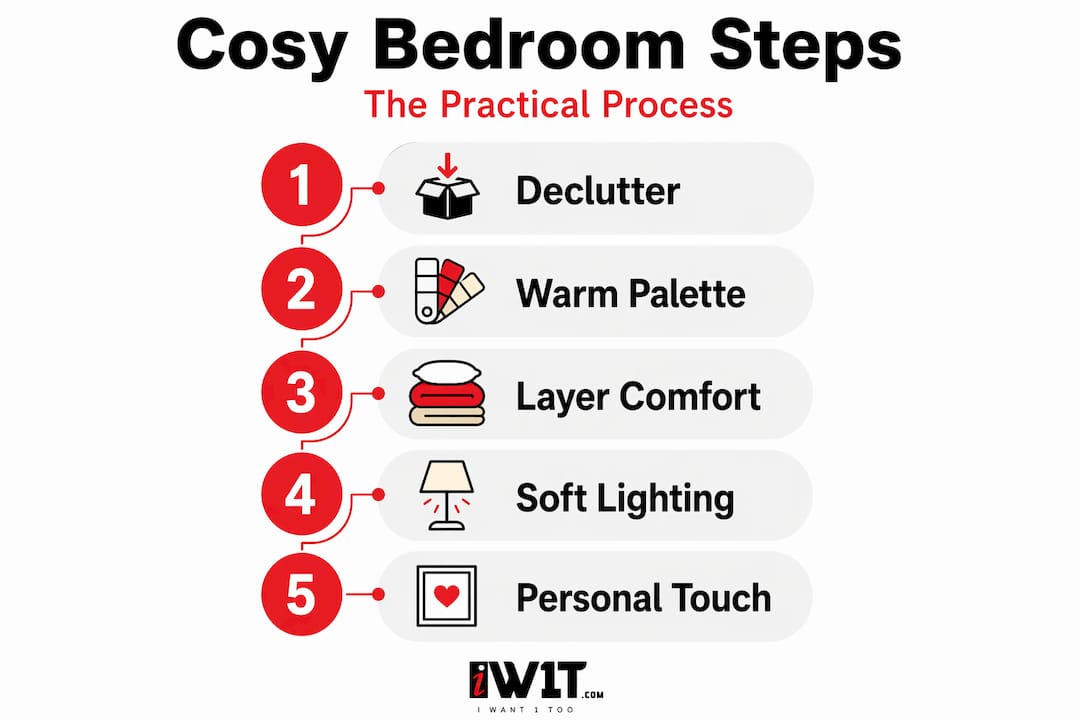
Before you move a single cushion, it helps to understand what actually makes a bedroom feel cosy. The answer isn't a style or a colour. It's a combination of sensory conditions that signal safety and warmth to your brain.
Here is what you will need to get started:
- Warm light sources: Side lamps, floor lamps, or LED strip lights. Overhead lighting alone creates a flat, clinical feel.
- Quality bedding: Cotton percale sheets with a 200 to 400 thread count offer the best balance of breathability and softness.
- Throws and extra blankets: Wool, fleece, or chunky knit throws are ideal.
- A large area rug: Especially if you have hard flooring. Cold feet are the enemy of cosiness.
- Curtains or heavy drapes: Floor length panels add visual warmth and block draughts.
- Personal items: A few well-chosen books, framed photos, or a candle.
One thing most people overlook at this stage is the importance of decluttering. Rearranging existing furniture and decluttering are often more impactful than expensive purchases. Before you buy anything new, take everything off your surfaces and decide what earns its place back.
Colour palette matters too, but perhaps less than you think. Warm tones like terracotta, ochre, dusty rose, and deep sage read as inviting. Cool greys and stark whites tend to push the room in the opposite direction. You do not need to repaint. Adding warm-toned textiles and lampshades can shift the entire feel without touching the walls.
| Element | What to look for | Why it matters |
|---|---|---|
| Bedding | 200 to 400 thread count cotton percale | Soft, breathable, and durable |
| Lighting | 2700K warm white bulbs | Mimics sunset light, promotes relaxation |
| Rugs | Thick pile, large enough to extend past the bed | Adds warmth underfoot and defines the space |
| Curtains | Floor to ceiling, wider than the window frame | Creates visual height and insulating warmth |
| Throws | Mixed textures: wool, knit, faux fur | Adds tactile depth and invites you to settle in |
Layering comfort: bedding, rugs, and soft furnishings
This is where a cosy bedroom is genuinely built. The order in which you layer matters as much as the materials themselves.
- Start with your fitted sheet. Choose cotton percale for a crisp but soft feel. Avoid microfibre if you run warm, as it traps heat in an uncomfortable way.
- Add a flat sheet or lightweight blanket. This creates the first layer of warmth and gives you something to pull up without committing to the full duvet on warmer nights.
- Place your duvet or comforter. A tog rating between 10.5 and 13.5 suits most UK bedrooms for most of the year.
- Layer a textured throw across the foot of the bed. This is purely for comfort and visual interest. A chunky knit or velvet and wool mix works beautifully.
- Add pillows in odd numbers. Three or five creates a relaxed, plentiful feel without looking like a hotel catalogue.
For your floor, a large area rug placed so it extends at least 30cm beyond either side of the bed makes an enormous difference. It anchors the space and means your feet hit something soft every morning.
Curtains deserve more attention than they usually get. Hanging curtains at ceiling height and using panels wider than the window frame does two things at once: it makes the room feel taller and warmer, and it creates a soft, enveloping backdrop. Even in a rented flat, removable ceiling hooks can make this work.
If you have room, a small armchair or upholstered bench adds an enormous amount of character. It creates a reading nook or a place to lay tomorrow's clothes that isn't the floor. It signals that this room is for living in, not just sleeping.
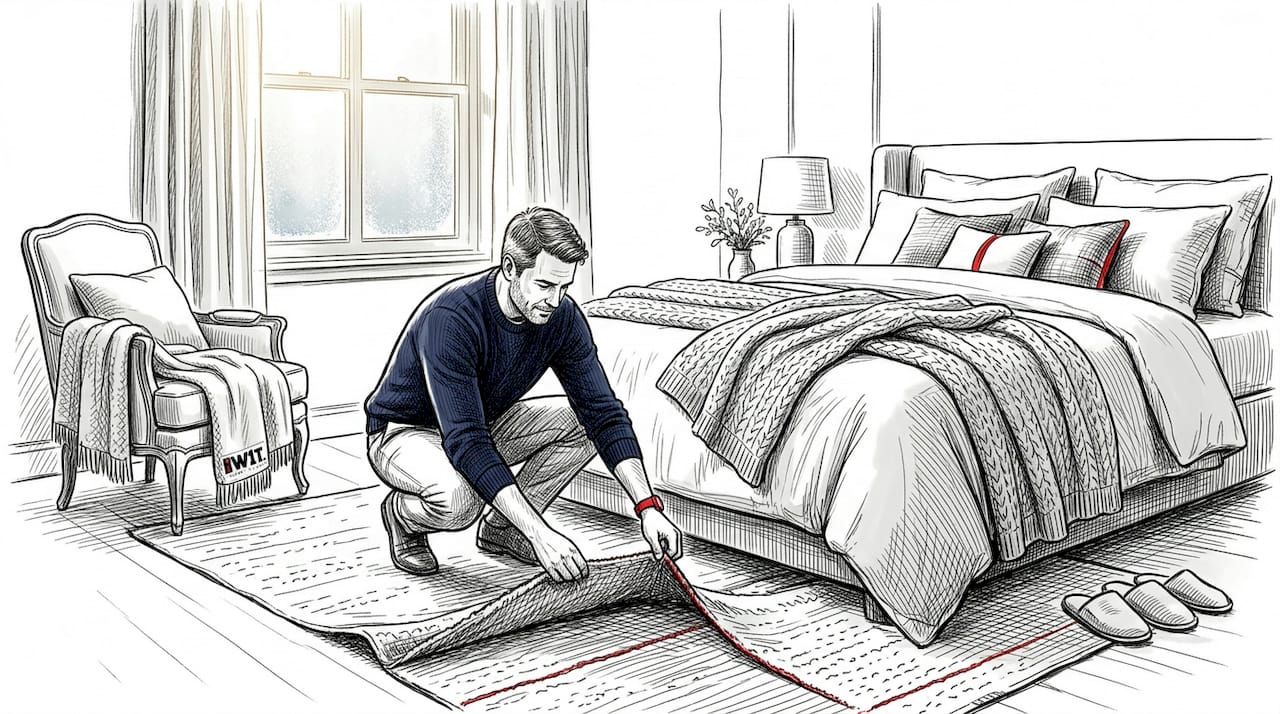
Pro Tip: Mix at least three different fabric textures in your bedroom. Velvet against linen against faux fur creates a layered, tactile richness that a single fabric type simply cannot achieve. Variety is what makes a room feel genuinely considered.
Cosy bedroom lighting: the element that does the most work
Most people get their bedroom lighting wrong in the same way. They rely on a single overhead light, perhaps with a lampshade, and wonder why the room still feels stark after all their decorating effort. Layered lighting performs around 90% of the work in creating a cosy bedroom aesthetic, and it is the element most consistently underused.
Here is how to build a lighting scheme that actually works:
- Replace any standard bulbs with 2700K warm white. The 2700K colour temperature mimics the warmth of a sunset and tells your body it is time to wind down.
- Add bedside lamps at eye level. When you are lying down, the light source should be at roughly your reading height, not above your head.
- Consider a floor lamp in a corner. It creates depth and fills the room with soft, ambient light rather than direct glare.
- Try LED strips behind your headboard or under your bed frame. Used at low brightness, they create a warm glow without any visible bulb.
- Fit dimmers wherever possible. Smart bulbs and dimmers let you shift from reading light to sleep-ready atmosphere in seconds, without getting out of bed.
The single biggest upgrade you can make to any bedroom, before buying a single new piece of furniture, is sorting your lighting. One warm lamp in the right place outperforms an entirely new colour scheme.
For more on how indoor lighting affects mood and wellbeing, the science behind the right bulb choice is worth understanding before you shop.
Pro Tip: Never put your bedroom on a single light switch. Even a simple plug-in lamp on a timer creates a natural wind-down ritual that your body will start to anticipate.
Personalising your space with meaning and scent
A bedroom that feels truly cosy rather than just nicely decorated is almost always a personal one. This is the step where bedroom decor for comfort moves beyond technique and into expression.
Scent is one of the most underused tools in bedroom design. Lavender, vanilla, and sandalwood are all well-documented for promoting calm and aiding sleep. A reed diffuser or a simple pillow spray costs very little and adds an invisible but powerful layer to the sensory atmosphere.
Here is how to personalise without over-styling:
- Choose three to five meaningful objects. A framed photo, a favourite book, a small plant, a candle. Not twenty things. Three to five.
- Add a plant or two. Indoor plants reduce stress and heart rate, and they soften hard surfaces visually in a way that no ornament quite replicates.
- Hang art with warm tones. Abstract prints in ochre, rust, or terracotta feel immediately warmer than cool-toned photography.
- Rotate accessories seasonally. Switching out a throw or moving a small lamp in autumn creates the sense that the room is alive and responsive to the season.
One principle worth following closely: less is more when it comes to bedroom decor. Clutter creates visual noise, and visual noise is the opposite of the calm you are trying to build. If something does not add meaning or function, it is working against you.
For ideas on decorating with restraint while still making a space feel warm and personal, there are some excellent frameworks for deciding what stays and what goes.
Common mistakes that undermine cosiness
Even with good intentions, a few recurring mistakes can undo most of the work described above. Watch out for these:
- Keeping a bright overhead light as your only source. Multiple light sources at different heights are what create depth. One bulb, however warm, cannot do it alone.
- Buying cushions without a plan. Too many mismatched cushions create the exact visual clutter you are trying to avoid. Stick to a palette of two or three tones and a maximum of five pillows.
- Choosing cold or stark colours. Even if you love a cool palette, balance it with warm textiles and lampshades.
- Ignoring storage. A cosy room requires clear surfaces. Without adequate storage, clutter will always creep back.
- Keeping a workspace in the bedroom. Removing work items from the bedroom supports a clearer mental boundary between rest and productivity. Even covering a desk with a throw when not in use helps.
- Addressing only what you can see. A cosy bedroom addresses sight, touch, and scent simultaneously. Ignoring any one of those senses leaves the room feeling incomplete.
My honest take on what actually works
I have seen people spend significant sums on new beds, headboards, and bedroom furniture, only to end up with a room that still feels cold and impersonal. And I have seen bedrooms transformed by nothing more than two warm lamps, a chunky throw, and the removal of a pile of unopened post from the bedside table.
What I have learned is this: cosiness is a feeling, not a price point. The rooms that genuinely feel like sanctuaries are almost always the ones where the person in them made specific, intentional choices about light and texture, not the ones that got the most money spent on them.
Lighting is the single most powerful lever you have. Get it right, and almost everything else in the room looks better. Get it wrong, and even expensive furniture looks flat.
The other thing I keep coming back to is patience. You do not need to sort the whole room in one weekend. Add one lamp. Swap one set of bedding. Clear one surface. A cosy bedroom is defined by balancing functionality and emotional atmosphere, and you build that balance gradually, not all at once. Trust the process and resist the urge to fill every corner.
— Scott
Find what you need at Iw1t

If this guide has given you a clear picture of what your bedroom needs, Iw1t can help you get there without the overwhelm. As a family-run UK store, Iw1t curates a considered range of home comfort products that genuinely earn their place in your space, from warm lighting solutions and quality throws to practical storage accessories and personal décor items.
Every product is selected with the same principle this article is built on: comfort, function, and meaning over excess. Whether you are starting from scratch or adding the final layer to a room that is almost there, Iw1t stocks the kind of things you will actually use and love. Browse the full range and take the next step towards a bedroom that feels like yours.
FAQ
What makes a bedroom feel cosy?
A cosy bedroom combines warm lighting, layered textures, personal touches, and a clutter-free environment. Addressing sight, touch, and scent together creates the strongest effect.
What light bulbs should I use in my bedroom?
Use warm white bulbs at 2700K. This colour temperature mimics sunset light and helps your body prepare for sleep naturally.
How do I make a small bedroom feel cosy rather than cramped?
Use ceiling-height curtains to add visual height, keep surfaces clear, and rely on layered soft furnishings rather than additional furniture. Warm lighting also makes small rooms feel intimate rather than tight.
Do I need to redecorate to create a cosy bedroom?
Not at all. Rearranging what you already own and decluttering often creates more impact than buying new items. Start with lighting, then layer textiles, before spending anything significant.
How many cushions and throws are too many?
Aim for three to five pillows and one to two throws. Beyond that, you risk creating the visual clutter that works against the calm atmosphere you are building.