
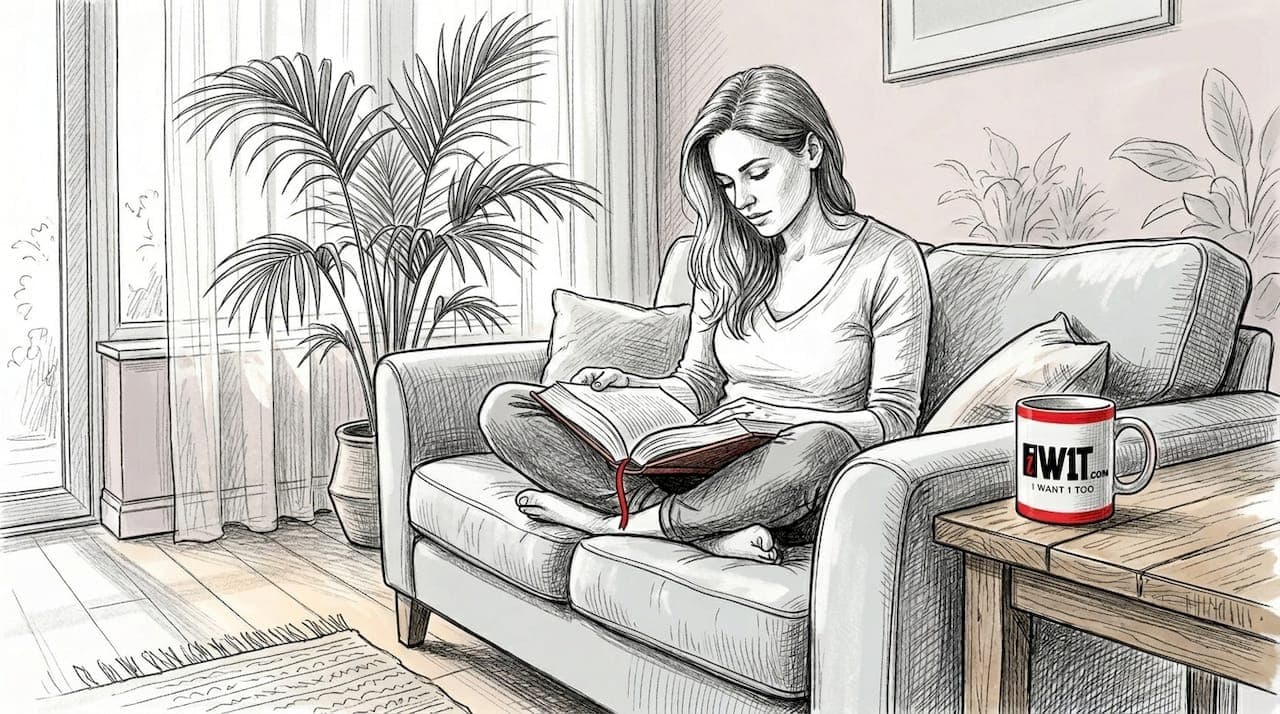
Your home should be a refuge, but for most people it quietly isn't. Clutter stacks up on surfaces, harsh overhead lighting buzzes through the evening, and the general disorder of daily life creates a low-level tension that never fully switches off. Learning how to create a relaxing space is less about buying the right candle and more about understanding what your environment is doing to your nervous system — and then making deliberate changes. This guide walks you through every stage, from clearing friction points to building sensory rituals that train your brain to unwind on cue.
Table of Contents
- Key takeaways
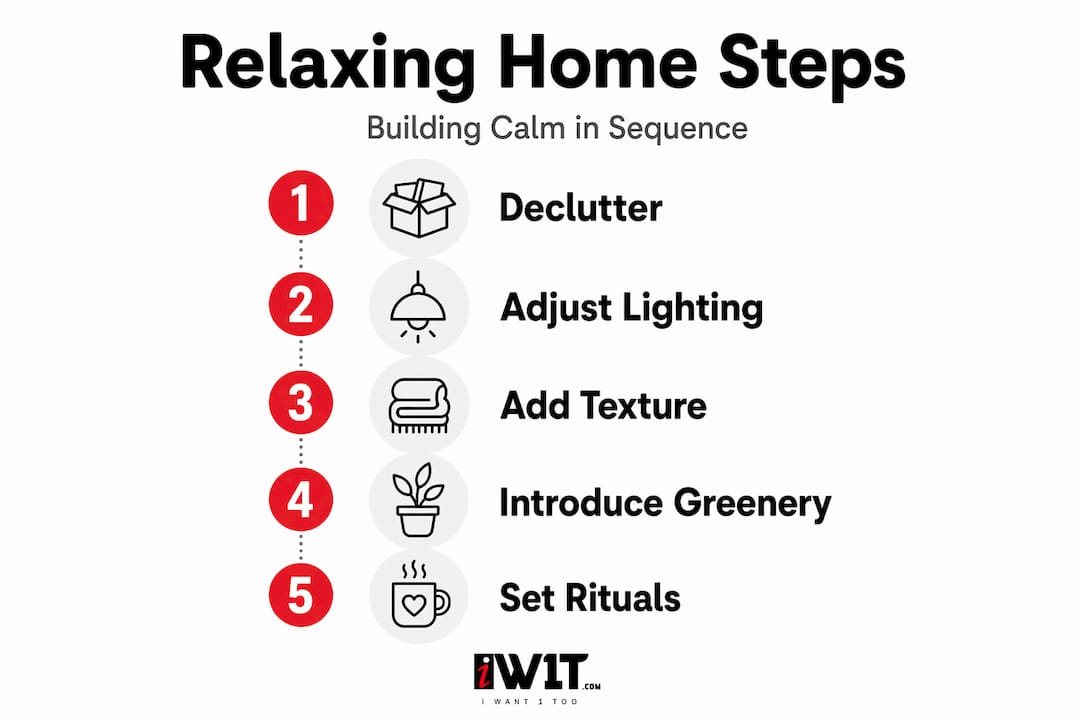
- How to create a relaxing space: start by removing friction
- Designing for calm: light, colour, and natural elements
- Furniture and organisation: function first
- Rituals and sensory cues that deepen calm
- Keeping your calming home working over time
- Scott's perspective: what actually moves the needle
- Find what you need at Iw1t
- FAQ
Key takeaways
| Point | Details |
|---|---|
| Remove friction points first | Decluttering one stress trigger before adding anything new delivers the fastest, most noticeable improvement. |
| Warm, layered lighting matters | Replacing harsh bulbs with warm, dimmable options after 7pm supports your circadian rhythm and speeds wind-down. |
| Colour and texture do the heavy lifting | Soft, natural palettes and tactile materials like linen and jute reduce visual overstimulation significantly. |
| Furniture size and placement are underrated | Right-sized seating with clear surfaces and hidden storage prevents clutter from creeping back in. |
| Rituals reinforce the effect | Small, repeated habits tied to your space train your brain to relax faster every time you enter it. |
How to create a relaxing space: start by removing friction
The design world has a useful phrase for this: mindful subtraction. Before you order a single cushion or reed diffuser, the most productive thing you can do is identify what is actively making your space feel tense. Designers consistently agree that removing visual clutter is more effective for calm than adding soothing décor on top of an already chaotic room.
A friction point is anything that catches your eye and triggers a micro-stress response. A pile of unopened post on the kitchen counter. A tangle of charging cables by the sofa. A chair that has become a permanent wardrobe. You likely walk past these things dozens of times a day without consciously registering them, but your brain notices every time.
Start with the room you already use for relaxation — your bedroom, living room, or a reading corner — because starting with the room you relax in daily prioritises impact and keeps the project manageable. Then identify your single biggest friction point and remove it before doing anything else. Not later. Today.
Practical steps to cut visual noise:
- Clear every horizontal surface completely, then return only items with a fixed purpose
- Use closed storage (baskets, boxes, cupboards) rather than open shelving where possible
- Establish a "landing zone" near your front door to catch bags, keys, and post before they migrate inward
- Digitise or file paperwork weekly rather than letting it accumulate
Pro Tip: Apply the "one in, one out" rule from the moment you start. Every new object entering your relaxation space requires the removal of an existing one. This single habit prevents the slow drift back to clutter that undoes most redesigns within weeks.
The psychological payoff of even modest decluttering is real. Removing one major friction point can immediately lower baseline alertness and create a measurable shift in how a room feels. You do not need to strip the space bare; you need to remove what does not belong.
You can explore more about this approach in the Iw1t guide to calm, stylish spaces using less.
Designing for calm: light, colour, and natural elements
Once the friction points are gone, you have a blank canvas. This is where most people rush to buy things. Resist that impulse a little longer, because the two decisions with the biggest return on effort are lighting and colour — and both cost far less than furniture.
Lighting: the most underused tool in home design
Warm, dimmable lighting after 7pm supports your circadian rhythm and creates a genuinely calming atmosphere as the evening progresses. The key detail that most people miss is colour temperature. Standard overhead bulbs tend to run at 4000K or above, which is a blue-white light that signals daytime alertness to your brain. Replacing those with bulbs in the 2700K to 3000K range — and adding a dimmer where possible — is arguably the single highest-return change you can make to design a peaceful room.
Practical lighting upgrades to consider:
- Floor and table lamps to replace or supplement harsh overhead fixtures
- Wall sconces for gentle ambient glow at eye level
- Warm LED candle bulbs in existing pendant fittings
- Battery-operated LED candles for surfaces where wiring is impractical
Pro Tip: Dim your lights after 7pm rather than waiting until bedtime. This one habit shifts your brain's wind-down process earlier and makes the transition to sleep noticeably easier over time.
For a deeper look at why this works, the Iw1t article on indoor lighting and mood covers the science in plain, practical terms.
Colour palettes and natural materials
The best colours for relaxation lean towards soft, desaturated tones: warm whites, dusty sage, pale clay, stone grey, and muted terracotta. These shades reduce visual stimulation without making a room feel cold or sterile.
| Colour category | Examples | Effect on mood |
|---|---|---|
| Warm neutrals | Cream, warm white, oatmeal | Grounding, creates openness |
| Soft greens | Sage, eucalyptus, moss | Calming, connected to nature |
| Muted earth tones | Clay, terracotta, sand | Cosy, reduces tension |
| Cool pastels | Dusty blue, pale lavender | Peaceful, lowers alertness |
Alongside colour, natural textures and soft palettes like jute, rattan, and linen reduce visual overstimulation and add a tactile grounding quality that synthetic materials rarely replicate. Pair a linen throw with a woven basket and a jute rug, and you have introduced biophilic texture without a single plant.
Speaking of plants: biophilic elements like greenery and natural light have measurable mental health benefits, even in everyday non-clinical settings. A small potted plant on a side table or a trailing vine near a window does genuine work.
Furniture and organisation: function first
A common mistake when setting up a relaxation space is choosing furniture based on aesthetics before function. A beautiful reading chair that gives you a sore back after twenty minutes is not a calming piece; it is a friction point waiting to happen.
A well-designed relaxation nook requires as little as six to eight square feet. You need a comfortable chair or floor cushion, a small side table for a drink or book, and a single warm light source. That is genuinely enough. Resist filling every corner because each additional object increases the visual load on the room.
Key principles for furniture and organisation in a calming space:
- Choose seating proportional to the space. Oversized furniture in a small room creates a cramped, pressured feeling.
- Prioritise surfaces that can stay clear. A small side table you always keep tidy beats a large coffee table that inevitably fills up.
- Use storage with lids or doors rather than open bowls and trays, which just give clutter a slightly tidier home.
- Create a designated basket or drawer for tech devices. Out of sight genuinely means out of mind.
Minimising notifications and multi-purpose tech use in your relaxation space supports better mental presence. This does not mean banning your phone. It means the space has a rule: devices go in the basket when you arrive, and you only retrieve them when you deliberately choose to. That small boundary makes a large difference.
Consistent rules for calming space use reinforce what the space is for, which over time makes relaxing there faster and easier. The space needs to know what it is, and so do the people in it.
Rituals and sensory cues that deepen calm
The physical environment does most of the heavy lifting, but rituals are what turn a nice-looking room into a space that genuinely works for you. Environmental cues train the brain through repetition. Once your brain associates a specific sequence of actions with rest, personal rituals triggered by environmental cues can activate a relaxation response faster each time you enter the space.
You do not need an elaborate routine. The most effective approach is a short, repeatable sequence tied to entering the space:
- Dim the lights or switch from overhead to lamp lighting
- Make a warm drink or pour a glass of water
- Put devices in their designated spot
- Sit in your specific chair or cushion before doing anything else
- Take three slow breaths before picking up a book, starting breathwork, or simply sitting quietly
That sequence, done consistently, becomes a neurological shortcut to calm. Over weeks it stops feeling like effort and starts feeling like relief.
For sensory supports, keep them minimal and consistent. A single scent you use only in this space (a candle, a diffuser, or even a small spray for the chair) becomes a powerful cue because the brain links smell to memory and state more quickly than any other sense. Gentle ambient sound, whether rain, a low-key playlist, or silence, rounds out the environment without overloading it.
Pro Tip: Small repeated rituals work better when they are boring. The more predictable your sequence, the faster the brain recognises it and shifts gears. Resist the urge to keep things interesting.
Keeping your calming home working over time
A relaxing space is not a project you finish; it is a habit you maintain. The distinction matters because it changes how you approach setbacks. Clutter will return. Seasons will change. Your needs will shift. None of that means the space has failed.
Signs your space may need a refresh:
- You avoid spending time in it or feel vaguely reluctant to go there
- Surfaces have accumulated objects that do not belong
- The lighting feels wrong for your current routine or the season
- Your rituals have faded and you cannot remember the last time you used the space intentionally
When any of these apply, a 20-minute reset is usually enough. Clear the surfaces, swap the light bulb if the colour temperature has drifted, and run through your ritual sequence once with intention.
Seasonal adjustments are worth building into your routine. In winter, add a warmer throw and bring lighting closer to eye level. In summer, pull back heavy curtains and lean into natural light during the morning hours. The home décor and wellbeing connection is ongoing rather than one-off, and your space benefits from reflecting where you are now, not where you were when you first set it up.
Progress matters more than perfection here. If your space brings you genuine calm three evenings a week rather than seven, that is still three evenings of better sleep, lower stress, and improved mood. Celebrate that.
Scott's perspective: what actually moves the needle
I've spent a lot of time looking at before-and-after home transformations, and the pattern is consistent: people who succeed do less, not more. The instinct is always to add. A new lamp, another cushion, a diffuser, a plant. Sometimes those additions help. More often they become the next round of clutter.
What I've found actually works is starting with a ruthless audit of what needs to go. Not what could go. What needs to go. That pile of magazines from three months ago. The broken lamp you keep meaning to fix. The random decorative object you do not even like but feel guilty about removing. Gone. All of it.
Lighting is the second lever, and it is dramatically underused. I've seen rooms transformed by nothing more than swapping a single ceiling bulb and adding a lamp in the corner. The furniture stayed the same. The colour stayed the same. The feeling of the room shifted completely.
What I'd push back on is the idea that you need a dedicated room. Some of the most effective calming spaces I've come across are a single armchair by a window with a side table and a warm lamp. Six square feet, intentionally used. That is enough to start with, and it's enough for most people to maintain without the redesign falling apart within a month.
— Scott
Find what you need at Iw1t

At Iw1t, we have curated a range of practical, quality products specifically chosen to support homes that feel genuinely restful. Whether you are looking for warm lighting options to replace harsh overheads, soft throws and natural-texture cushions for your seating area, or neat storage baskets to get tech and clutter out of sight, you will find what you need without having to wade through hundreds of irrelevant results. As a family-run business, we keep our range focused on things that actually improve daily life. Browse at your own pace, and if you have questions about what might suit your space, we are always happy to help.
FAQ
What is the quickest way to make a room feel calmer?
Remove the single largest source of visual clutter before changing anything else. Research shows that one decluttered friction point immediately reduces baseline stress in a space.
What colours are best for a relaxing space?
Soft, muted tones including warm white, dusty sage, pale clay, and stone grey are the most effective. These shades lower visual stimulation without making a room feel cold or uninviting.
How much space do I need for a relaxation corner?
As little as six to eight square feet is sufficient. A comfortable chair, a side table, and a warm lamp are all you need to set up a relaxation space that genuinely works.
How do I stop clutter from returning to my calming space?
Apply the "one in, one out" rule consistently, use closed storage rather than open surfaces, and create a specific zone near your entrance for everyday items to prevent them migrating into the relaxation area.
Do rituals really make a difference to how well a space works?
Yes. Consistent sensory rituals train your brain to associate the space with rest, meaning your relaxation response activates faster each time you use the space over time.