

Comfort living is defined as the deliberate combination of physical relaxation, psychological security, and an intentionally designed environment that supports overall well-being and daily contentment. It is not a synonym for luxury or excess. The concept draws on dual definitions of comfort that span bodily ease and the broader state of having enough to live well, and it applies equally to how you arrange your home, structure your day, and choose the products around you. Brands like Tri Pointe Homes with their LivingWell™ model and communities such as Comfort of Living in Ontario have turned these principles into built environments, proving that comfort living is a practical discipline, not an abstract ideal.
What is comfort living and how is it defined?
Comfort living is best understood as a system that addresses both the body and the mind simultaneously. Cambridge Dictionary defines comfort as a pleasant feeling of being relaxed and free from pain, and separately as the state of having a pleasant life with enough money for what you need. These two senses together capture what comfort living actually means in practice: physical ease plus material and emotional sufficiency.
Merriam-Webster frames "comfortable" as affording or enjoying contentment and security. That framing matters because it shifts comfort from a passive sensation to an active state you can design for. A comfortable lifestyle is not something that happens to you. It is something you build.
The two pillars of the definition are worth holding separately before combining them:
- Physical comfort covers freedom from pain, bodily relaxation, and the sensory qualities of your environment: temperature, light, acoustics, and the textures of the materials around you.
- Psychological comfort covers feeling secure, content, and free from the persistent low-level anxiety that comes from unmet needs or chaotic surroundings.
"Comfort is best approached as a mix of bodily comfort plus psychological safety to fully capture comfort living's meaning." — Cambridge Dictionary research insight
Neither pillar works in isolation. A beautifully lit room that triggers financial stress every time you look at the heating bill is not comfort living. Equally, financial security lived out in a cold, noisy, poorly arranged space falls short of the full definition. The goal is alignment between the two.
What role does intentional home design play in comfort living?
Home design is the most visible expression of comfort living, and the most commonly misunderstood. Most people treat it as an aesthetic exercise. Architect Eric Drivdahl argues otherwise: warmth in architecture is a physiological response shaped by natural materials, light, proportion, and acoustic control, not just visual choices. Your nervous system responds to the space before your conscious mind forms an opinion about it.
Intentional design for a comfortable lifestyle works through four primary levers:
- Natural light and circadian alignment. Light that shifts in colour temperature across the day supports your body's natural rhythms. North-facing rooms with flat, cold light create low-grade fatigue that most people attribute to stress rather than their environment.
- Room proportion and acoustic control. Hard surfaces, high ceilings, and open-plan layouts amplify sound and reduce the sense of enclosure that signals safety to the brain. Rugs, soft furnishings, and considered room sizing absorb sound and create calm. You can explore how home décor shapes wellbeing in more detail if this is new territory for you.
- Natural materials. Timber, stone, linen, and wool engage the senses in ways that synthetic materials do not. They age visibly, which creates a sense of lived-in permanence rather than showroom sterility.
- Reduction of visual clutter. Intentional-living design promotes calm, connection, and clarity by reducing clutter rather than adding extravagance. The goal is purposeful space usage, not minimalism for its own sake.
The Scandinavian hygge tradition, popularised through homes like those built by Mysa Hus, applies these principles at a domestic scale. Hygge spaces prioritise warmth, texture, and low lighting over grand gestures. If you want to apply these ideas practically, the guide on hygge décor for UK spaces is a useful starting point.
Pro Tip: Before buying anything new, spend one week noting which rooms you avoid and which you gravitate towards. The pattern will tell you more about your comfort priorities than any mood board.
How do lifestyle choices and technology enhance comfort living?
Design sets the stage, but daily habits and technology determine whether comfort living is sustained or gradually eroded. The most practical finding from recent research is that small, continuous home improvements such as soft lighting changes and breathable bedding are more effective at building lasting comfort than large one-off remodels. Small changes compound. Large projects stall.
The lifestyle dimension of comfort living includes:
- Reducing daily friction. Meal planning, automated bill payments, and organised storage remove the low-level cognitive load that accumulates across a week and undermines the sense of ease that comfort living depends on.
- Sleep environment quality. Breathable bedding, blackout curtains, and a well-chosen mattress comfort level directly affect physical recovery and mood. Sleep is the single highest-leverage comfort intervention most people overlook.
- Social connection. Comfort of Living's senior community model demonstrates this clearly. Their all-inclusive independent living removes maintenance, meals, and chores so residents can focus entirely on relationships and personal interests. The principle scales down to any household: reduce the burdens that crowd out connection.
- Wellness integration. Regular movement, time outdoors, and deliberate rest periods are not separate from comfort living. They are part of its architecture.
On the technology side, Tri Pointe Homes' LivingWell™ model integrates circadian lighting, air quality monitoring, and smart home automation directly into the building's design. The result is a home that actively supports comfort rather than simply providing a neutral backdrop for it. You do not need to build from scratch to apply this logic. Swapping standard bulbs for tunable white LEDs, adding a programmable thermostat, or installing a white noise machine in a bedroom are all entry points to the same principle.
Pro Tip: Start with your bedroom before any other room. It is the space with the highest return on comfort investment because it affects sleep quality, which in turn affects every other dimension of your wellbeing.
How does comfort living differ across contexts?
The phrase "comfort living" appears in three distinct contexts, and conflating them creates confusion about what you are actually trying to achieve.
| Context | Primary focus | What comfort means here |
|---|---|---|
| Home design and lifestyle | Physical ease, psychological security, intentional environment | Sensory quality, reduced friction, aligned daily habits |
| Senior living communities | Independence, social connection, removal of domestic burdens | Freedom from maintenance, meals, and chores |
| Healthcare comfort care | Symptom relief, emotional support, pain management | Reducing pain and distress alongside or instead of curative treatment |
For most readers of this article, the relevant context is the first one. Healthcare comfort care focuses on symptom reduction and family support, which is a distinct discipline with its own clinical framework. Senior living comfort, as practised by communities like Comfort of Living, removes friction of maintenance and meal planning so residents can focus on wellbeing and relationships. That principle is transferable to any household, even if the full model is not.
Applying comfort living ideas to your own home starts with an honest audit. Walk through each room and ask three questions: Does this space support physical ease? Does it reduce or add to my mental load? Does it reflect what I actually value, or what I thought I should want? The answers will surface your highest-priority changes faster than any design guide.
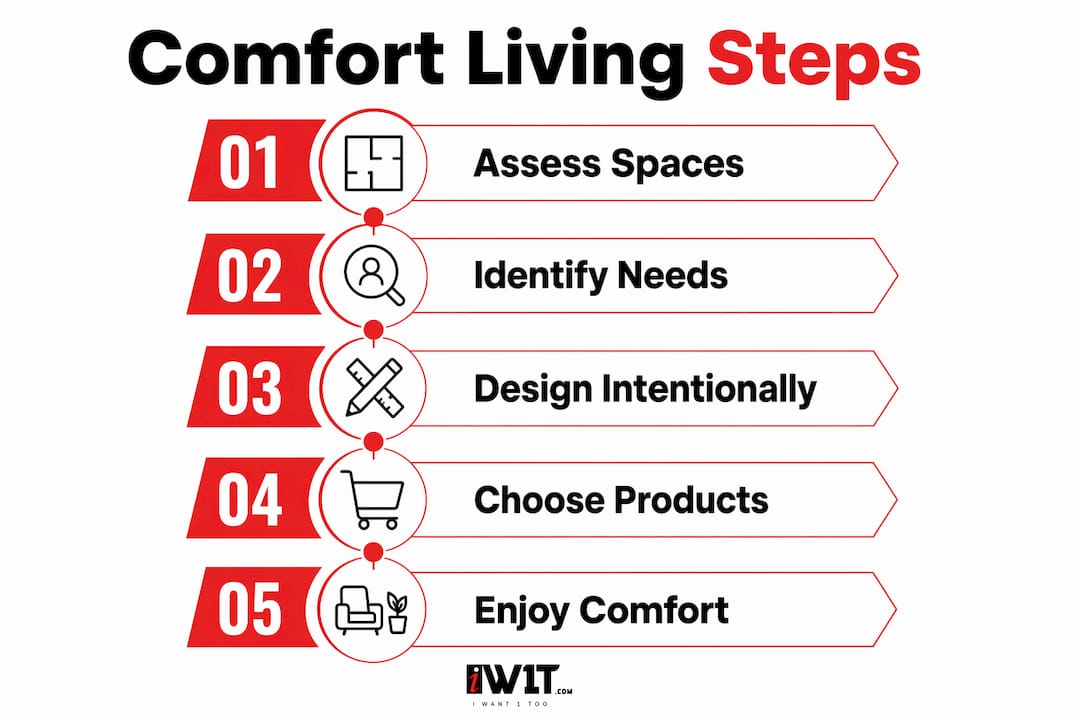
For practical styling guidance on translating these answers into product choices, the article on decorating for comfort covers the process room by room.
Key takeaways
Comfort living works because it addresses physical ease and psychological security together, through intentional design, deliberate lifestyle choices, and incremental improvements rather than single large interventions.
| Point | Details |
|---|---|
| Dual definition matters | Comfort living spans bodily relaxation and psychological security. Addressing only one produces incomplete results. |
| Design is physiological, not just aesthetic | Light, acoustics, proportion, and natural materials affect your nervous system before you consciously register them. |
| Small changes compound | Breathable bedding, tunable lighting, and reduced clutter build lasting comfort more reliably than large remodels. |
| Context shapes meaning | Home design, senior living, and healthcare comfort care each define comfort differently. Clarify your context before acting. |
| Start with sleep | The bedroom offers the highest return on comfort investment because sleep quality underpins every other dimension of wellbeing. |
Why comfort living is worth taking seriously
Scott here. I have spent years looking at how people talk about comfort in their homes versus how they actually experience it, and the gap is consistently wider than anyone admits. Most people describe their ideal home in visual terms: the right sofa, the right colour on the walls, the right lighting fixture. Then they wonder why the space still feels wrong after they have ticked every box on the mood board.
The insight that changed how I think about this came from reading about how architects like Eric Drivdahl approach warmth as a physiological event rather than a decorative outcome. Once you accept that your body is responding to the space before your brain forms an opinion, you stop asking "does this look comfortable?" and start asking "does this feel comfortable, and why?" Those are very different questions with very different answers.
The other thing I would push back on is the idea that comfort living requires significant investment. The research on incremental improvements is genuinely encouraging. A set of breathable linen bedding, a warm-toned lamp in a room that currently has harsh overhead lighting, and a single afternoon spent clearing a cluttered surface will produce a measurable shift in how a space feels. You do not need to wait for a renovation budget. You need to start paying attention to what your body is telling you about the spaces you inhabit, and then act on it in small, consistent steps.
Comfort living is not a destination. It is a practice of noticing and adjusting, sustained over time.
— Scott
Explore comfort living products at Iw1t

At Iw1t, the product range is built around exactly the kind of incremental, practical improvements that make comfort living achievable without a full renovation. From warm-toned lighting and tactile home accessories to wellness products and bedroom essentials, every item is selected with daily ease and personal wellbeing in mind. The team at Iw1t are a family-run business based in the UK, and they understand that comfort is personal. Whether you are refreshing a single room or rethinking your whole approach to home comfort and wellbeing, the catalogue offers quality, practical choices delivered with discretion and care.
FAQ
What is the simplest definition of comfort living?
Comfort living is the state of physical relaxation, psychological security, and an intentionally designed environment that supports daily wellbeing. It combines bodily ease with emotional contentment and practical lifestyle design.
How do I start applying comfort living ideas at home?
Begin with a room audit: identify which spaces feel draining and which feel restorative, then address the highest-friction areas first. Small changes such as warmer lighting, breathable bedding, and reduced clutter produce noticeable results without large expenditure.
Is comfort living the same as luxury living?
No. Comfort living prioritises ease, security, and wellbeing over expense or status. A well-lit, acoustically calm room with natural materials can deliver more genuine comfort than an expensive but poorly considered space.
How does comfort living differ from healthcare comfort care?
Healthcare comfort care focuses on clinical symptom relief and emotional support for patients, which is a distinct medical discipline. Comfort living in a home and lifestyle context is about intentional design, daily habits, and environmental quality.
What role does technology play in a comfortable lifestyle?
Smart home technologies such as circadian lighting systems and programmable thermostats actively support physical comfort by aligning the home environment with the body's natural rhythms. Tri Pointe Homes' LivingWell™ model demonstrates how these systems can be integrated at the architectural level.