
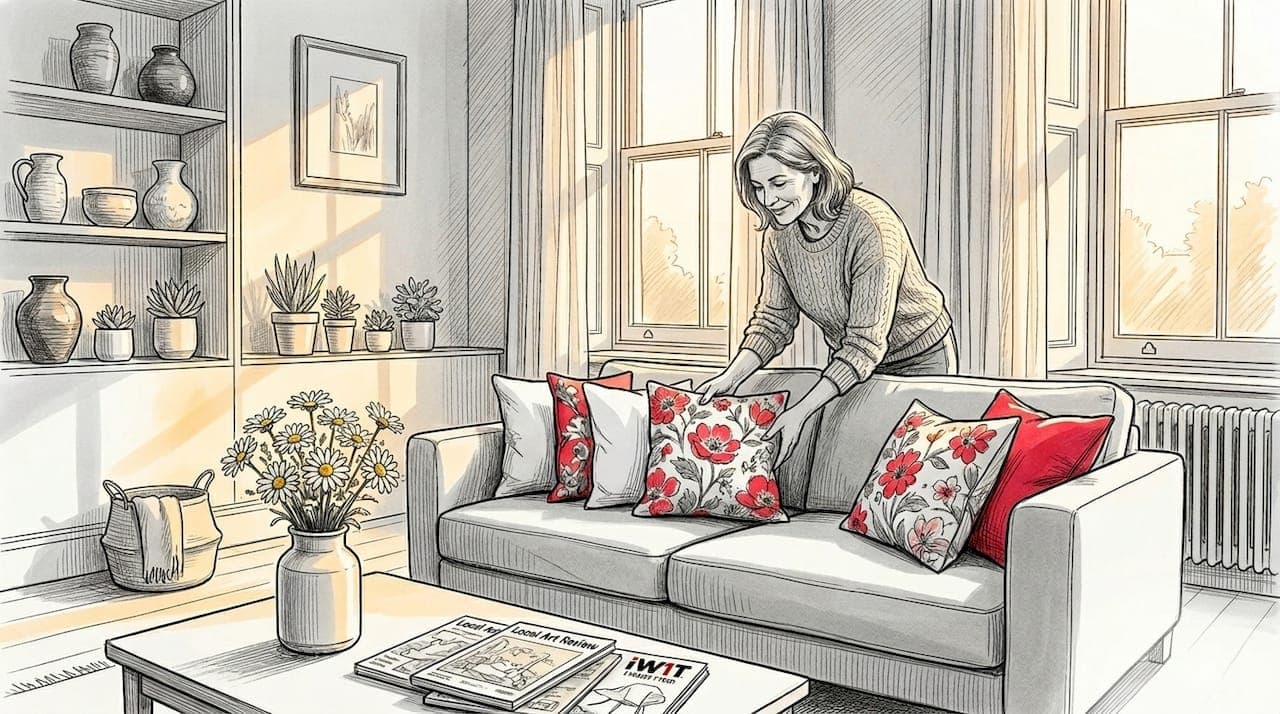
Refreshing your home for each new season is one of the most rewarding things you can do for your living space, yet the sheer number of choices can make it feel overwhelming before you even start. These seasonal home decoration tips are designed specifically for UK homes and rentals, where limited storage, unpredictable weather, and a packed calendar of holidays demand a smarter approach than simply buying more stuff. Whether you are working with a compact flat in Manchester or a terraced house in Bristol, the same principles apply: focus on a few high-impact swaps, plan your timing, and keep your budget realistic.
Table of Contents
- Key criteria for seasonal home decoration success
- Spring and summer seasonal decoration tips
- Autumn and winter seasonal decoration tips
- Comparing seasonal decoration approaches
- Rethinking seasonal home decoration for modern UK homes
- Shop stylish and practical seasonal decor at IW1T
- Frequently asked questions
Key Takeaways
| Point | Details |
|---|---|
| Plan four swaps annually | Align your home decoration changes with the UK’s four main seasonal periods for best results. |
| Focus on textiles and accents | Textiles, faux greenery, and scented candles create impactful seasonal shifts on modest budgets. |
| Use a neutral base | Maintain neutral permanent items to make swapping seasonal accents easier and reduce waste. |
| Organise smart storage | Use labelled bins and vacuum bags to store seasonal items efficiently in small spaces. |
| Shop off-season for savings | Buy seasonal decor items out of season to save up to 50% and avoid stock shortages. |
Key criteria for seasonal home decoration success
Before you invest in a single cushion cover or string of fairy lights, it helps to understand what actually makes seasonal home decoration work. The difference between a home that feels genuinely fresh each season and one that just looks cluttered comes down to three things: timing, budgeting, and space management.
Timing your swaps to the UK calendar matters more than most guides acknowledge. UK homeowners swap decor four times a year: early March for spring, late May or early June for summer, early September for autumn, and mid-November for the festive period, with a neutral reset in January. That rhythm maps neatly onto UK meteorological seasons and our major celebrations, from Easter and the Chelsea Flower Show to Halloween, Bonfire Night, and Christmas.
Budgeting realistically is where many people come unstuck. Aiming for £50 to £200 per room keeps changes meaningful without tipping into excess. That range sounds wide, but the upper end applies to rooms where you are investing in quality pieces you will reuse for years, not disposable décor.
Storage discipline is the unsung hero of seasonal decorating. British homes, particularly in cities, are not built for hoarding. The practical solution is to:
- Use clear, labelled stackable bins sorted by season
- Compress bulky throws and cushion inners with vacuum storage bags
- Limit yourself to one or two bins per season per room
- Keep a running list of what each bin contains so you are not rummaging every March
Focus your decorating budget on practical home décor ideas across four main categories: textiles, greenery, lighting, and small accent pieces. Everything else is optional. Understanding the essential criteria sets the stage for exploring individual seasonal decoration ideas next.
Spring and summer seasonal decoration tips
Spring is arguably the easiest season to decorate for because the instinct is already there. The light changes, you want to open windows, and heavy, dark interiors suddenly feel out of place. The key is to act on that instinct with intention rather than impulse.
Spring refresh works best with lighter textiles in soft greens, whites, blush tones, and yellows, while summer calls for an even more open, minimal feel with coastal blues or warm sandy palettes. In practice, that means:
- Swapping out your deep navy or charcoal cushion covers for linen in sage or warm white
- Replacing heavyweight curtain panels with sheer or cotton alternatives where possible
- Introducing faux botanicals, which handle the damp UK climate far better than real plants that suffer indoors through unpredictable spring temperatures
- Rotating candle scents from vanilla or sandalwood to something fresh, such as lemon verbena, white tea, or fresh linen
Store your bulky winter throws by early May at the latest. Removing visual weight from a room can make it feel 20 to 30 per cent more spacious without moving a single piece of furniture.
For summer, resist the urge to add more. The best summer spaces in British homes are the least cluttered ones. Minimal tabletop styling, one or two coastal or botanical prints, and a shift to cotton or rattan accessories is genuinely all you need.
Pro Tip: A quick DIY home décor swap that costs almost nothing is rotating your artwork seasonally. Simply lean a light, botanical print against a shelf or mantelpiece and lean your darker, moodier piece out of sight. No nails required, no cost involved.
With spring and summer covered, we now turn to the cosy and textured warmth ideal for autumn and winter.
Autumn and winter seasonal decoration tips
Autumn is where British homes come into their own. The urge to nest is real, and the good news is that the most effective seasonal decoration tips for this time of year are also the most enjoyable to apply.
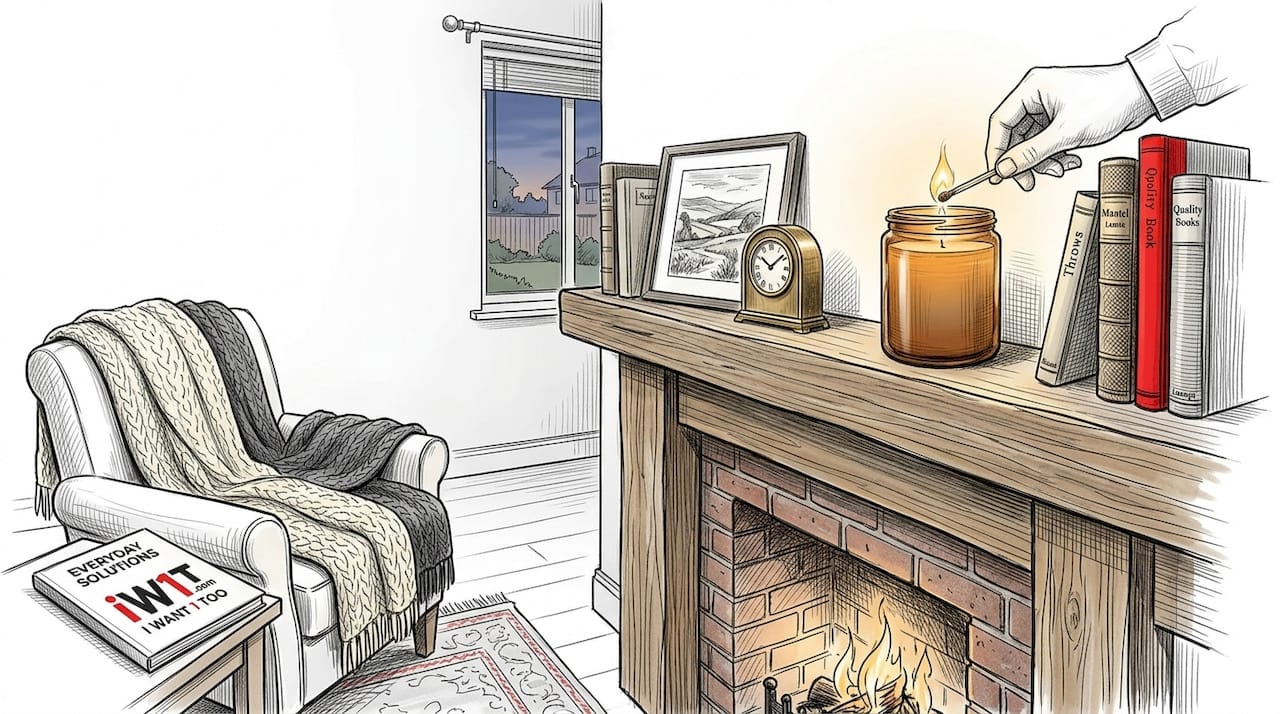
Autumn décor centres on chunky knit throws, velvet cushions in jewel tones like burnt orange, forest green and deep plum, amber foliage, warm candle scents, and amber-toned lighting. These are not just aesthetic choices; they are genuinely functional in homes that grow cooler from September onwards.
Some practical tips for getting this right:
- Layer your lighting. Swap cool-white bulbs for warm-white alternatives (around 2700K) in table and floor lamps during autumn and winter. The difference this makes to a room's atmosphere is remarkable and it costs almost nothing.
- Limit yourself to three to five seasonal accent pieces per room. A ceramic pumpkin, a velvet cushion, a foliage wreath on the fireplace, and a cluster of pillar candles is a complete autumn vignette. More than that, and it tips into clutter.
- For Christmas, work within a single colour palette rather than mixing every festive colour available. A home decorated in deep green, brass, and ivory feels intentional. A mix of red, gold, silver, and multi-colour looks chaotic.
The January reset is one of the most underrated seasonal decoration tips in any top décor trends guide. Stripping back to neutral, breathable tones after the festive period actively counteracts winter gloom. Swap jewel-tone cushions for oat or stone-coloured alternatives, remove all overtly festive pieces, and let the room breathe. It is a remarkably effective mood lift that costs nothing if you already own the neutral pieces.
Pro Tip: Batch your winter candles. Buy three or four different scents in September, one for early autumn, one for the lead-up to Christmas, one for the festive period itself, and one for January. Rotating scents is one of the fastest ways to shift the feeling of a space.
Having explored season-specific ideas, a clear comparison can help you prioritise and apply these tips efficiently.
Comparing seasonal decoration approaches
It helps to see all four seasons side by side so you can plan purchases and storage in one go rather than reacting to each season as it arrives.
| Season | Key elements | Typical cost per room | Storage tips |
|---|---|---|---|
| Spring | Pastel textiles, faux botanicals, fresh scents | £50 to £100 | One medium bin, swap with winter textiles |
| Summer | Minimal styling, coastal or warm palettes, cotton fabrics | £30 to £80 | Minimal storage needed, keep pieces simple |
| Autumn | Chunky knits, velvet cushions, jewel tones, warm lighting | £80 to £150 | Vacuum bags for knits, one labelled bin |
| Winter and festive | Festive accent pieces, candles, warm neutrals for January | £100 to £200 | Labelled festive bin, separate from general autumn |
The recommended budget of £50 to £200 per room holds across all seasons when you prioritise textiles, greenery, scents, and a handful of accent pieces rather than statement furniture.
A few additional principles that make the whole system work:
- Limit your palette to three colours per season. This single rule prevents the "too much going on" problem that makes seasonal décor look amateur rather than considered.
- Buy quality in the items you rotate most. Cushion covers and faux botanicals that survive four or five annual uses are far better value than cheap alternatives you replace every year.
- Use textiles and scents for speed. When time is short, swapping a throw and lighting a new candle achieves 80 per cent of the seasonal mood shift in under five minutes.
With this clear overview, you are ready to approach seasonal decoration with confidence and personal style. For those who want to go further, there are plenty of innovative home décor ideas worth exploring once the fundamentals are in place.
Rethinking seasonal home decoration for modern UK homes
Here is something most seasonal home decor guides will not tell you: the biggest obstacle to a beautifully decorated home is not a lack of ideas, it is too many of them.
The traditional approach to seasonal decorating assumes you need a completely different set of accessories for each season. It is an expensive, wasteful model that fills lofts and under-bed storage with boxes of things you barely use. We think there is a smarter way.
Seasonal layering works by building on a neutral base and making just one or two accent swaps per season to avoid waste. Beige linen, oatmeal cotton, and warm grey wool are year-round workhorses. On top of that foundation, you rotate a single cushion cover, a seasonal scent, and perhaps one tabletop piece. That is it.
The one-in-one-out rule is essential here. For every new seasonal piece you bring in, something old leaves. Either donate it, gift it, or discard it responsibly. This keeps your storage manageable and your home from accumulating the decorating equivalent of fast fashion.
We are also strong believers in investing in stylish décor for comfort rather than novelty. A beautiful faux eucalyptus stem will serve you through three seasons. A novelty Halloween cushion will not. The question to ask before every seasonal purchase is: "Will I genuinely use this in two years?" If the answer is uncertain, put it back.
Sustainable sourcing matters too. Second-hand and charity shops in the UK are excellent sources for seasonal ceramics, candle holders, and framed prints. They are cheaper, more individual, and considerably less wasteful than buying new every year.
Shop stylish and practical seasonal decor at IW1T
If you are ready to put these tips into practice, having the right pieces makes all the difference.

At IW1T, we stock a curated selection of home décor items chosen specifically with UK homes in mind. That means affordable cushion covers and throws in seasonally relevant colours, quality faux botanicals that look convincing in British light, scented candles and diffusers for every season, and accent pieces that earn their storage space. Everything is sourced with an eye for longevity and real-home practicality, not just what looks good on a product page. Shop seasonal decor at IW1T and find pieces that work as hard as you do, season after season.
Frequently asked questions
How often should I swap my seasonal home decorations in the UK?
Most UK homeowners update their decor four times a year: early March, late May or early June, early September, and mid-November, with a neutral reset in January after the festive period.
What are the most cost-effective items to change for seasonal home refreshes?
Textiles such as cushion covers and throws, faux botanicals, and scented candles or diffusers deliver the greatest mood shift per pound spent, making them the smartest starting point for any seasonal refresh on a modest budget.
How can renters update seasonal decor without damaging walls or fixtures?
Use command strips for lightweight wreaths or prints, lean framed artwork against walls or shelves, and focus your changes on textiles and tabletop accents. These renter-friendly styling methods avoid nails and sticky tape entirely.
What storage tips help manage seasonal decorations in small UK homes?
Label clear stackable bins by season, use vacuum-seal bags for bulky textiles, and limit seasonal items to one or two bins per season to keep storage manageable in smaller British homes.