
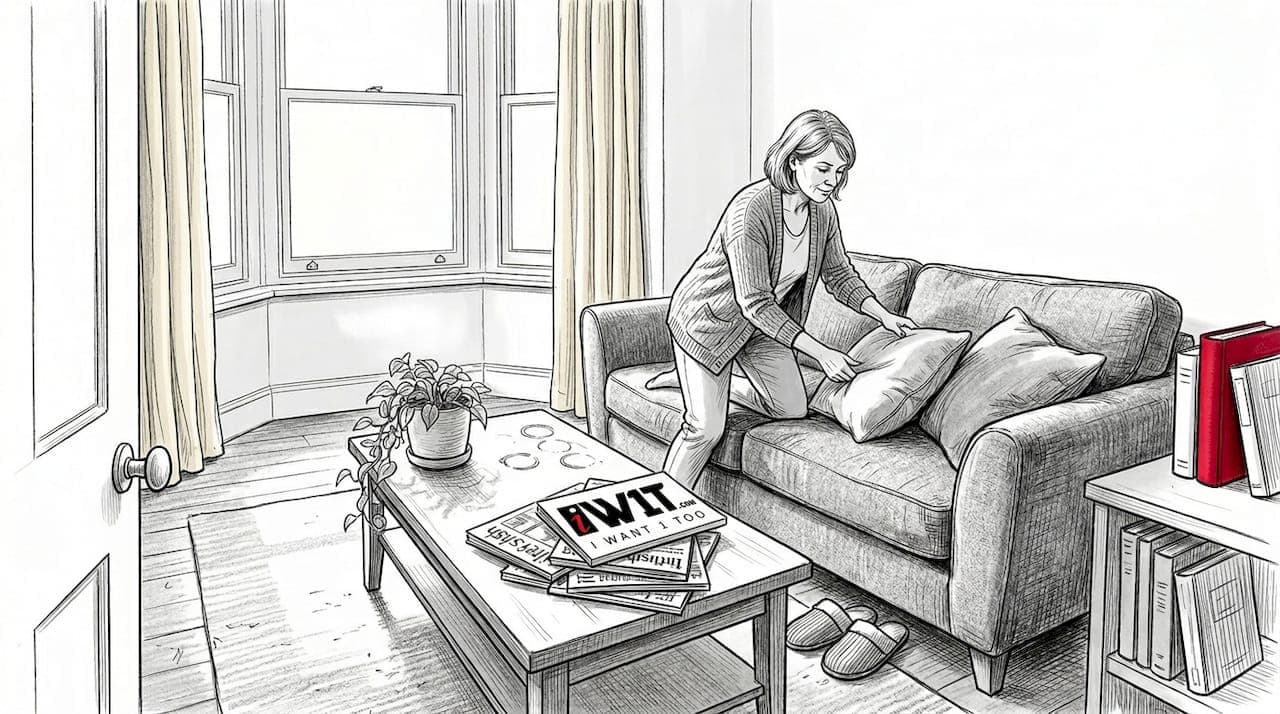
Most people assume home décor is simply about making a room look nice. Choose a colour, hang a picture, buy a cushion. Done. But that view undersells what décor actually does. Thoughtful home décor enhances mood, creates welcoming atmospheres, improves comfort, and reflects personal style in ways that genuinely change how you feel day to day. When you understand décor's deeper purpose, every choice you make becomes more intentional and far more satisfying. This guide takes you from the basics right through to confident, purposeful application in your own home.
Table of Contents
- Understanding the core purpose of décor
- The emotional and functional impact of home décor
- Key principles: Functionality meets personal style
- Personalisation trends: From curated clutter to classic cohesion
- Bringing it all home: Practical steps for purposeful décor
- Why true décor is more than just trends
- Curate your purposeful home with our help
- Frequently asked questions
Key Takeaways
| Point | Details |
|---|---|
| Décor impacts mood | A well-thought-out décor scheme enhances comfort and better reflects your identity. |
| Balance function and style | Prioritise practical, foundational pieces and use accents to personalise your space. |
| Express your personality | Mix trends and timeless choices for a space that feels unique and genuinely yours. |
| Start with core spaces | Focus on the rooms where you spend the most time, such as bedrooms, for maximum benefit. |
Understanding the core purpose of décor
To understand décor's full impact, we must first define what its purpose is and how it differs from design. Many homeowners use the words "décor" and "interior design" interchangeably, but they are not the same thing. Interior design involves structural decisions: knocking through walls, repositioning doorways, laying new flooring, reconfiguring a kitchen layout. Décor, by contrast, works within the existing structure to create something beautiful and emotionally resonant.
Décor focuses on aesthetics, furnishings, and colour without structural changes, and it enhances visual cohesion and mood through layered lighting and textures. This is an important distinction because it means most homeowners can achieve a genuine transformation without planning permission, major budgets, or months of building work. You are working with what you have and making it feel intentional.
The core purposes of décor can be broken down clearly:
- Mood enhancement: Colour, light, and texture all trigger emotional responses. Warm tones encourage relaxation; cool blues and greens promote focus and calm.
- Personal expression: Your home should tell your story. Objects, art, and materials reflect who you are and what you value.
- Visual cohesion: A well-decorated room feels unified. Nothing jars or competes. Everything belongs.
- Comfort: Décor is not purely visual. Soft furnishings, rugs, and layered textiles make a space physically as well as emotionally comfortable.
- Atmosphere: The right combination of elements creates a feeling the moment you walk into a room, whether that is calm, energy, warmth, or creativity.
"Décor is not decoration for decoration's sake. It is the deliberate shaping of how a space feels to live in."
When you approach a room with these purposes in mind, you stop asking "Does this look nice?" and start asking "Does this serve how I want to live here?" That shift in thinking changes everything.
The emotional and functional impact of home décor
Now that we know what décor aims to achieve, let us look at its real-life effects, both emotional and practical, for UK homeowners. The evidence here is genuinely compelling.
Well-decorated homes boost mental health, reduce stress, and can even improve property value. Stress reduction is not a minor benefit. When your home feels chaotic, cluttered, or mismatched, it creates low-level tension that compounds over time. A cohesive, considered space does the opposite. It signals safety, order, and belonging to your brain, which is why so many people describe feeling genuinely calmer after a room refresh.
UK homeowners are increasingly aware of this, and their spending habits reflect it. A survey of British furniture and décor priorities revealed some striking figures:
| Priority | Percentage of UK homeowners |
|---|---|
| Value for money in furniture | 80% |
| Durability as a key factor | 79% |
| Sofas as first priority purchase | 63% |
| Keep furniture items for 5+ years | 48% |
| Follow a specific style (e.g., modern) | 61% |
| Prefer modern style specifically | 28% |
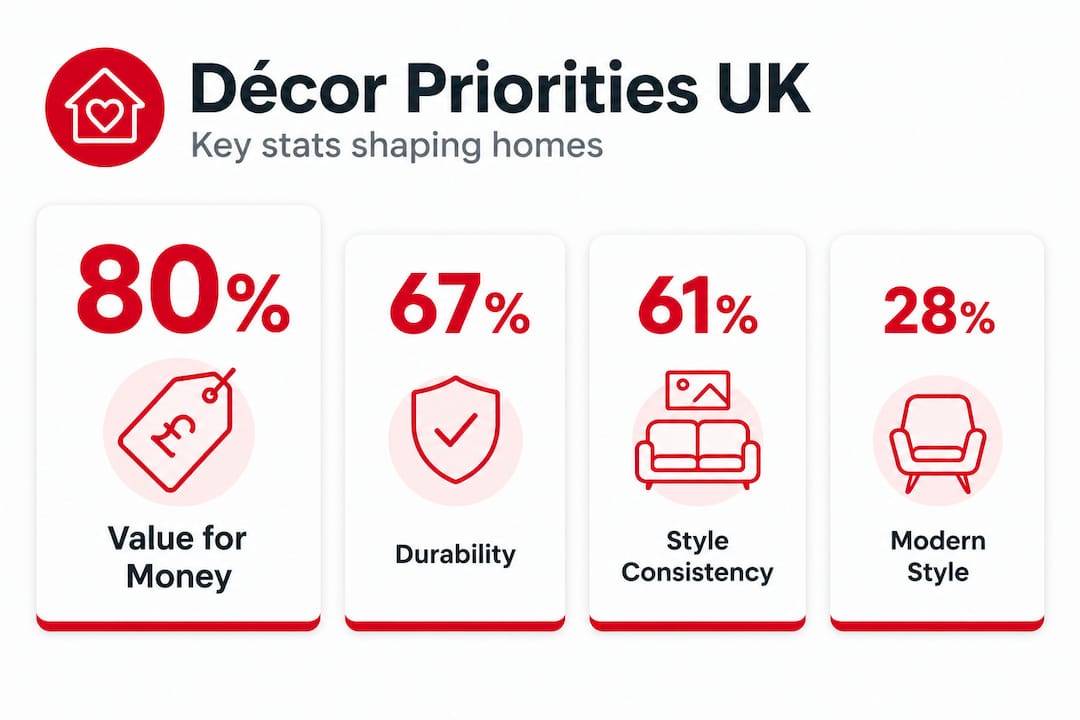
These UK décor priorities tell a clear story: British homeowners are not impulsive decorators. They think carefully, invest in quality, and expect longevity. This is a sensible approach that aligns perfectly with purposeful décor thinking.
Statistic to note: 61% of UK homeowners follow a specific décor style, yet only 28% choose modern. This means a significant portion are working with traditional, eclectic, or transitional schemes, which actually require more skill to execute well.
Pro Tip: Before buying a single item, spend a week noticing how you actually use each room. Where do you sit? Where does clutter collect? Where does light fall? This observation period will make every subsequent decision more purposeful and prevent costly mistakes.
Décor also affects property value in measurable ways. Thoughtful, neutral-leaning schemes with quality foundational pieces tend to appeal to a broader range of buyers, while over-personalised spaces can actually deter interest. This does not mean your home should feel like a show home, but it does mean that UK home décor trends worth following are those that balance personality with broad appeal.
Key principles: Functionality meets personal style
We can see that décor shapes how we feel and function in our homes, but how do you get the balance right between personal taste and practical needs? This is where many homeowners get stuck, either creating beautiful rooms that are impractical to live in, or perfectly functional spaces that feel utterly soulless.
The answer lies in sequencing your decisions correctly. Professionals allocate 60 to 70% of their budgets to foundational pieces, meaning sofas, beds, storage, and flooring, before spending on accessories. This is because foundational pieces define the room's scale, function, and longevity. Accessories, by contrast, are where personality and trend can be introduced at lower cost and replaced more easily.
Here is a comparison of how to approach foundational versus trend-led choices:
| Category | Foundational pieces | Trend-led accessories |
|---|---|---|
| Examples | Sofa, bed frame, dining table, flooring | Cushions, throws, artwork, vases, lamps |
| Budget priority | High (60 to 70%) | Lower (30 to 40%) |
| Lifespan expectation | 8 to 15 years | 1 to 5 years |
| Style approach | Neutral, durable, classic | Expressive, seasonal, personal |
| Risk level | Low if chosen carefully | Low, easy to swap |
Expert guidance on decorating is consistent on several key dos and don'ts. Functionality and space planning must come first. Short curtains are a common mistake that makes ceilings feel lower and rooms feel smaller. Mixing scales and patterns adds depth, but only when anchored by a cohesive colour palette. Layered lighting, meaning ambient, task, and accent sources combined, transforms a room far more effectively than a single overhead light ever could.
Follow these steps to get the balance right:
- Measure everything first. Know your room dimensions, ceiling height, and window placement before you buy anything.
- Identify how the room is used. A family living room needs durability. A home office needs focus-supporting elements. A bedroom needs calm.
- Choose your foundational pieces in neutral tones. This gives you flexibility to change accessories without replacing expensive items.
- Plan your lighting in layers. At least three light sources per room is a reliable rule.
- Add personality through textiles, art, and plants. These are low-cost, high-impact, and easily updated.
Pro Tip: Period properties with unusual proportions or north-facing rooms need adapted schemes. North-facing rooms receive cool, blue-toned light, so warm paint tones and layered artificial lighting are essential to prevent the space feeling cold and flat.
Explore practical décor ideas that work within real budgets and real homes, not just aspirational magazine spreads.
Personalisation trends: From curated clutter to classic cohesion
Style is deeply personal, and here is how current British décor trends help homeowners infuse authenticity while still keeping cohesion and value in mind.
The dominant trend emerging for 2026 is what designers are calling the "real home" aesthetic. UK décor in 2026 favours curated clutter, imperfections, and lived-in maximalism over sterile perfection. This is a meaningful shift. For years, aspirational interiors were defined by minimalism, clean lines, and a sense that nobody actually lived there. The real home trend pushes back against that, celebrating storytelling, emotional connection, and the accumulation of objects that genuinely mean something.
This does not mean letting chaos reign. "Curated" is the operative word. The difference between a warm, characterful home and a cluttered mess is intention. Every object should earn its place, either functionally or emotionally.
Here are practical ways to embrace this trend without losing cohesion:
- Anchor with neutral, durable bases. A warm grey sofa or natural linen bedding gives you a stable foundation that any personal items can work around.
- Use colour bridging. Pick two or three colours that appear across different rooms in textiles, art, or accessories. This creates visual flow without requiring everything to match.
- Mix old and new deliberately. A vintage lamp on a contemporary side table creates interest. The key word is deliberately: place items with purpose, not accident.
- Tell a story with objects. A shelf displaying travel finds, inherited pieces, and current reads says far more about you than a set of matching decorative balls from a catalogue.
- Embrace imperfection in materials. Linen wrinkles. Wood marks. Terracotta chips. These qualities add warmth and authenticity that perfectly pristine materials cannot replicate.
"The most inviting homes are not the most perfect ones. They are the ones that feel genuinely, unapologetically lived in."
That said, durable and neutral bases remain essential if you want to avoid devaluing your property or making costly mistakes. Trends in accessories are safe to chase. Trends in foundational pieces are not. A maximalist gallery wall can be taken down in an afternoon. A maximalist tiled kitchen splashback cannot.
Bringing it all home: Practical steps for purposeful décor
With trends and principles in mind, let us end with a clear, step-by-step approach to putting décor wisdom into action in your own home.
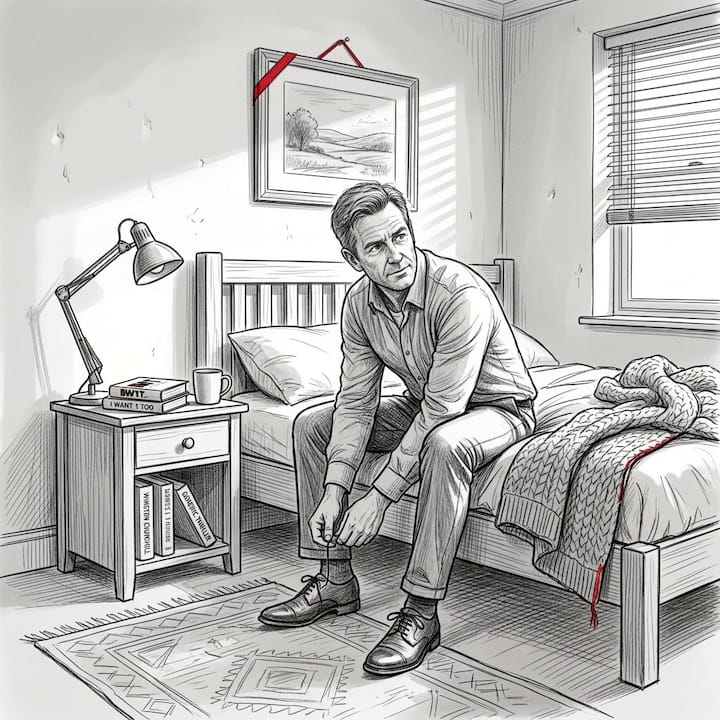
The bedroom is the best place to start. Homeowners spend approximately eight hours daily in the bedroom, which means it yields the highest return in comfort and wellbeing of any room you invest in. Yet it is often treated as an afterthought compared to living areas that guests see.
Follow this sequence for any room you are tackling:
- Start with measurements and flooring. Know the exact dimensions and assess the flooring condition before anything else. Flooring anchors every other decision.
- Prioritise the bedroom. If you can only refresh one room, make it the one where you sleep and wake. The impact on daily wellbeing is immediate.
- Assess natural light honestly. North-facing rooms need warm paint tones and layered lighting. South-facing rooms can handle cooler, bolder colours. Do not fight your light; work with it.
- Use colour bridging across rooms. Colour bridging with 40% textiles unifies mismatched furniture and creates a sense of cohesion even in homes where pieces have been accumulated over many years.
- Consider durability for your actual lifestyle. Homes with pets or young children need materials that can withstand real use. Velvet is beautiful; it is also a magnet for pet hair. Be honest about your household's needs.
- Adapt for unusual spaces. Period properties with low ceilings benefit from vertical stripes or tall mirrors. Awkward alcoves become assets when fitted with shelving or a reading nook.
Pro Tip: When colour bridging, choose one accent colour and repeat it in at least three places across a room: a cushion, a piece of art, and a plant pot, for example. This creates cohesion without the room feeling themed or contrived.
Why true décor is more than just trends
Finally, let us step back and share an honest view of what really matters in the purpose of décor today.
Here is something the interiors industry rarely says plainly: trends are designed to make you spend money. The "real home" aesthetic, the maximalism revival, the quiet luxury movement, each of these has genuine merit, but they are also commercial forces. If you redecorate every time a new trend emerges, you will spend a great deal of money and never actually feel settled.
The homeowners with the most genuinely satisfying interiors are not the ones who follow trends most closely. They are the ones who started with a clear sense of how they want to live and feel in their home, and then made deliberate choices in service of that vision. Their homes feel cohesive not because everything matches, but because everything belongs.
This is the uncomfortable truth about décor: most of the work happens before you buy anything. It happens in the honest assessment of your lifestyle, your light, your budget, and your taste. Skipping that stage and going straight to shopping is why so many rooms feel "off" despite containing individually lovely pieces.
We believe that balanced UK décor choices are those grounded in self-awareness rather than aspiration. Know your home. Know how you live. Then choose pieces that serve both.
Trends will always be there. Your home should outlast them.
Curate your purposeful home with our help
If you feel inspired to put these purposeful décor principles into practice, here is where to look for the right pieces.

At IW1T, we have curated a range of home and lifestyle products that reflect exactly the kind of thinking this article champions: quality over quantity, function alongside beauty, and lasting value over fleeting fashion. As a family-run UK business, we understand that real homes need real solutions, not just aspirational styling. Whether you are refreshing a bedroom, adding warmth to a living space, or sourcing those finishing touches that pull a room together, our quality décor essentials are chosen with the same care and intention we have described throughout this guide. Browse our collection and find pieces that genuinely belong in your home.
Frequently asked questions
Does décor really affect wellbeing and mental health?
Yes, thoughtful décor choices can elevate mood, reduce stress, and make daily life feel more enjoyable at home. Well-decorated homes have a measurable positive impact on mental health and stress levels.
How can I make my home décor both stylish and practical?
Begin by focusing on foundational pieces that are durable and functional, then layer in accessories reflecting your personal style. Professionals allocate 60 to 70% of décor budgets to these foundational elements for good reason.
What is colour bridging and why is it helpful?
Colour bridging uses textiles and accents to tie together mismatched furniture and create a harmonious look throughout a room. Textiles accounting for around 40% of the bridging effect makes them the most powerful and affordable tool for cohesion.
Should I follow décor trends or focus on timeless style?
Favouring durable, neutral basics ensures longevity and value, while trends can be added through easily swapped accents. Prioritising neutral bases over trend-led foundational choices protects both your budget and your property's appeal.