

The role of innovation in home products is to improve daily living by integrating advanced technologies and design principles that enhance comfort, efficiency, and aesthetic appeal. Product development in this space has shifted from cosmetic updates to genuine functional change, driven by smart connectivity, AI, and materials science. Smart kitchen device ownership sits at 14%, with 34% of consumers expressing interest in future adoption. That gap between ownership and intent is the most telling signal in the market: millions of homeowners and renters are ready to upgrade, but the products need to earn their place.
What are the key technological innovations transforming home products today?
Home product technology in 2026 is defined by three converging forces: smart sensing, AI intelligence, and unified connectivity standards such as Matter and Thread. Together, these pillars have moved home products from isolated gadgets into coordinated systems that respond to how you actually live.
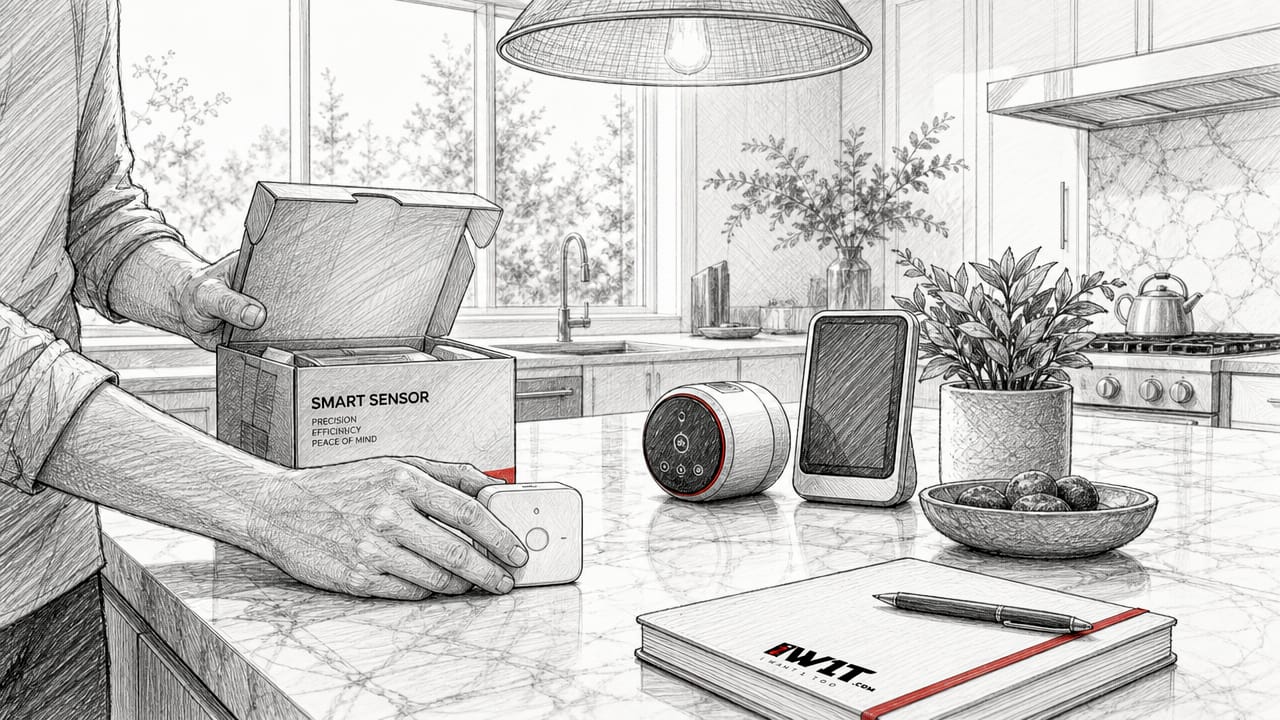
Smart home automation is the most visible change. Devices from brands like Philips Hue, Google Nest, and Amazon Echo now share a common language through the Matter protocol, meaning a light switch from one manufacturer works with a thermostat from another. This interoperability removes the single biggest barrier to adoption: the fear of buying into a dead-end ecosystem.
3D printing is the less-discussed but arguably more transformative force. France recently completed Europe's largest 3D printed apartment block in 34 days, finishing three months ahead of a conventional construction schedule. That speed advantage is beginning to filter into home furnishings and fixtures, where bespoke printed components are replacing off-the-shelf parts for kitchens, bathrooms, and storage.
For budget-conscious homeowners and renters, retrofit solutions offer a practical middle path. Low-cost retrofit devices priced between £15 and £40 can deliver 80 to 90% of smart appliance functionality without replacing existing equipment. This matters enormously for renters who cannot make structural changes, and for owners who want the benefits of a connected home without a full refit.
- Matter/Thread connectivity unifies devices across brands, reducing setup friction and future-proofing purchases
- AI-driven automation learns usage patterns and adjusts heating, lighting, and security without manual input
- 3D printed components allow bespoke home fixtures at lower cost and faster lead times than traditional manufacturing
- Retrofit smart plugs and sensors add intelligence to existing appliances, preserving their working life
Pro Tip: Before buying any smart home device, check the product packaging or listing for the Matter logo. Matter-certified products work across Google Home, Amazon Alexa, and Apple HomeKit, so you are never locked into one platform.
How do innovative home products improve comfort, efficiency, and aesthetics?
The primary value of smart home innovation is removing friction from daily life, providing visibility into device status, and delivering insights that help you make better decisions. That definition, drawn from Nielsen Norman Group research, cuts through the marketing noise and identifies what genuinely matters to people living in these spaces.
The practical benefits break down into four clear areas:
- Convenience. Automated routines handle repetitive tasks. A smart thermostat like Tado or Hive learns when you leave and return, adjusting temperature without any manual input. Over a week, those small automations add up to hours of recovered time and a home that feels responsive rather than inert.
- Energy savings. Intelligent monitoring identifies waste that is invisible to the naked eye. AI-driven insights from devices like Sense or Hildebrand Glow show exactly which appliances are drawing power and when, allowing targeted changes that reduce bills without sacrificing comfort.
- Ambience and design. Mood management technology has matured significantly. Tunable white and colour-changing lighting from brands like Nanoleaf and LIFX adjusts colour temperature throughout the day, supporting alertness in the morning and relaxation in the evening. This is not a luxury feature. Research links home comfort to measurable wellbeing improvements, making ambience a genuine health consideration.
- Security and awareness. Smart doorbells, cameras, and contact sensors give you real-time visibility into your home whether you are inside or away. The psychological benefit of knowing your home is secure is as significant as the practical deterrent effect.
"Smart home value lies in convenience, security, savings, information access, and ambience." Nielsen Norman Group, 2024.
One nuance worth acknowledging: software updates for smart devices can introduce new data collection features. Reviewing privacy settings after every major firmware update is a habit worth building, particularly for devices with microphones or cameras. The benefits of a connected home are real, but so is the responsibility to manage what data you share.
How do user needs and validation shape innovation in home products?
True breakthrough innovation comes from uncovering latent consumer needs rather than simply responding to what people say they want. This distinction is critical in home products, where consumers typically ask for incremental improvements to things they already own rather than articulating the entirely new product that would solve their problem.
The classic example is the cordless vacuum cleaner. Consumers asked for longer cables and better suction. Dyson observed that people hated the cable itself, not its length. The latent need was freedom of movement, and the expressed need was a longer cord. Products built on expressed needs iterate. Products built on latent needs transform.
The home housewares market in 2026 shows a slowdown in transformational innovation, with brands increasingly focused on iterative updates and real user validation before scaling. This is not necessarily a failure of ambition. It reflects a maturing market where the cost of launching an unvalidated product is higher than the cost of thorough testing.
- Expressed needs are what consumers say in surveys and focus groups. They are useful but incomplete.
- Latent needs emerge from observation, diary studies, and contextual research in real homes.
- Validation before scaling reduces the risk of investing in features that test well in labs but fail in living rooms.
- Iterative updates maintain consumer trust and allow brands to respond to feedback without full product relaunches.
Pro Tip: When evaluating a new home product, look for brands that publish user research or beta testing programmes. Products refined through real household testing consistently outperform those developed purely in-house.
The tension between iterative and transformational approaches is not resolved by choosing one over the other. The most successful home product brands, from Dyson to IKEA, use iterative cycles to refine core products while investing separately in transformational research. That dual track is what sustains relevance across decades rather than product cycles.
What does the future hold for innovation in home products?
The future of home innovation points toward what researchers call ambient intelligence: homes that sense, learn, and adapt without requiring active input from residents. This is not a distant concept. Advanced home automation is already shifting toward cloud-edge-TinyML computing, which processes data locally on the device rather than sending everything to a remote server. The result is faster response times and stronger privacy protection.
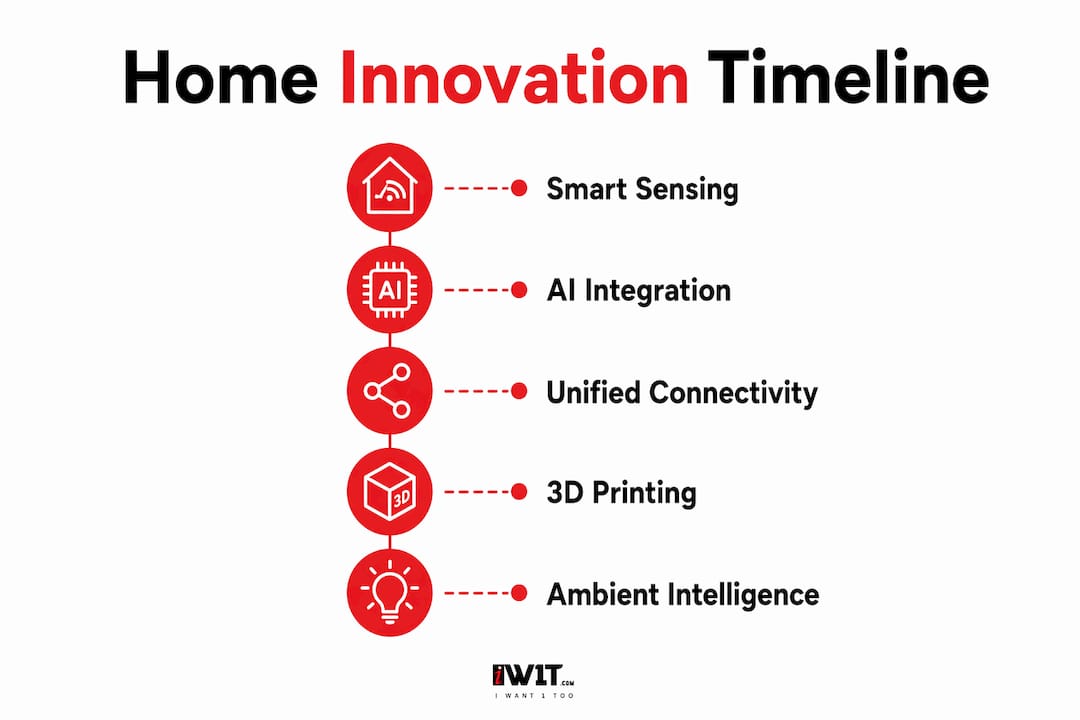
Interoperability will define the next five years more than any single technology. The Matter standard, backed by Apple, Google, Amazon, and Samsung, is the most significant structural change in smart home history. It means the benefits of smart home gadgets are no longer contingent on buying everything from one brand.
3D printing is moving from construction novelty to mainstream home product tool. Wells Fargo now offers a 50 basis point lender credit for buyers purchasing 3D printed homes, signalling that financial institutions view the technology as credible and durable. As printing costs fall, bespoke home components, from fitted shelving to architectural details, will become accessible to ordinary households rather than just architects and developers.
| Technology | Current state | Near-term direction |
|---|---|---|
| Matter/Thread connectivity | Widely available, growing device support | Universal standard across all major platforms |
| AI home automation | Pattern learning, basic prediction | Proactive adaptation without user input |
| 3D printed home products | Construction and bespoke fixtures | Affordable consumer-level home components |
| Retrofit smart devices | £15 to £40 per device, broad compatibility | Deeper integration with existing appliances |
| Digital Twin simulation | Architectural and commercial use | Household-level home planning and personalisation |
Hyper-personalisation is the end goal. Digital Twin technology, currently used in architecture and engineering, will eventually allow homeowners to simulate changes to their living space before committing to them. Pair that with AI-driven product recommendations and on-demand 3D printed components, and the future of home improvement looks less like a trip to a DIY superstore and more like a conversation with a system that already knows your home.
Key takeaways
Innovation in home products delivers the greatest value when it removes genuine friction from daily life, is validated by real users, and is built on open connectivity standards rather than closed ecosystems.
| Point | Details |
|---|---|
| Smart adoption is accelerating | 14% own smart kitchen devices and 34% want them, signalling strong near-term growth. |
| Retrofit is a practical first step | Devices costing £15 to £40 can deliver up to 90% of smart appliance functionality without replacement. |
| Latent needs drive real breakthroughs | Observing how people actually live reveals product opportunities that surveys consistently miss. |
| Matter connectivity future-proofs purchases | Choosing Matter-certified devices protects against ecosystem lock-in as the market consolidates. |
| User validation reduces launch risk | Products tested in real homes before scaling consistently outperform lab-developed alternatives. |
Why I think most people are approaching home innovation backwards
Most homeowners I speak to start with the technology and work backwards to the problem. They buy a smart speaker because it looks impressive, then spend weeks trying to find a use for it. The products that genuinely change how a home feels are the ones that start from a specific irritation and find the most direct solution to it.
I have seen this play out repeatedly. A smart plug on a lamp you already love costs less than £20 and solves the problem of walking into a dark room. A tunable bulb in a home office costs under £15 and genuinely affects how alert you feel at 3pm. These are not glamorous purchases, but they are the ones that stick. The practical guide to enhancing home comfort I keep returning to makes exactly this point: start with the friction, not the feature list.
The other mistake I see is treating innovation in home design as an all-or-nothing commitment. You do not need a full smart home refit to benefit from what is available in 2026. Pick one room, identify the single most annoying daily task, and find the most direct product solution. That approach builds confidence, avoids waste, and produces results you can actually feel.
— Scott
Discover practical home products at Iw1t

Iw1t is a UK family-run store that curates home, lifestyle, and wellness products with a focus on practical value and everyday comfort. Whether you are exploring smart home gadgets, ergonomic accessories, or home décor that genuinely improves how your space feels, the range is selected to solve real problems rather than fill shelves. Every product ships in discreet packaging, and the catalogue is updated regularly to reflect what is actually worth buying. If this article has given you ideas about where to start, Iw1t is a straightforward next step.
FAQ
What is the role of innovation in home products?
Innovation in home products improves comfort, efficiency, and aesthetic appeal by integrating technologies such as smart automation, AI, and advanced materials into everyday household items. The core purpose is to remove friction from daily routines and give homeowners greater control over their living environment.
Are smart home devices worth it for renters?
Retrofit smart devices costing between £15 and £40 deliver up to 90% of smart appliance functionality without permanent installation, making them well-suited to rental properties. Products certified with the Matter standard are particularly practical because they work across multiple platforms and move with you when you leave.
How does 3D printing affect home products?
3D printing is reducing construction timelines and enabling bespoke home components at lower cost. France's largest 3D printed apartment block was completed three months ahead of schedule, and financial institutions like Wells Fargo now offer mortgage incentives for 3D printed homes, indicating the technology is moving into the mainstream.
How do I know if a home product innovation is genuinely useful?
Look for products developed through real user testing rather than purely in-house research. Brands that publish validation data or run household beta programmes consistently produce products that perform better in everyday use than those built on survey responses alone.
What is ambient intelligence in the home?
Ambient intelligence describes a home that senses, learns, and adapts to residents' behaviour without requiring active input. It is enabled by privacy-preserving sensors, on-device AI processing, and unified connectivity standards like Matter and Thread, and represents the direction the intelligent home market is heading through the late 2020s.