

Lifestyle gadgets are purpose-built devices designed to improve daily living by enhancing comfort, wellness, and personal productivity. The best examples of lifestyle gadgets span three distinct categories: wearable health monitors, smart home automation devices, and personal tech accessories. Products like the Google Fitbit Air, Oura Ring 5, and Matter-compatible smart home systems represent the current standard for what these devices can achieve. This article covers the top picks across all three categories, with practical guidance on features, ecosystem fit, and how to choose the right devices for your habits and home.
1. Top wearable lifestyle gadgets for health and wellness
Wearable lifestyle gadgets sit at the intersection of health technology and everyday comfort. They track biometrics passively, surface insights you would never gather manually, and increasingly offer coaching that adapts to your behaviour over time.
Google Fitbit Air
The Google Fitbit Air weighs just 12 grams, making it 20% lighter than its predecessor. That matters because comfort is the single biggest reason people abandon wearables. At approximately £80 retail with a three-month premium trial included, it offers an accessible entry point. The subscription costs around £8 per month or £80 per year and unlocks AI health coaching, sleep analysis, and personalised readiness scores. Without it, the device's core functionality is noticeably limited, so factor that into your total cost.
Oura Ring 5
The Oura Ring 5 is 40% smaller than its predecessor, with a width of 6.09mm and a thickness of 2.29mm in a titanium build. Battery life runs six to nine days, and a wireless charging case is now available. Priced between £320 and £400, it is a premium choice, but the form factor is genuinely unobtrusive. For people who find wrist-worn devices uncomfortable during sleep, the ring format solves a real problem.
Sony Reon Pocket Pro Plus
Less well known but worth attention, the Sony Reon Pocket Pro Plus is a wearable personal air conditioner that lowers body temperature by 2°C compared to its predecessor. It sits at the back of the neck inside a collar and uses an improved cooling plate with a redesigned exhaust system for better clothing compatibility. For anyone working outdoors or commuting in summer heat, it is one of the more genuinely useful wearable devices available.
Key considerations for wearables:
- Comfort and weight matter more than spec sheets suggest
- Subscription costs can double the annual price of ownership
- Ecosystem compatibility with your phone's platform affects feature availability
- Sizing accuracy is critical, particularly for ring-form devices
Pro Tip: Order a sizing kit before committing to any ring-form wearable. The Oura Ring 5 uses a redesigned component structure, so your size from a previous generation may not transfer accurately.
2. Smart home gadgets that improve daily living
Smart home technology is shifting toward passive, automated systems that require minimal manual input. The best devices work quietly in the background, adjusting your environment without you needing to think about it. That is the standard worth holding new purchases to.
Kitchen automation
AI ovens use internal cameras and sensors to identify food, set temperatures automatically, and adjust cooking time in real time. Smart refrigerators monitor contents, track expiration dates, and suggest recipes based on what is available. These are not novelty features. For households that cook regularly, they reduce waste and remove the guesswork from meal preparation.

Automated cleaning
Stair-climbing robot vacuums now handle multi-level homes without manual intervention. Previous generations were limited to single floors, which made them impractical for most UK homes. The new generation maps staircases and transitions between levels autonomously. Paired with a smart home hub, they can be scheduled around your daily routine.
Lighting and window control
Lighting systems that adjust colour temperature and brightness based on time of day and activity have moved from luxury to mainstream. Electrochromic windows go further still. They automatically adjust tint to control heat and glare without manual blinds, improving energy efficiency and reducing solar gain in summer. For home offices, the difference in comfort over a working day is significant.
Energy and safety monitoring
Smart energy monitors give real-time consumption data via phone apps, helping you identify which devices are drawing the most power. Water leak detectors placed under sinks and near appliances send alerts before minor leaks become expensive damage. These are low-cost devices with disproportionate practical value.
Pro Tip: When buying smart home gadgets, check for Matter standard compatibility before purchasing. Matter-certified devices work across Apple Home, Google Home, and Amazon Alexa without requiring separate hubs or workarounds.
3. Personal tech accessories that complement lifestyle gadgets
Personal tech accessories are the connective tissue of a well-functioning gadget ecosystem. They do not always get the attention of headline devices, but they are often the items you use most.
Wireless earbuds rank as the most used tech gifts in daily life, valued for their practicality and platform-agnostic design. The latest generation offers meaningful improvements in noise cancellation and battery life. Unlike many gadgets, earbuds work equally well across Android and iOS, which makes them one of the safest purchases regardless of your existing ecosystem.
GaN multi-port fast chargers solve a problem most people have quietly tolerated for years: too many devices, too few sockets, and slow charging speeds. A single GaN hub can charge a laptop, phone, earbuds, and wearable simultaneously at full speed, replacing a tangle of individual adapters. The reduction in desk clutter alone makes them worth considering.
Bluetooth trackers such as Apple AirTag and Tile attach to keys, bags, and luggage and report their location via the respective device network. They are small enough to ignore until you need them, at which point they are genuinely useful. For frequent travellers, attaching one to checked luggage is now standard practice.
Ergonomic keyboards and desk lighting round out the personal tech category. Split ergonomic keyboards reduce wrist strain during extended typing sessions, and adjustable bias lighting behind monitors reduces eye fatigue. These are not glamorous purchases, but for anyone spending six or more hours at a desk, they have a measurable effect on comfort and focus.
| Accessory | Primary benefit | Ecosystem note |
|---|---|---|
| Wireless earbuds | Daily audio and noise cancellation | Works across iOS and Android |
| GaN fast charger | Multi-device charging from one hub | Universal compatibility |
| Bluetooth tracker | Item location via phone network | Platform-specific (AirTag for Apple) |
| Ergonomic keyboard | Reduced wrist strain at desk | Works with any operating system |
| Desk bias lighting | Reduced eye fatigue on screens | No ecosystem dependency |
4. How subscription services affect lifestyle gadget value
Subscription models transform lifestyle gadgets from one-time purchases into ongoing platforms. That is genuinely valuable when the service delivers, but it changes the economics of ownership in ways that are easy to underestimate.
The Google Fitbit Air is a clear example. The hardware is affordable at around £80, but the AI coaching, advanced sleep analysis, and personalised health scores all sit behind a paywall. Without the subscription, you get step counts and heart rate data. With it, you get a health platform. The same pattern applies to Oura, which charges a monthly fee for its full insight suite. Many users underestimate the total cost of ownership when they buy a wearable at the headline hardware price.
The smart home side of this equation is different but equally worth scrutiny. Some smart cameras and doorbells require cloud subscriptions to store footage. Others offer local storage as an alternative. Before committing to any smart home device, check whether its core functionality works offline or without a recurring payment.
The Matter standard addresses a different kind of cost: the cost of fragmentation. Before Matter, buying a smart bulb from one brand and a smart plug from another often meant managing two separate apps and two separate ecosystems. Matter-certified devices communicate across Apple Home, Google Home, and Alexa from a single interface. Prioritising Matter-compatible devices when building a smart home setup prevents the kind of ecosystem sprawl that leads to tech fatigue.
"Successful lifestyle gadgets solve daily frustrations and integrate smoothly to prevent tech fatigue." NextTechBuy
The practical advice here is straightforward. Before purchasing any gadget with a subscription component, calculate the two-year total cost including hardware and service fees. Then ask whether the subscription features are ones you will actually use, or whether the base device meets your needs without them.
5. How to choose the best lifestyle gadgets for your needs
Choosing the right devices comes down to matching gadgets to your actual habits rather than aspirational ones. A high-end fitness tracker is only useful if you will wear it consistently. A smart oven is only worth the investment if you cook regularly enough to benefit from its automation.
Here is a practical framework for making good decisions:
- Start with daily frustrations. The best lifestyle gadgets solve problems you encounter every day. If you lose your keys regularly, a Bluetooth tracker pays for itself quickly. If you struggle with sleep quality, a wearable with sleep tracking offers real value.
- Audit your existing ecosystem. If you use an iPhone, Apple AirTag integrates more deeply than Tile. If your home already runs on Google Home, prioritise Matter-compatible devices that work within that environment rather than adding a competing hub.
- Account for subscription costs upfront. Calculate the two-year cost of any wearable or smart home device that requires ongoing payment. Some subscriptions are worth it. Others are not, and the base device without them is underwhelming.
- Prioritise comfort for wearables. A device you stop wearing after two weeks delivers no value. Weight, form factor, and battery life matter more than feature lists for long-term use.
- Consider your home layout for smart home devices. Stair-climbing robot vacuums are a meaningful upgrade for multi-level homes. Electrochromic windows make the most sense in south-facing rooms with significant solar gain.
- Start with universally useful accessories. If you are new to lifestyle gadgets, wireless earbuds and a GaN charger deliver immediate, tangible value without ecosystem commitment or subscription complexity.
Pro Tip: Read about active lifestyle accessories before committing to a wearable category. Understanding the difference between fitness trackers, health monitors, and comfort wearables helps you avoid buying the wrong type for your lifestyle.
Key takeaways
The most useful lifestyle gadgets are the ones that fit your existing routine without requiring you to change your behaviour to accommodate them.
| Point | Details |
|---|---|
| Wearables require subscription budgeting | Calculate two-year hardware plus subscription costs before purchasing any wearable device. |
| Matter standard prevents fragmentation | Choose Matter-certified smart home devices to avoid managing multiple incompatible apps and hubs. |
| Accessories deliver consistent daily value | Wireless earbuds and GaN chargers offer the highest daily use rate of any lifestyle gadget category. |
| Comfort drives long-term wearable use | Weight and form factor matter more than feature lists for devices worn throughout the day. |
| Match gadgets to actual habits | A gadget that solves a real daily frustration outperforms a feature-rich device that does not fit your routine. |
What I have actually learned from testing lifestyle gadgets
The gadgets I return to most are rarely the ones with the longest spec sheets. The Google Fitbit Air is a good example. At 12 grams, you genuinely forget it is there, which is exactly why it works. Devices that demand your attention to function are the ones that end up in a drawer.
The subscription question is where I think most buyers make their biggest mistake. The hardware price is visible and easy to compare. The subscription cost is buried in the setup process, and by the time you realise the device is significantly less useful without it, you are already committed. I would always recommend calculating the full two-year cost before buying any wearable.
On the smart home side, I have seen too many setups where someone has bought three or four devices from different brands and ended up with a fragmented mess of apps and incompatible automations. The smart home gadget category is genuinely useful now, but only if you build around a single ecosystem or commit to Matter-compatible devices from the start.
The broader trend I find most interesting is the shift toward passive automation. The best smart home devices in 2026 do not ask you to interact with them. They adjust your lighting, manage your energy use, and alert you to problems without requiring you to open an app. That is the direction the category is heading, and it is the right one.
— Scott
Find the right lifestyle gadgets at Iw1t
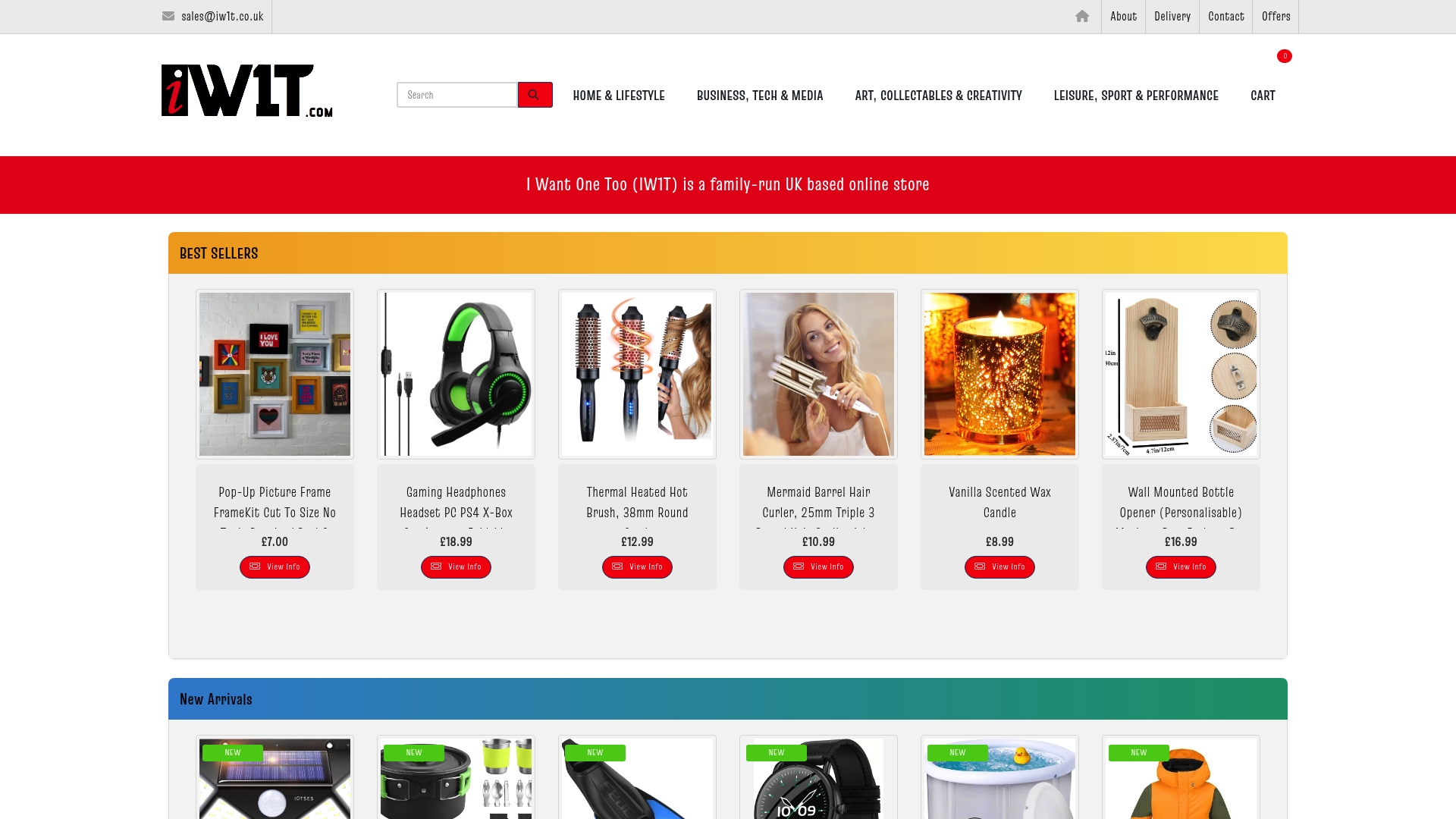
Iw1t is a UK-based, family-run online store with a carefully curated range of lifestyle gadgets and accessories covering wellness, smart home tech, and personal comfort. Whether you are looking for your first wearable, upgrading your home setup, or searching for a genuinely useful gift, Iw1t selects products for practical value rather than novelty. Every order is dispatched in discreet packaging, and the catalogue spans health and fitness accessories, home improvement devices, and personal care items. Browse the full range at iw1t.com and find devices that fit your life rather than the other way around.
FAQ
What are the most popular examples of lifestyle gadgets?
The most popular lifestyle gadgets in 2026 include the Google Fitbit Air, Oura Ring 5, wireless earbuds, GaN fast chargers, and Matter-compatible smart home devices. These devices consistently rank highest for daily use and practical value across tech-savvy consumers.
Do lifestyle gadgets require a subscription to work?
Many wearable lifestyle gadgets, including the Google Fitbit Air and Oura Ring 5, require a monthly or annual subscription to access their full feature sets, including AI coaching and advanced health analytics. Basic data such as step counts and heart rate is typically available without payment, but the core value proposition sits behind the paywall.
What is the Matter standard in smart home gadgets?
Matter is an interoperability standard that allows smart home devices from different manufacturers to work together across Apple Home, Google Home, and Amazon Alexa without separate hubs. Choosing Matter-certified devices prevents ecosystem fragmentation and simplifies home automation management.
Which lifestyle gadgets are best for beginners?
Wireless earbuds and a GaN multi-port charger are the best starting points for anyone new to lifestyle gadgets. Both deliver immediate, tangible value, require no subscription, and work across all device ecosystems without compatibility concerns.
How much should I budget for a wearable lifestyle gadget?
Entry-level wearables like the Google Fitbit Air start at around £80, but the two-year total cost including subscription fees is closer to £240. Premium options like the Oura Ring 5 start at £320 for hardware, with additional monthly subscription costs on top.